
Where the color is, and how long you actually have.
Peak color in any one spot holds for about ten days to two weeks, and it shifts a week or more from year to year. So the reliable fall family photo locations aren't single pins on a map, they're types of places that look good across the whole season: orchards with the props built in, tree-lined park roads, golden fields that turn before the maples do, and water that doubles whatever color shows up. Pick the type early, confirm the exact spot the week of, and book the photographer months before any of it happens. Here's how to run all three.
Six kinds of spots, and what each one gives you.
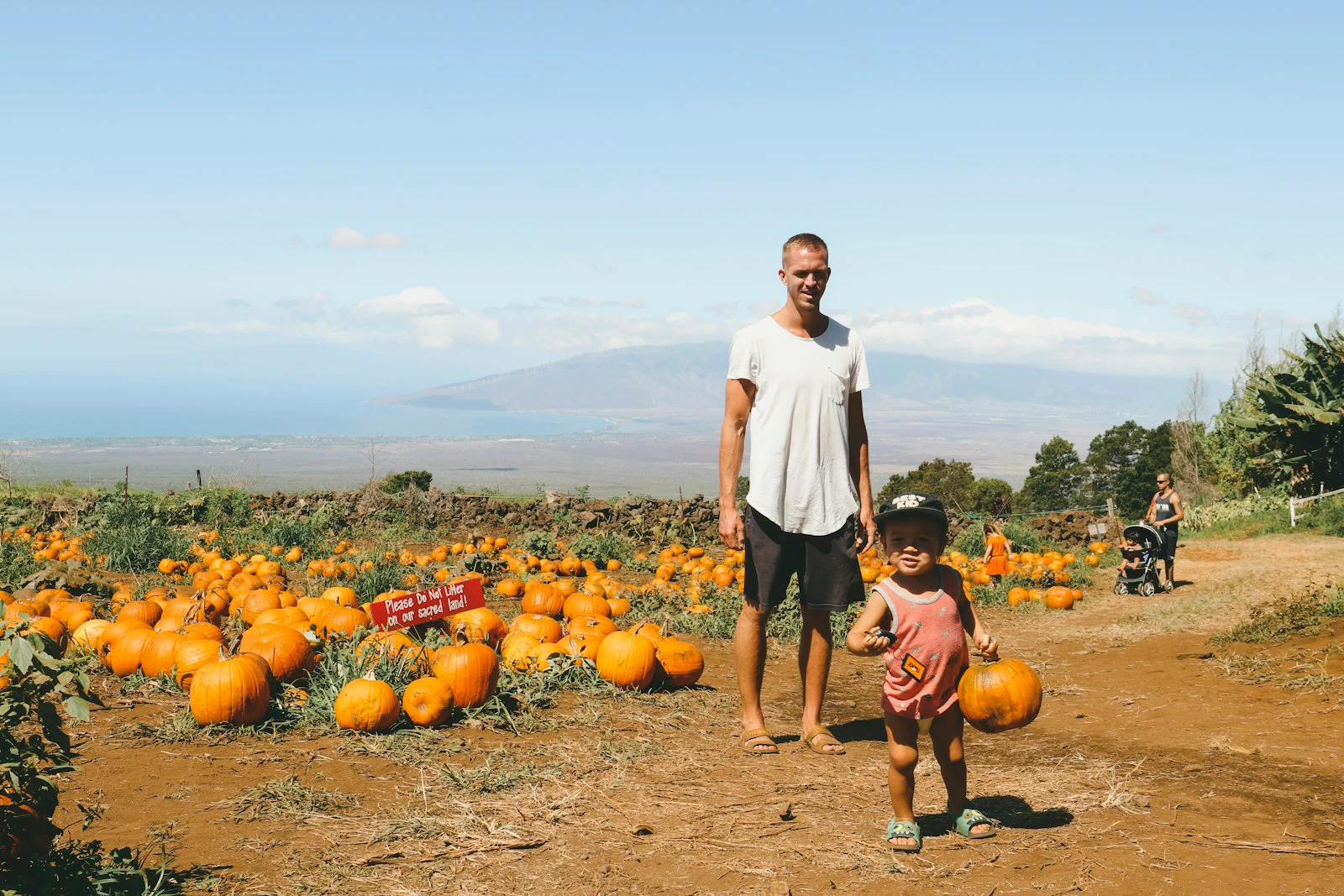
Apple orchards and pumpkin patches
The props come with the ticket. Kids pick apples instead of holding a pose, hay bales and crates do the seating, and the planted rows give you leading lines in every direction. Call ahead, though: plenty of orchards welcome sessions, some charge a photography fee or ask you to reserve a time, and by 10am on an October Saturday you'll be dodging strangers in every frame.
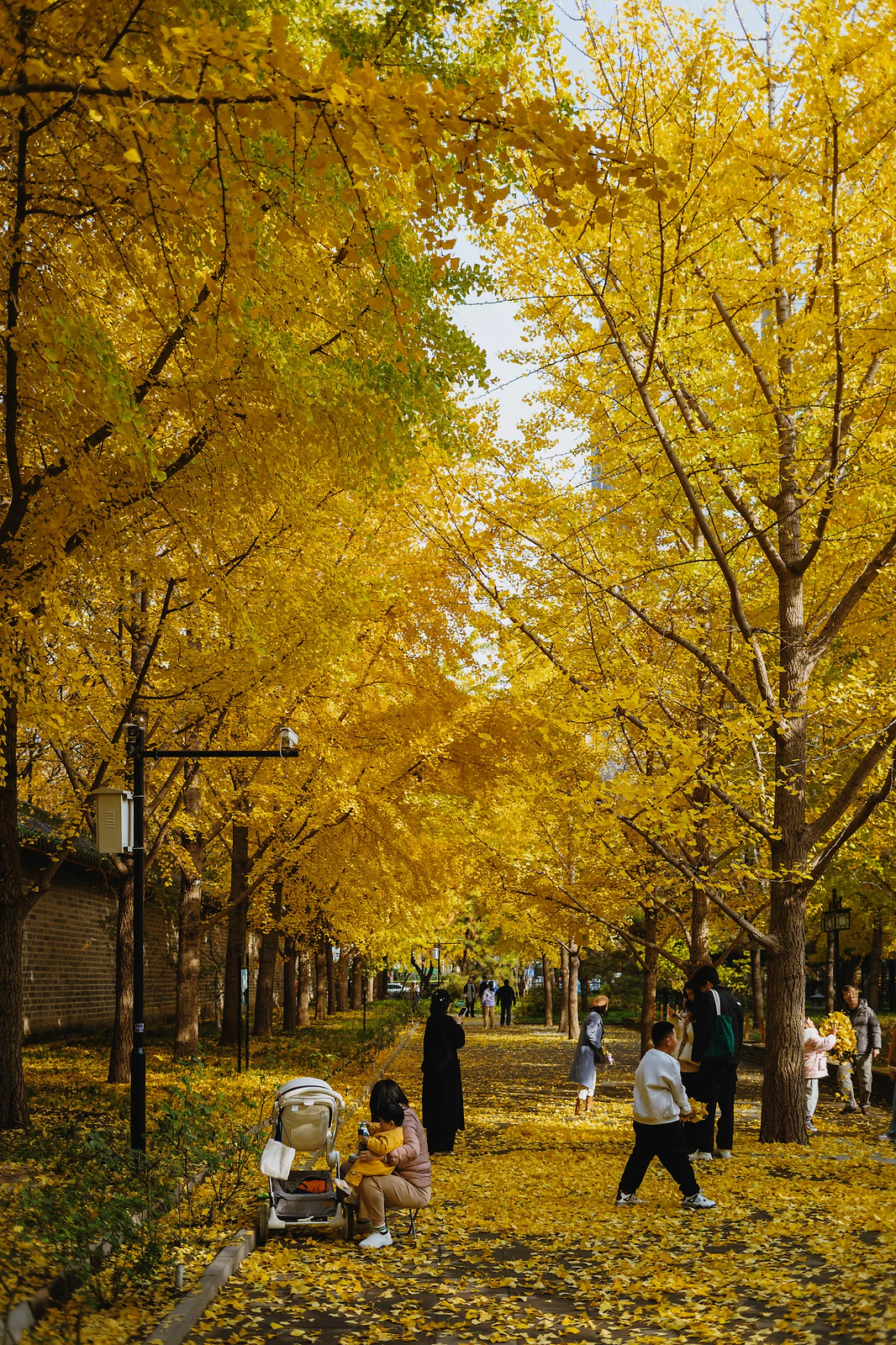
Tree-lined park avenues
A road or path with mature maples or oaks arching over it is the closest thing this season has to a guarantee. The canopy reads as a tunnel of color even when individual trees are past their best, it's stroller and grandparent friendly, and the repeating trunks frame a walking shot better than any posed lineup.
Golden fields and tall grass
Uncut meadow and native grass turn gold by mid September in most regions and hold that color well past leaf drop, which makes a field the insurance policy of fall locations. Backlit in the last hour of daylight, tall grass reads warm even in a bad color year. If the trees disappoint, the field won't.
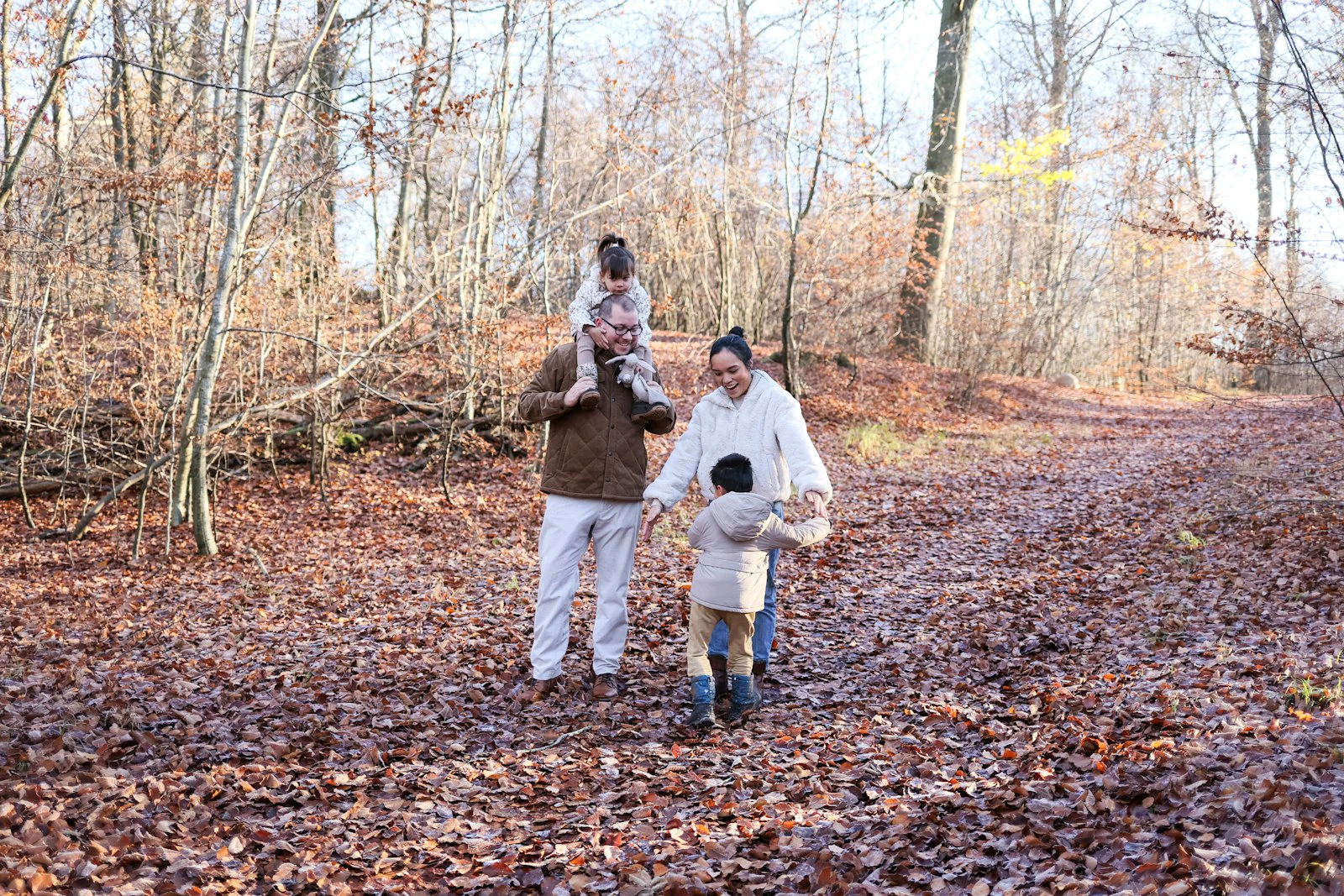
Hardwood forest trails
Maple, aspen, and hickory stands deliver the deep reds and oranges the season is famous for, plus filtered light that's workable at noon, when open locations put the sun straight in everyone's eyes. A trail bend with color ahead and behind puts the family inside the scene instead of in front of it.
Lakes, ponds, and slow rivers
Still water doubles every tree on the far bank, so a mediocre year still photographs like a good one. Go in the morning: the water is calmer and so are the kids. A dock or a stretch of shoreline also gives you the one clean, uncluttered background a fall forest almost never offers.
Brick streets and historic neighborhoods
The late-season play. Once leaves start coming down, brick, painted doors, and one stubborn yellow maple carry the palette instead. Leaf-covered sidewalks photograph better than leaf-covered lawns, and a downtown block usually means coffee within a hundred yards of the tantrum.
Turning a location type into an exact spot.
Pick the type early and pick the pin late. From September on, live foliage prediction maps update weekly, so watch your region and, if you can, drive the spot two or three days before the session. Color that reads "peak" on a map can be brown on the ground after one windy weekend or a dry summer, and no amount of editing puts leaves back on a tree.
Check the photo policy before you're standing there. City and county parks are usually fine for a family session, but many state parks, botanical gardens, and orchards require a photography permit or charge a fee once a paid photographer is involved, and gardens often cap group size. The rules live on the venue or parks department website, and your photographer may already know them for local spots. Don't assume, and don't budget by guesswork either; permit costs range from a free registration form to a real line item depending on the venue.
Then plan for the two things that ruin more sessions than weather: crowds and the missing backup. A famous orchard at 2pm on a mid-October Saturday is everyone's plan, so take the weekday slot or the early morning one if your schedule allows it. And keep a second location of a different type within a fifteen-minute drive. If the maples went brown early, the golden field next town over didn't.
None of this is family-specific, by the way. When it's a shoot for two instead of five, the same scouting rules apply, and our guide to the best engagement photo locations runs the same play for couples.
Pick the location type in July, the exact spot in October, and the photographer before either one.
When color peaks, region by region.
Typical peak windows for an average year in the US. A hot September or an early freeze moves any of these by a week or more, so treat this table as a booking guide and a live foliage map as the truth.
| Region | Typical peak window | What to know |
|---|---|---|
| Northern New England, Upper Midwest, northern Rockies | Late September to mid October | High elevations and aspen country turn first and drop fast; the earliest booking crunch in the country |
| Southern New England, Mid-Atlantic, Great Lakes | Early to late October | The classic maple window and the busiest mini-session weekends of the year |
| Pacific Northwest | Mid October to early November | Bigleaf maples and larches; overcast skies are normal here and photograph beautifully |
| Ohio Valley and southern Midwest | Mid to late October | Oaks hold rust and bronze for weeks after the maples fade, stretching the usable window |
| Southern Appalachians and inland South | Late October to mid November | Elevation stretches the season; valleys peak weeks after the ridgetops do |
| Deep South, Texas, Southwest lowlands | Early November onward, where color shows at all | Subtler palette; lean on golden fields, water, and cottonwood or cypress pockets instead of maple hillsides |
The hour matters as much as the week.
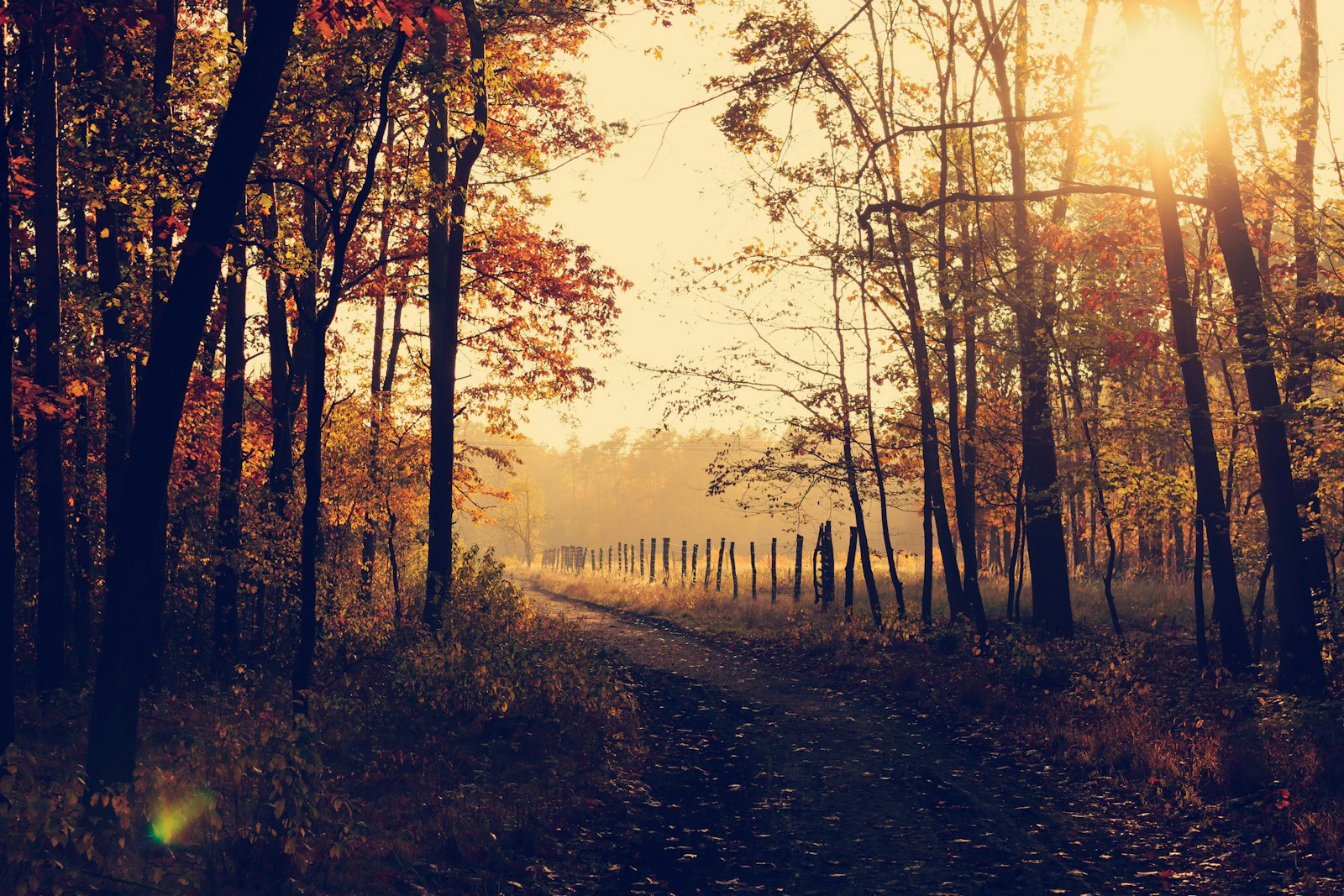
The last hour or so before sunset is the one to fight for. Backlit leaves are translucent, so low sun behind the trees lights the whole canopy from inside while it wraps soft, warm light around faces. In October that window lands somewhere in the late afternoon and moves earlier every week, so look up the real time for your exact date and spot rather than guessing. Our golden hour photography guide covers the timing, the apps that predict it, and why you should arrive well before it starts.
That said, be honest about your actual kids. A slot that ends at dinnertime puts toddlers at their worst hour in front of a camera, and no light is flattering enough to fix that. The hour after sunrise gives you the same quality of light in reverse, with calmer children, empty parking lots, and dew on the field grass. And if the forecast turns gray, a forest trail is the location type that shrugs it off, since overcast light inside the trees is even and shadow-free.
Outfits follow the same logic as the location: don't compete with the leaves. Warm neutrals, cream, rust, olive, and denim sit inside the fall palette instead of fighting it, while bright logos and neon anything will win every frame they appear in. There's a full breakdown, including what reads well against orchards versus open fields, in our guide to what to wear for family photos.
A short list that saves the session.
- Check the foliage map. If your spot reads past peak or still green, switch to the backup now, not in the parking lot.
- Confirm the photo policy. Permit, fee, or group cap, whichever applies, and keep the confirmation on your phone.
- Nail down parking and the walk in. A full lot at golden hour costs you the best fifteen minutes of light.
- Lay out outfits two days early. Layers matter: an October morning can start near 40 degrees and finish near 65.
- Pack the boring bag. Snacks, wipes, a towel for dewy grass, and one bribe per kid, deployed only when needed.
The calendar fills before the leaves turn.
Fall is the busiest stretch of the year for most family photographers, and the math is unforgiving: the classic peak window in any region contains maybe eight or nine weekend days, and mini-session blocks on those dates routinely sell out in August. If you want a specific photographer at a specific orchard in the good light, that gets locked in during July or August, not the week the map turns red. Late bookers get the Tuesday slot or the week after peak.
Most photographers now run that whole rush through a booking page: you pick a slot, pay a deposit, and later get your gallery back through the same link. If you're the photographer setting that up, that exact stack (mini-session slots, deposits paid through your own Stripe account, and password-protected client galleries) is what PicurPhoto does, on a flat subscription that never takes a cut of what you charge. The free plan is a real $0 with real limits (10 galleries, 1 GB of storage, one user), which is enough to run a first season of fall minis before you know whether you need more room.
Quick answers before you book.
When should you take fall family photos?
Inside your region's typical peak window: late September to mid October in the far north and high elevations, most of October across the middle of the country, and into November across the South. Book the photographer in July or August, then let the exact date float toward whatever the foliage maps say in the final two weeks if your photographer offers that flexibility.
What time of day is best for fall family photos?
The last hour to ninety minutes before sunset, when low sun backlights the leaves and flatters faces. With babies or toddlers, the hour after sunrise gives you comparable light and much better moods. On overcast days, shoot midday under the trees, where the light stays even.
Do you need a permit for family photos in a park?
Often not for a casual family session in a city park, but state parks, botanical gardens, arboretums, and orchards frequently require a permit or fee when a paid photographer is involved. Check the venue's website before the session; local photographers usually know the drill for their regular spots and often handle the paperwork themselves.
What if the leaves peak early or late in our year?
This is why you choose a location type rather than a single pin. Golden fields and orchards cover an early miss, oak stands and brick neighborhoods cover a late one, and a backup spot within fifteen minutes covers both. Ask your photographer up front how they handle foliage and weather reschedules, since policies vary.
Are orchard photo sessions worth the fee?
Usually, if you have kids under ten. You're paying for built-in props, an activity that keeps children engaged between frames, and a contained space where nobody can sprint out of sight. Confirm the fee, the photographer policy, and any time restrictions when you book, since every orchard sets its own rules.
Picked the spot? Book the photographer.
Families: your photographer's booking page is where the good October slots live, so grab one early. Photographers: set up a free booking page and gallery before the fall calendar fills.