
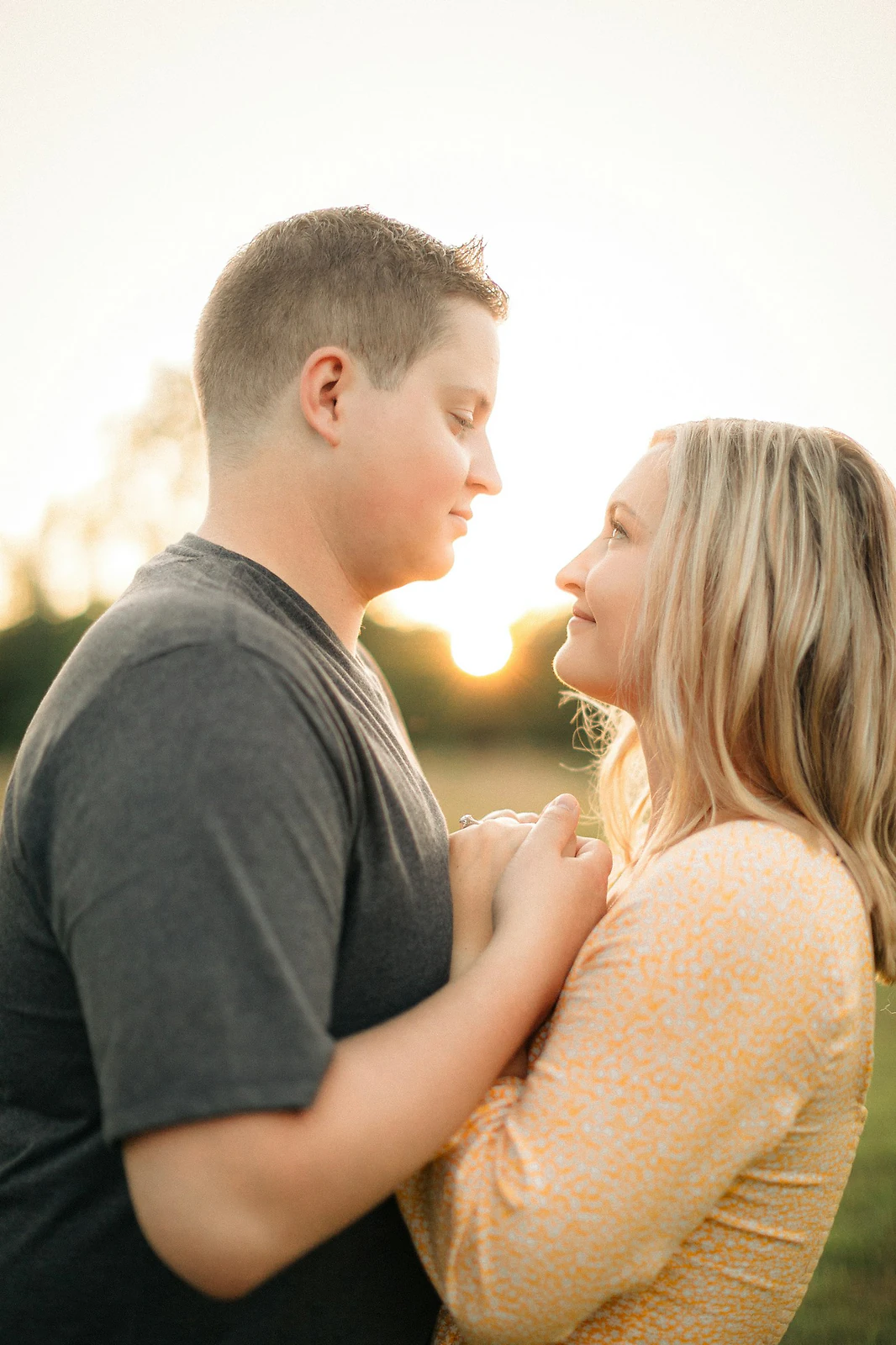
The most dramatic spot is usually the wrong one.
The most-photographed overlook in your state is probably a bad pick for your engagement photos. Not because it isn't beautiful. Because it's forty minutes up a trail in shoes you can't walk in, it's shoulder to shoulder with strangers at sunset, half the good angles need a permit, and the shots come back looking like every other couple's who stood on the same rock. The best engagement photo location isn't the most cinematic one. It's the one where you two actually loosen up, the light is soft, and you're allowed to be there. That usually means a place with some meaning to you, or somewhere plain and pretty close to home, shot in the last hour before the sun drops. Here's how to land on the right one instead of the obvious one.
The place with a story
Where you had your first date, the bar where you met, the proposal spot, the block you both lived on. It won't photograph like a magazine, but it means something, and that shows up on your faces in a way scenery can't fake. If a spot already makes you both laugh before the camera is out, start there.
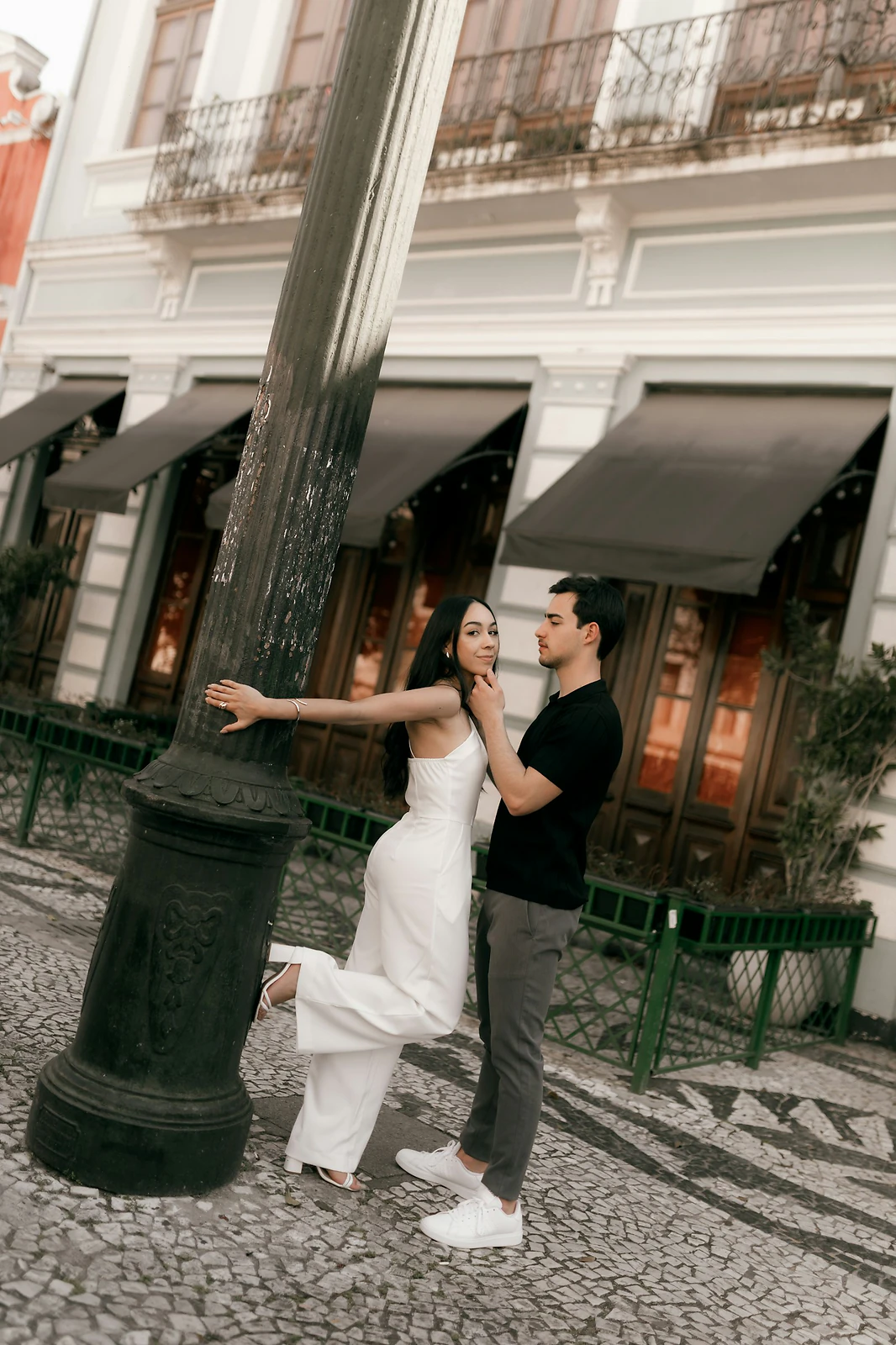
Downtown and old streets
Brick alleys, a strip of storefronts, a bridge, a mural, string lights outside a cafe. Cities give you texture and warm reflected light after the sun goes down, and you can duck into a coffee shop or a doorway if it rains. Historic districts and old-town blocks tend to beat glassy new development.
Botanical gardens and greenhouses
Reliable color in any season, and a glass greenhouse is the rescue plan for a February session when everything outside is brown. The catch is that most gardens treat engagement photos as a paid portrait session and charge a permit fee on top of admission, so this one comes with homework (more on that below).
Beaches, lakes and rivers
Open sky and a clean horizon make golden hour do most of the work for you. Water reflects light back up onto your faces, which is flattering, and there's room to walk and move so the poses stay loose. Wind and tides are the variables, so check both, and bring a towel for sandy feet.
Fields, mountains and woods
Tall grass, a wildflower meadow, a treeline, a ridge at sunset. Wide open landscape is where the epic shots come from, and it's also where the practical stuff bites: distance, parking, bugs, weather that turns fast, and sometimes a permit. Beautiful, worth it, but plan the logistics like a small trip.
Your home or neighborhood
Underrated and getting more popular. Your kitchen, the porch, the couch, coffee in bed, the dog underfoot, then a walk around your own block. It's the most comfortable you'll ever be in front of a camera, costs nothing, needs no permit, and it looks like your actual life instead of a location you rented for an hour.
The right spot isn't the one that photographs best. It's the one where you forget the camera is there.
Run each candidate through the same short test.
Once you've got two or three spots in mind, don't pick by prettiest photo online. Pick by which one survives the boring questions.
- Does it mean something, or does it just look good? Either is a valid answer, but know which you're choosing. A meaningful-but-plain spot plus one scenic backup is a stronger session than two spectacular strangers' backdrops.
- Which way does the light fall in the evening? Stand there around the time you'd shoot and see where the sun sets and what it hits. A west-facing beach glows; a spot boxed in by tall buildings or a north-facing wall goes flat and gray at the same hour.
- How busy is it at that exact time? The overlook that's empty at 10am is a parking-lot scrum at sunset. Go scout on the same day of week and roughly the same hour you'd book, not on a quiet weekday lunch break.
- Can you actually get to it, dressed like that? Count the walk from the car in real shoes. A mile of trail in heels is a different plan than a spot you park next to. Bring flats and swap for the photos if you have to.
- Are you allowed to shoot there, and does it cost anything? Public sidewalk, usually yes. Botanical garden, private venue, or a popular park, often a fee or a permit. Sort this before the day, not at the gate.
- What's the rain plan? Every outdoor session needs an indoor or covered backup within a few minutes, or a clear reschedule policy with your photographer. Weather is the number one reason sessions move.
Then tell your photographer your shortlist before you lock it. A good one has shot the popular spots in your area a dozen times, knows which have a permit desk and which have a hidden angle away from the crowd, and will tell you honestly if your dream location photographs worse than you think. That conversation is worth more than another hour of scrolling. Send them the three places you're weighing and let them break the tie.
The when matters as much as the where.
The single biggest upgrade to any engagement location is free: shoot it in the last hour before sunset. Golden hour light is low, warm, and soft, it wraps around faces instead of casting the hard shadows and squinting you get at noon, and it flatters nearly every backdrop on the list above. Ask your photographer for the sunset time on your date and count back about an hour, that's your start. On the flip side, an overcast sky is not a problem, it's a giant softbox, and lightly cloudy days often shoot better than harsh full sun.
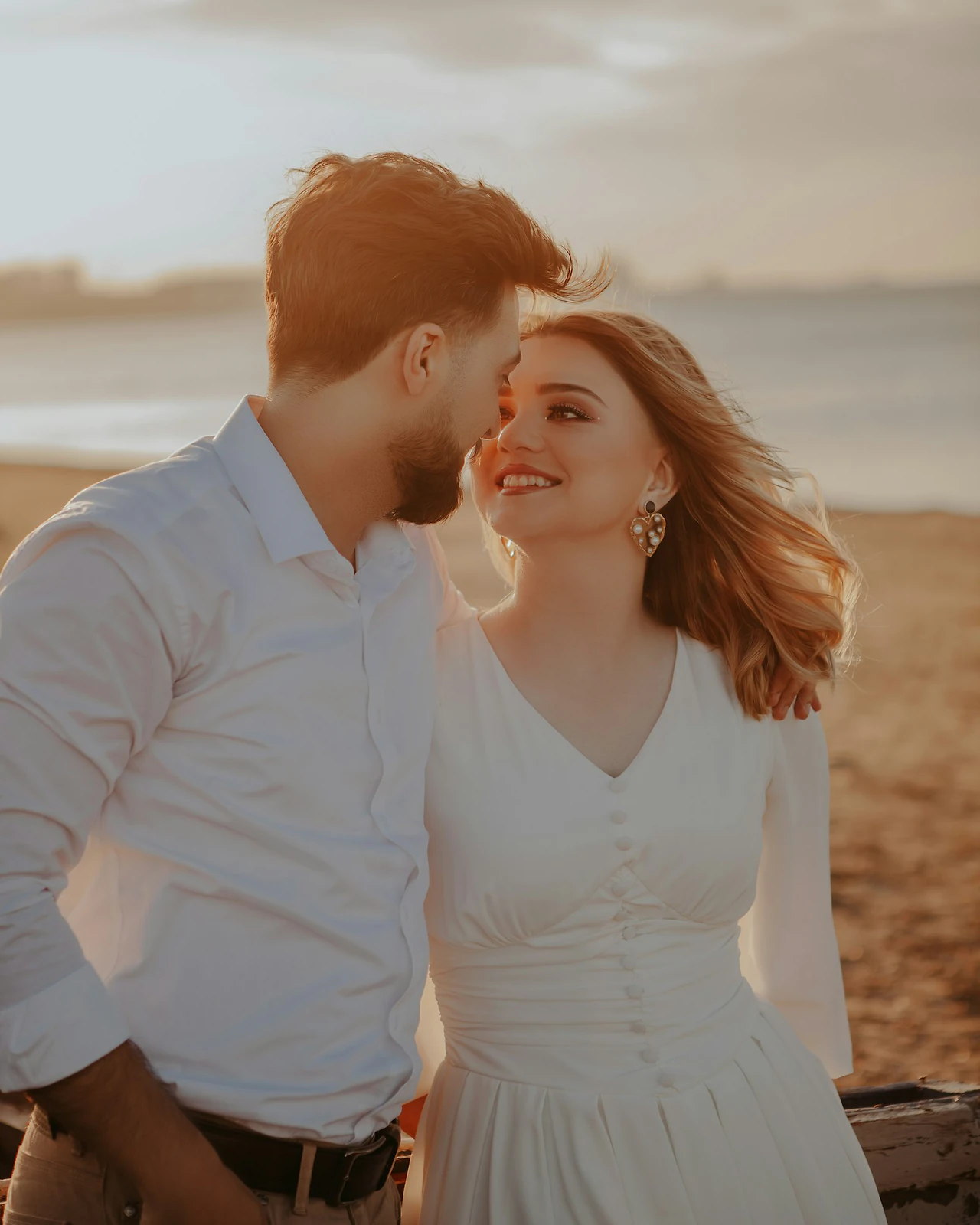
Season changes which locations are even worth it. Spring gets you blossoms and green in gardens and orchards. Early fall is peak for foliage in the woods and mountains, and it's the busiest booking window for exactly that reason, so lock your photographer and permits early. Winter is when the greenhouse, the downtown block, and your own warm living room quietly become the best options, and a bare field or a dead garden becomes the worst. Match the spot to the calendar, not just to a photo you saw in a different month.
The unglamorous part: permits and permission
This is the step couples skip and then get stopped over on the day. A few real examples of how the rules actually shake out, all worth confirming yourself before you go:
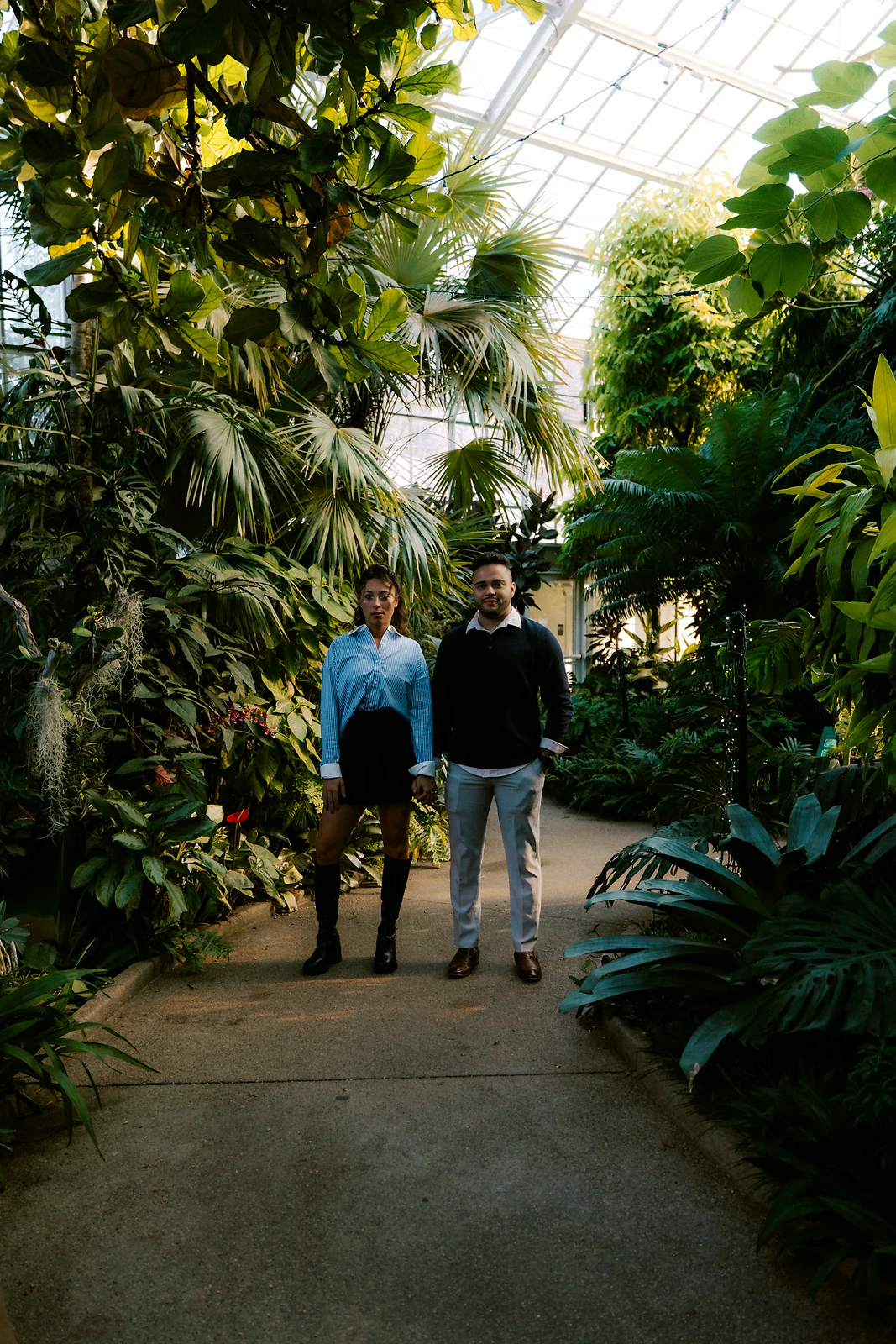
- Botanical gardens almost always charge. Most treat an engagement shoot as a paid portrait session with a permit fee on top of admission, and the amount ranges widely by garden, often somewhere from around $30 for a couple of hours to well over $100 at the pricier ones. A few, like the United States Botanic Garden in Washington, don't allow posed sessions at all. Check the specific garden's photography policy page, don't assume.
- National and state parks vary a lot. A quick couple photographing themselves is usually fine, but a hired photographer at a popular spot can trigger a special-use permit requirement, and rules differ park to park and change over time. Look up the individual park's commercial or portrait photography policy rather than trusting a blanket answer.
- Private property needs a yes. That pretty barn, orchard, vineyard, rooftop, or cafe is someone's business or home. Ask first, expect that some will want a fee, and get the ok in writing so there's no awkward conversation mid-shoot.
- City parks and public streets are the easy ones. A sidewalk, a public plaza, or most city parks are generally fine for a small session, though a few require a permit for anything with lighting gear or a large group. When in doubt, the parks or recreation department can tell you in one phone call.
None of this is hard. It's just a phone call or a policy page per location, done a week ahead instead of discovered at the entrance. Build it into choosing the spot, not into the morning of.
Then you still have to book the person and pay them.
Picking the spot is the fun part. The friction usually shows up right after: pinning down a date, putting down a deposit so it's actually held, signing something, and later getting the gallery back without a mess of download links. If you're the couple, you just want one link that lets you book, pay, and receive the photos. If you're the photographer reading this to scout your own city's spots, that same friction is your admin pile.
That's the gap PicurPhoto is built for on the photographer's side: a booking page on the photographer's own domain where a client self-books an engagement session from real availability, pays a deposit up front through the photographer's own Stripe account (so payouts and refunds stay with them, not routed through a middleman), and gets a password-protected gallery back that can sell prints and extra files without any hand-selling. There's a genuine free tier with ten galleries and 1GB of storage, and because PicurPhoto is a flat subscription it never takes a cut of your bookings or sales on any plan. A $19 per month Pro plan lifts galleries to unlimited, bumps storage to 10GB, adds up to five team members, and unlocks a custom domain and white-label branding. It won't help you choose a location, but it removes every step between "we love this spot" and photos in hand. Photographers can see the plan details on the pricing page.
Where should we take our engagement photos?
Start with somewhere that means something to you both (first date, proposal spot, your own neighborhood), then add one scenic backup for variety. A meaningful-but-simple location where you're relaxed beats a spectacular one where you're stiff and self-conscious. Match the spot to the season and shoot it near sunset, and you're most of the way there.
What time of day is best for engagement photos?
The last hour before sunset, often called golden hour. The light is low, warm, and soft, which flatters faces and almost any backdrop. Ask your photographer for the sunset time on your date and start about an hour before. Overcast days work well too. Midday full sun is the one to avoid if you can, because of harsh shadows and squinting.
Do you need a permit for engagement photos?
It depends entirely on the location. Public sidewalks and most city parks are generally fine for a small session. Botanical gardens usually charge a portrait or permit fee. National and state parks and private venues often require a permit or the owner's permission, especially with a hired photographer. Check each specific location's photography policy a week or so ahead.
How many locations should we have for one session?
One or two is plenty for a typical one to two hour session. A second spot adds variety in your outfits and backdrops, but every extra location eats time in travel and setup, so more than two usually means fewer good frames at each. If you do pick two, keep them close together and let your photographer sequence them by the light.
Should engagement photos be somewhere meaningful, or just pretty?
Either works, and there's no wrong answer. A meaningful spot gives you a story and easier, more natural expressions. A purely scenic spot gives you drama. The strongest sessions often do both: lead with the place that matters to you, then add one beautiful backup. What actually ruins photos is not the backdrop, it's being uncomfortable, so weight comfort heavily.
The couples who end up happiest with their engagement photos rarely chose the flashiest place. They chose somewhere they felt like themselves, checked the light and the rules ahead of time, and showed up an hour before sunset ready to actually be together while someone quietly caught it. Pick for comfort and light first, scenery second, and sort the permit before the day. The rest takes care of itself.
Booked the session? Now make the rest painless.
If you're a photographer shooting these spots, set up a booking page that takes the deposit, holds the date, and delivers the gallery, all on one link.