
When it starts, how long you get, and how not to waste it.
Golden hour isn't an hour. Plan on 20 to 60 minutes of usable light, starting right around sunrise or ending right at sunset, and the exact length depends on where you are: close to the equator it can be gone in 20 minutes, up near the poles it can stretch for hours. That soft, warm, low-angle light is the reason portraits look flattering and landscapes get their glow, because the sun is skimming across the scene instead of beating straight down on it. The whole game is getting set up and shooting before it arrives, because once it fades you can't get it back today. Here's how to time it, dial in your camera, and actually use the light.
Show up early, because the window is shorter than you think.
Golden hour rewards planning more than reflexes. The light changes minute to minute, so you want the composition set and the settings close before the good stuff starts.
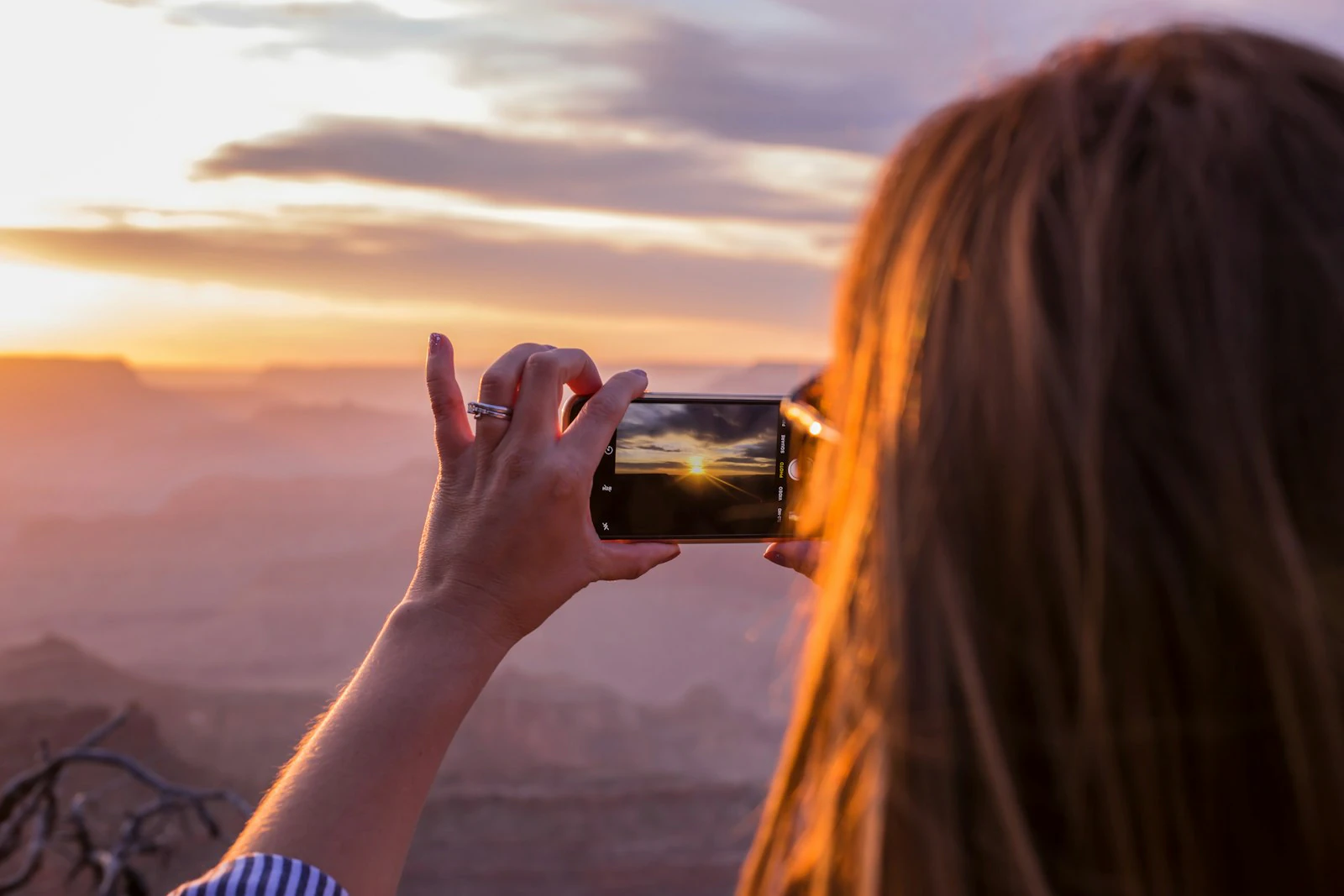
- Look up the real times, don't guess. A sun-tracking app gives you sunrise, sunset, and the golden and blue hour windows for your exact spot and date. PhotoPills, Sun Seeker, and Sun Surveyor all do this, and The Photographer's Ephemeris has a free web version. The augmented-reality view that shows where the sun will actually sit matters more than the clock time.
- Arrive at least an hour early. That buffer is for parking, walking in, scouting the frame, and firing test shots while the light is still ordinary. If you show up when golden hour starts, you spend the best light fumbling with a tripod.
- Know your latitude and season. Near the equator the window is short and consistent year round. The farther from it you are, the more the length swings with the seasons, and in high summer up north it can run far longer than an hour. Don't assume a flat 60 minutes everywhere.
- Plan the sun's direction, not just its time. Backlit, side-lit, and front-lit shots need the sun in different places relative to your subject. Decide which look you're after and position accordingly, because you won't have time to relocate mid-window.
- Don't pack up at sunset. Blue hour, the 20 to 40 minutes after the sun drops, gives you cool even light with no harsh shadows. It's a different mood, not a worse one, and most people leave right before it shows up.
A starting point for the light, then adjust fast.
There's no single correct setting because the light drops steadily the whole time. Treat these as where you begin, then keep nudging as it changes.
ISO: start at 100
Keep it as low as the light allows for the cleanest files. Early in the window 100 to 200 is plenty. As the sun sinks and you need to hold a usable shutter speed, raise it rather than let the shot go soft. A little noise beats a blurry frame.
Aperture: match the look
For portraits, f/2.8 to f/5.6 blurs the background and separates your subject from the glow. For landscapes where you want the whole scene sharp, close down to f/8 to f/11. Push past f/14 only if you specifically want a crisp sun star, and know you'll pay for it in shutter speed.
Shutter: keep it handholdable
Somewhere around 1/250 to 1/500 handles moving subjects and keeps highlights near the sun in check early on. As the light fades your shutter will slow. When it drops below what you can hand-hold sharp, put it on a tripod instead of cranking ISO forever.
White balance: hold the warmth
Auto white balance tends to "correct" the gold right out of the scene, which is the opposite of what you want. Set it to Daylight or Cloudy, or dial in roughly 5600K to 6500K, to keep the warm cast. And shoot RAW so you can fine-tune the temperature later without wrecking the file.
On mode: manual gives you the most control when the light is moving this fast, but aperture priority is a perfectly good fallback if you'd rather set the depth of field and let the camera chase exposure. Either way, watch your histogram and lean toward slightly underexposing near the sun. Blown highlights around a bright sky don't come back, but shadow detail usually does.
The light is the subject during golden hour. Everything you set on the camera is just about not fighting it.
Five ways to point the camera at that light.
Same window, same sun, very different photos depending on where you stand relative to it. These are the looks worth practicing until they're automatic.
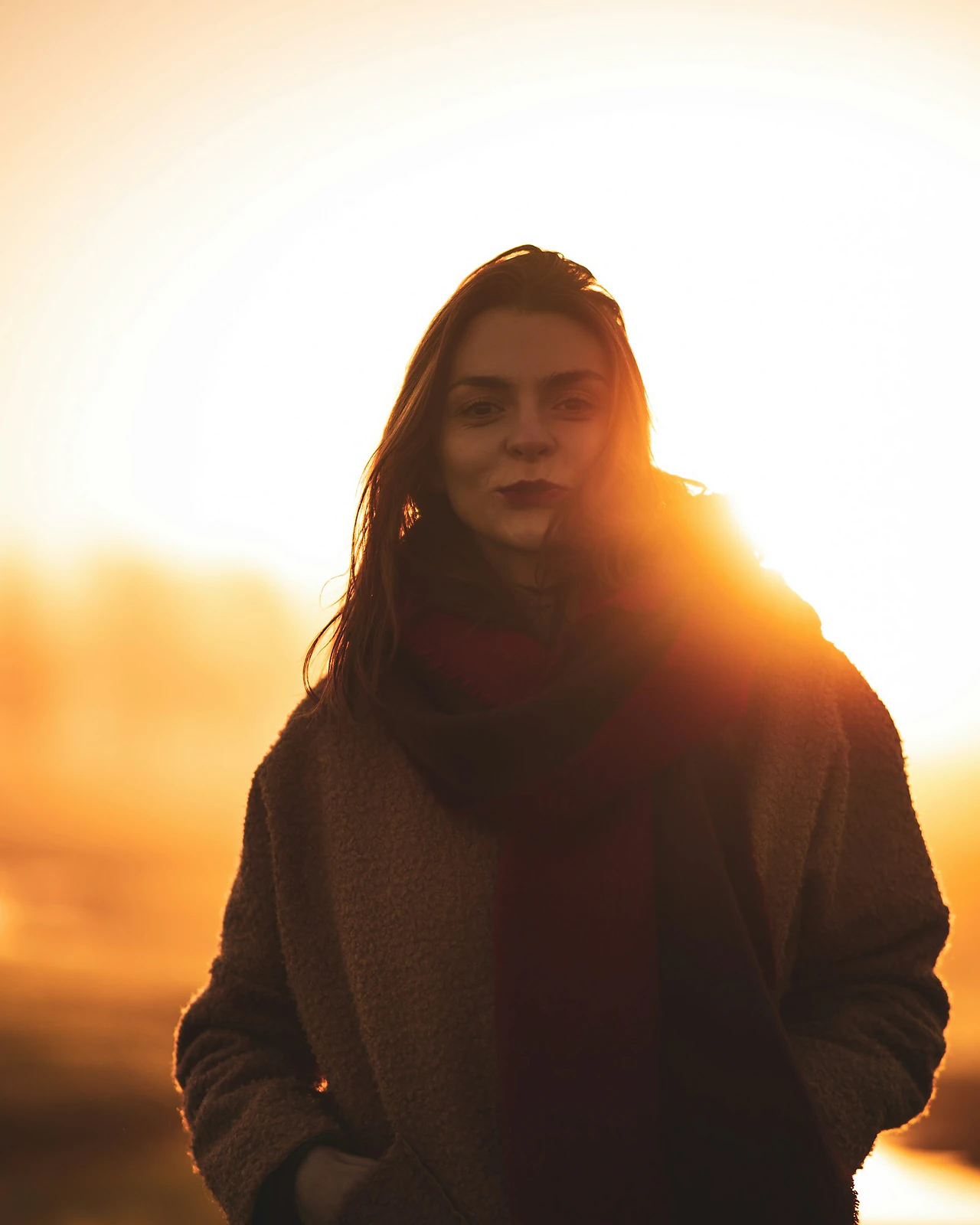
Backlight
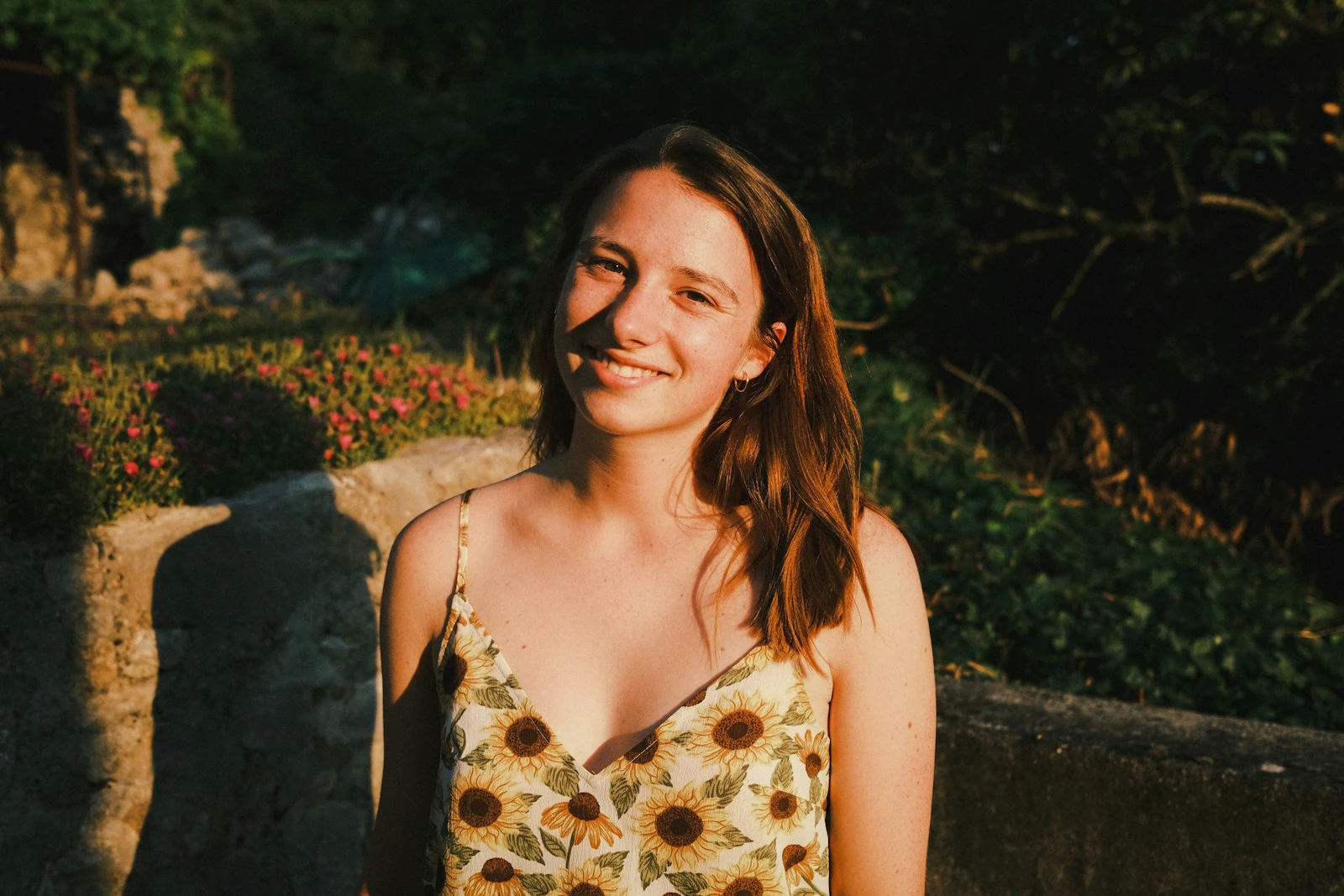
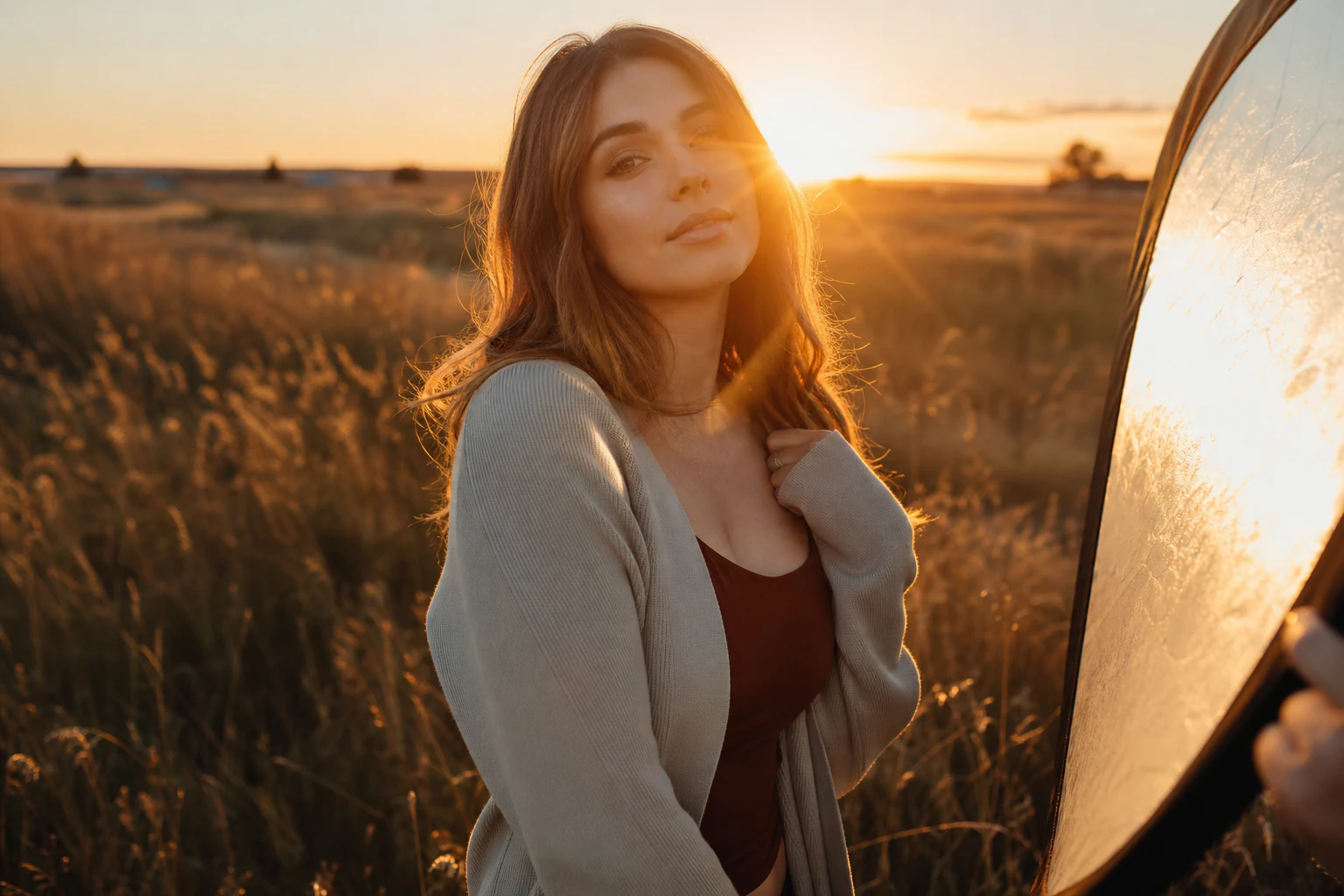
Put the sun behind your subject for a soft rim of light around the hair and shoulders and a dreamy glow. Meter for the face, not the sky, or add a touch of fill so the front doesn't go dark. This is the classic golden hour portrait for a reason.
Silhouette
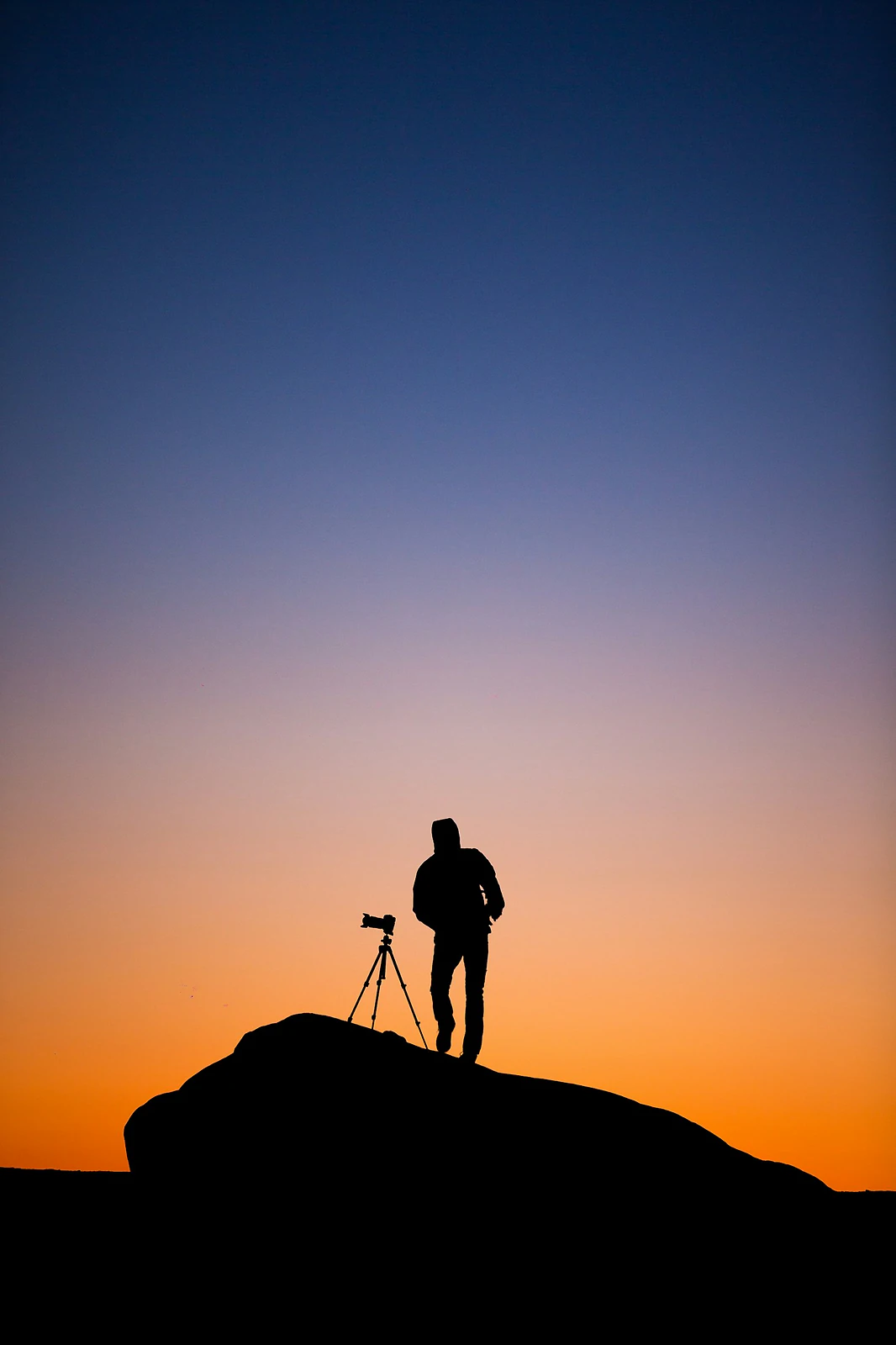
Do the opposite: expose for the bright sky and let your subject fall to a clean black shape against it. It lives or dies on the outline, so pick a pose with clear separation, space between the arms and the body, a recognizable profile, nothing mushy in the middle.
Sun flare
Let the sun clip the edge of your frame or peek from behind your subject and you'll catch flare and starbursts. Partially block it with a head or a tree to control how much spills in. A smaller aperture sharpens the star; a lens hood off and a bit of experimentation get you the flare you want.
Rim and side light
Turn the subject so the sun rakes across them from the side and you get shape and texture: a glowing edge on one side, gentle shadow on the other. It's the most sculptural light of the day, great for detail, faces, and anything with texture you want to show off.
A reflector for fill
When you're backlighting a face, a cheap collapsible reflector bounces some of that warm light back onto the shadow side. White for subtle, silver for punch, gold to lean even warmer. It's the single most useful piece of kit for golden hour portraits, and you'll want a second pair of hands to hold it.
Foreground and horizon
For landscapes, use the low warm light to rake across texture: grass, sand, ripples on water, a long shadow reaching toward you. Put something in the foreground to anchor the frame and let the golden sky do the rest. A tripod keeps you sharp as the light drops.
When golden hour is the product, the schedule is the risk.
If you shoot portraits, couples, or families, golden hour is prime real estate, and it's why sunset mini-sessions sell out. It's also the one shoot you genuinely cannot reschedule on the day. The light is a hard deadline.
That changes how you have to run the business side. If someone books your 7:10pm slot and no-shows, there's no bumping them to 8pm, the light's gone and so is the money. Back-to-back mini-sessions make it worse: a single late arrival eats into the next family's window. So the booking has to do two jobs most tools don't: only offer the exact short slots that fit inside the golden window, and collect a deposit up front so a booking actually means something.
That's the seam where PicurPhoto fits. It's a booking, payments, and gallery platform built for solo and small-studio photographers, so you can put up a booking page that opens only your real 15 or 20 minute sunset slots, takes a deposit through your own Stripe account (payouts and refunds stay yours, not routed through a middleman), and sends automatic email and SMS reminders to cut the no-shows that wreck a tight golden hour lineup. Afterward, the warm frames go out in a password-protected gallery that can upsell prints, which suits golden hour work because those glowing images are the ones clients actually want on a wall.
The pricing is simple, stated plainly: PicurPhoto is a flat subscription that never takes a cut of your bookings or sales, so every deposit you collect is yours. The Free Forever plan runs a real booking-and-gallery setup at no monthly cost, with 10 galleries, 1GB of storage, and a single user, which a busy season will outgrow. Unlimited galleries and 5GB of storage start on the Basic plan at $9/month, and the custom-domain, white-labeled booking page (with PicurPhoto branding removed) lives on the Pro plan at $19/month. And it's a younger platform than the long-established gallery hosts, so if you already run a deep studio CRM you're happy with, this is the lighter-weight all-in-one, not a rip-and-replace. For a golden hour shooter who mostly needs clients to self-book the right slot, pay a deposit, and get their photos back without friction, that's the whole job.
How long does golden hour last?
Roughly 20 to 60 minutes, depending on your latitude and the season. Near the equator it can be as short as 20 minutes; far north or south at certain times of year it can stretch much longer. The reddest, softest peak is often just the middle 15 minutes or so, which is why timing it with an app and arriving early matters.
What's the difference between golden hour and blue hour?
Golden hour is the warm, low-angle light just after sunrise and just before sunset, when the sun is above or right at the horizon. Blue hour is the cooler, shadow-free light before sunrise and after sunset, when the sun is below the horizon and the sky goes deep blue. They run back to back, so a good plan uses both: golden for warm portraits, blue for moody skies and cityscapes.
What camera settings are best for golden hour?
Start at ISO 100, set white balance to Daylight or Cloudy (not Auto) to keep the warmth, and pick aperture for your look: f/2.8 to f/5.6 for portraits, f/8 to f/11 for sharp landscapes. Keep shutter speed handholdable, around 1/250 to 1/500 early, and shoot RAW. Then adjust constantly, because the light drops the entire time.
Do I need a tripod for golden hour?
Not for backlit portraits early in the window, when there's still plenty of light. You'll want one toward the end and into blue hour, as shutter speeds slow past what you can hand-hold sharp. For landscapes and any long exposure, it's essential from the start.
Should I shoot in manual or aperture priority?
Manual gives you the tightest control when the light is changing fast, which it is. But aperture priority is a solid fallback: set the depth of field you want and let the camera track exposure, then dial in exposure compensation to protect the highlights. Both work. What matters more is watching your histogram and not blowing out the sky.
Book the light before it's gone.
If sunset sessions are your bread and butter, the schedule is the part that bites. Set up a free booking page that only opens your real golden hour slots and takes a deposit up front, and see if it fits how you work.