
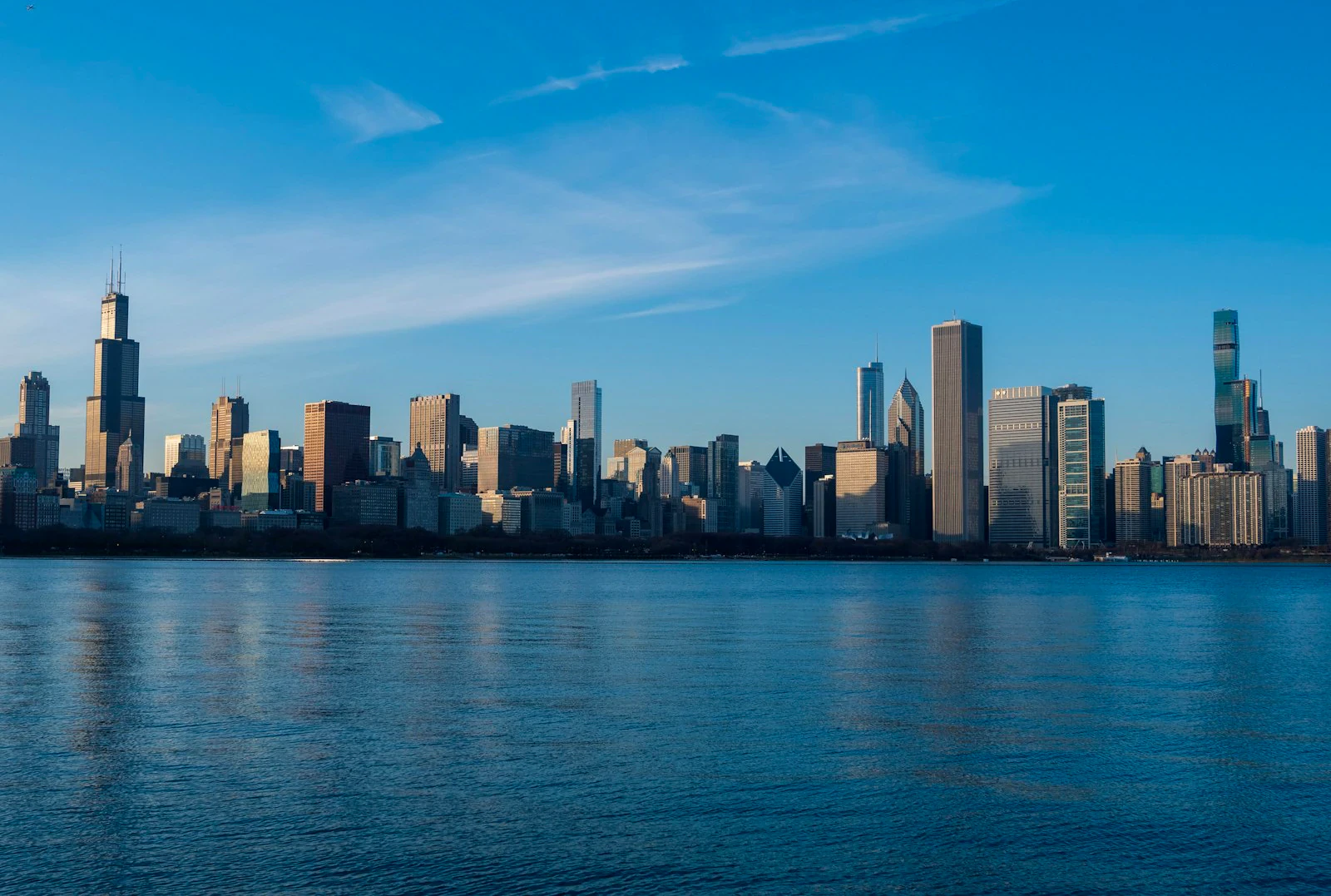
The skyline is the star. The lake is why it works.
Chicago hands you something New York and LA can't: the entire downtown skyline, front lit and doubled in the water, from a public sidewalk. Walk out along Solidarity Drive toward the Adler Planetarium and the whole city stacks up across the harbor. That view, the Riverwalk at blue hour, and Cloud Gate before the crowds arrive are the three shots that define the city. The rest of this guide covers where to stand, when the light cooperates, where to park, and which spots need a permit, because Chicago is friendlier to photographers than most big cities, but it does have rules worth knowing before you haul a tripod onto the lakefront.
Adler Planetarium peninsula
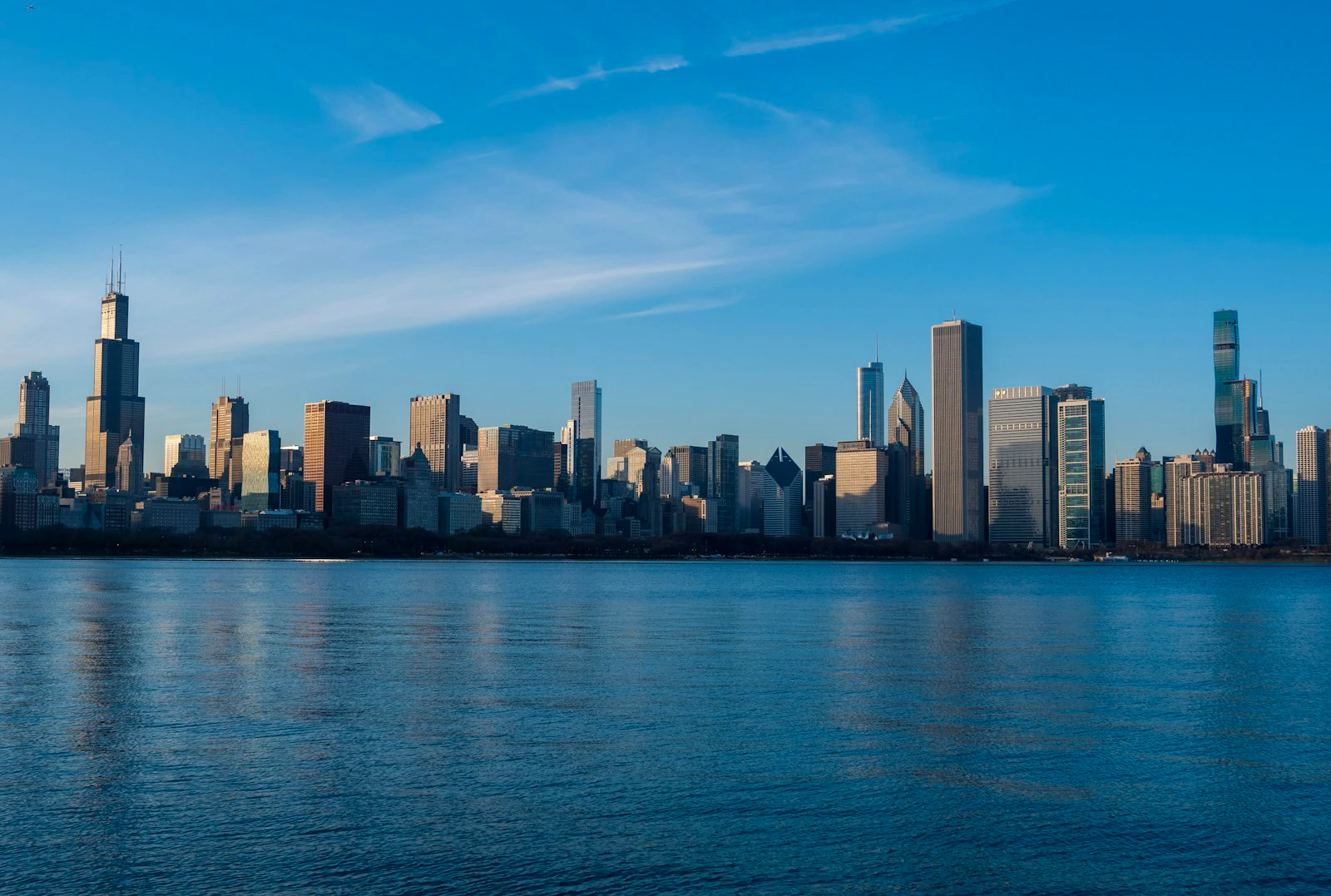
The definitive Chicago skyline view, from the Museum Campus spit that juts into the lake. Sunrise lights the buildings straight on; after sunset they glow against a deep blue sky. Wide open, free, and rarely as crowded as it deserves to be.
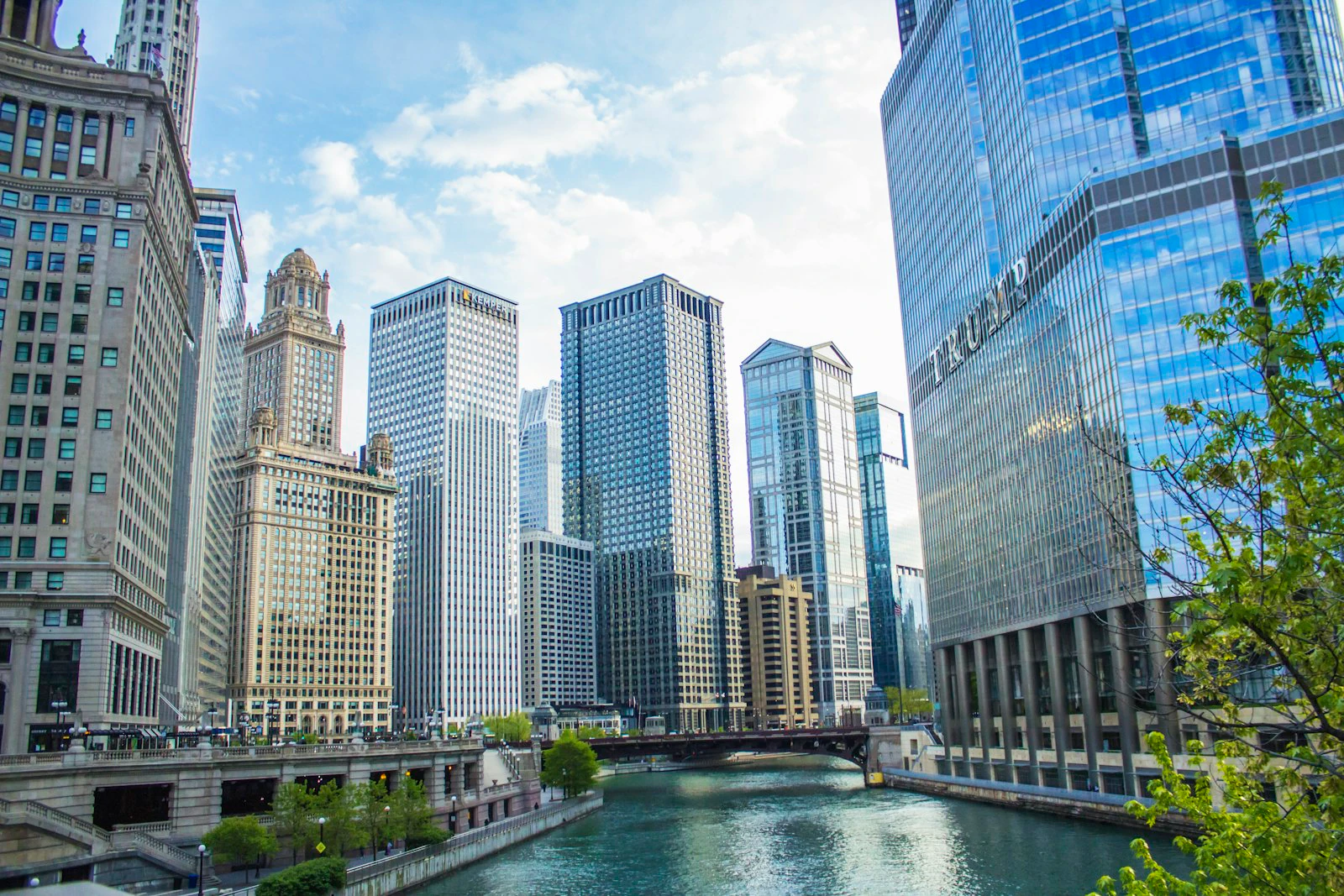
The Riverwalk and DuSable Bridge
An architecture canyon at water level. Shoot from the lower path between Michigan Avenue and Wells Street, or from the DuSable Bridge itself with the Wrigley Building and Tribune Tower framing the river. Blue hour, when the tower lights come on and the water goes glassy, is the money window.
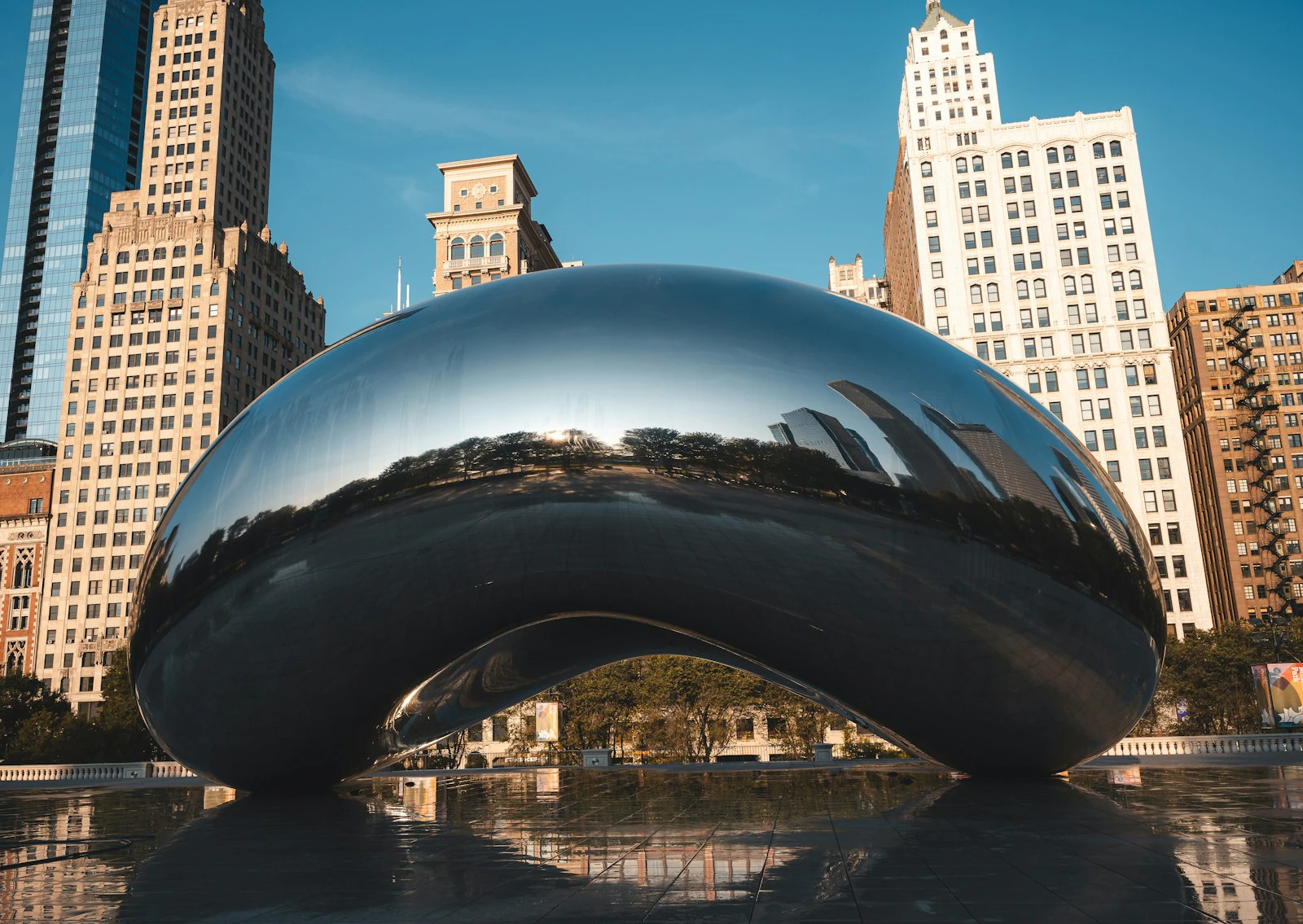
Cloud Gate (the Bean)
Millennium Park's mirror. It warps the skyline, the sky, and you into one frame, which is why it's mobbed from mid-morning on. Come right when the park opens and you can shoot it nearly empty; in winter, a snow-dusted Bean at dawn is one of the best cold-weather photos in the country.
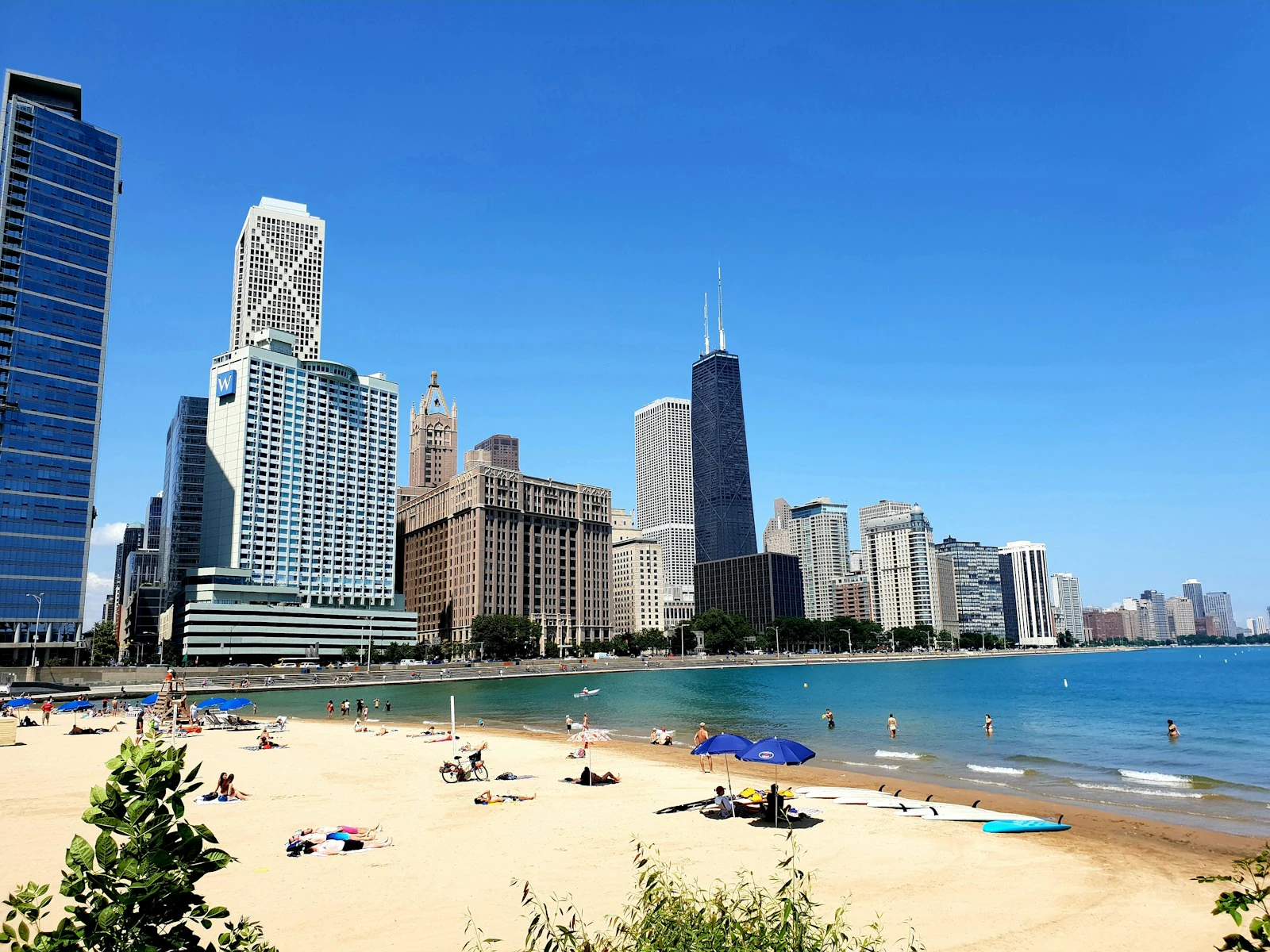
North Avenue Beach
Sand in the foreground, skyline behind, with 875 North Michigan (the old Hancock) towering over everything. Summer sunrise here gets you soft light, an empty beach, and the city waking up across the water. The concrete chess pavilion at the north end is a favorite portrait backdrop.
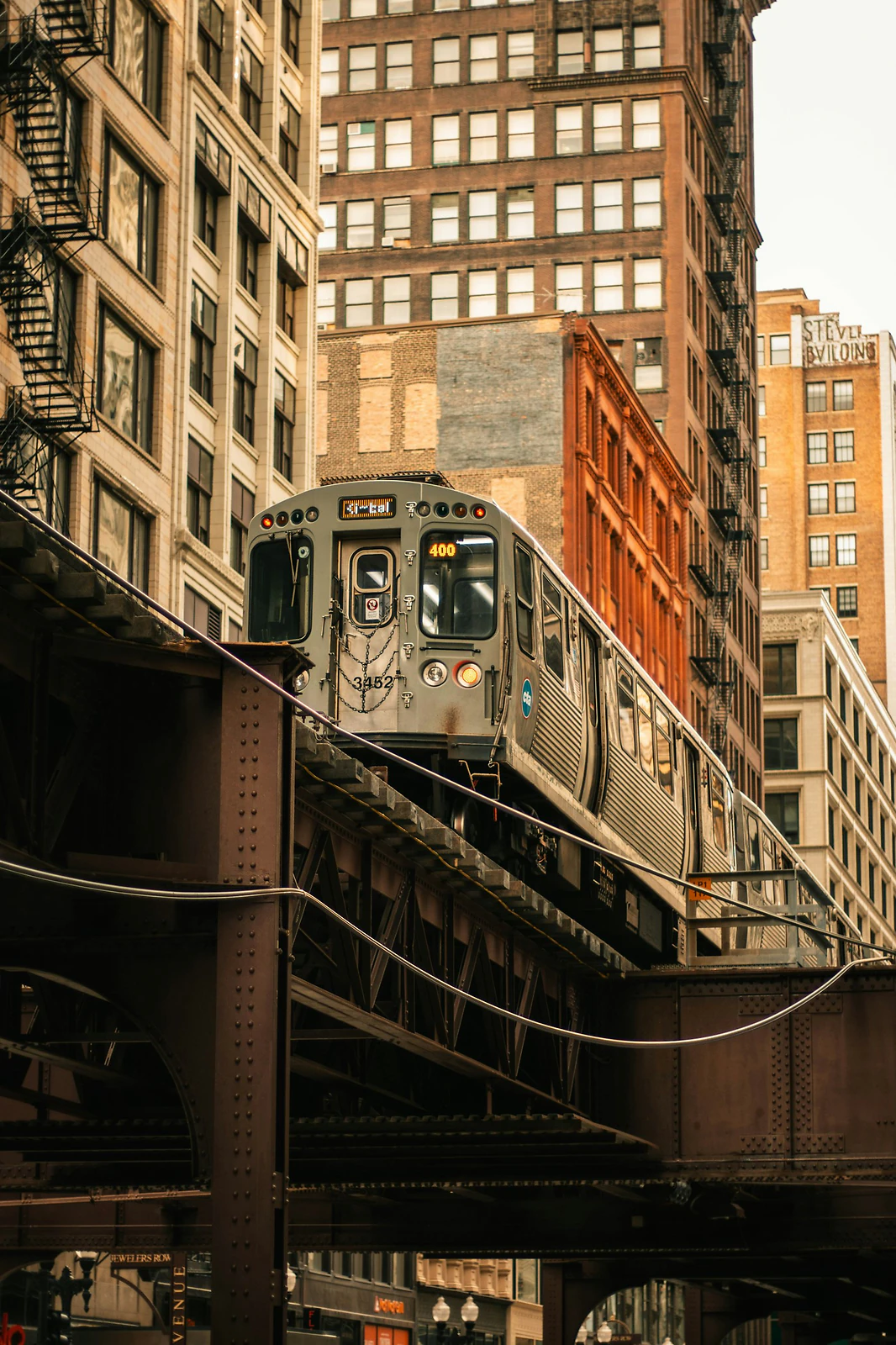
The Loop and the L
Elevated train tracks running between office towers is Chicago's signature street shot. The Adams/Wabash platform looks straight down Wabash Avenue under the steel, and the corner of Lake and Wells catches trains curving through the junction. Street level under the tracks works too, especially wet.
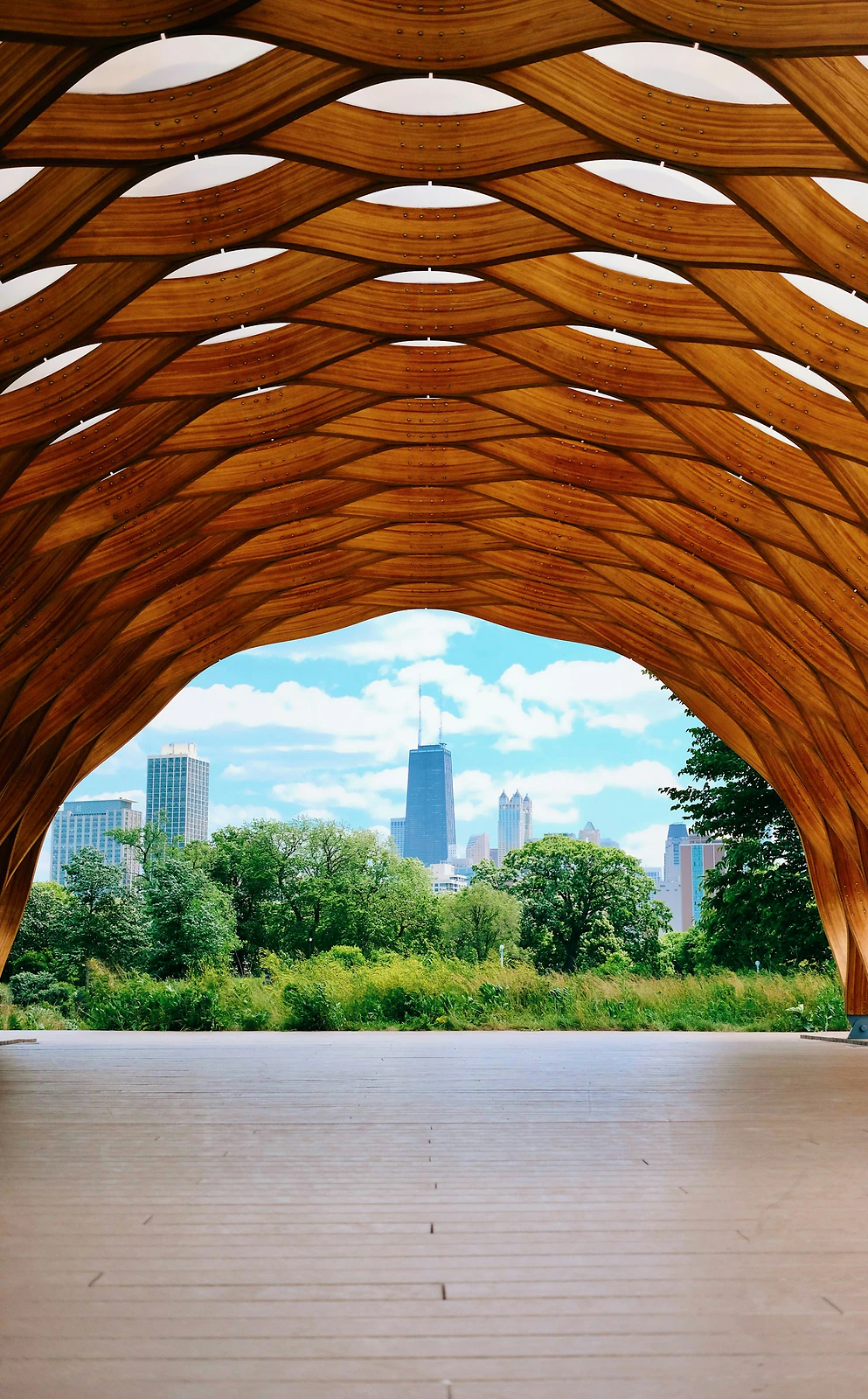
Lincoln Park Nature Boardwalk
The honeycomb-shaped pavilion by the South Pond, with the skyline rising behind the prairie grass, is the shot every Chicago engagement gallery seems to include, and for good reason. The Alfred Caldwell Lily Pool and the conservatory are a short walk away, and the zoo around it is free to enter.
Timing, parking, and permits, spot by spot.
Downtown parking is expensive and the lakefront lots fill early in summer, so the CTA is usually the smarter move. Here's the practical grid.
| Spot | Best light | Getting there | Watch for |
|---|---|---|---|
| Adler Planetarium peninsula | Sunrise for lit buildings, dusk for the glow | Museum Campus paid lots, or the 146 bus from downtown | Lakefront wind; weight your tripod |
| Riverwalk / DuSable Bridge | Blue hour, roughly 20-40 minutes after sunset | Any Loop L stop, short walk north | Patio crowds on warm evenings; go on a weeknight |
| Cloud Gate | First hour after the park opens | Millennium Park Garage sits under the park; Loop L stops nearby | Tour groups from mid-morning; commercial-use limits on the sculpture |
| North Avenue Beach | Summer sunrise | Beach lot fills by mid-morning in season; buses along the lakefront | Crowds after 9am from Memorial Day on |
| The L platforms | Late afternoon side light, or rainy nights | It's a train station; buy a fare | Stand clear of the platform edge; keep gear handheld |
| Lincoln Park boardwalk | Golden hour, either end of the day | Limited street parking; buses on Stockton Drive | Weekend zoo traffic; weekday mornings are calm |
Plan around the lake, not around the clock.
Everything about shooting Chicago follows from one piece of geography: the lake is east. The sun comes up over open water, which means sunrise is the city's signature light. The downtown towers face the lake, so first light hits them straight on, and from the Adler peninsula or North Avenue Beach you get a fully lit skyline with soft, warm color and almost nobody around. In June that means being in position by about 5:15am. Nobody said the good shot was comfortable.
Chicago is a sunrise city. The lake makes the choice for you.
Sunset runs the opposite way. The sun drops behind the buildings, so from the lakefront the skyline goes silhouette, then comes alive again at blue hour as the tower lights switch on against a darkening sky. That 20-to-40-minute window after sunset is the best time on the Riverwalk and the best time at the Adler view, and it's short, so be set up before the sun goes down. If you're planning a session around that light, our golden hour photography guide covers how to time it and what to do when the window is shorter than the shot list.
It's the mirror image of the best photo spots in Los Angeles, where the water faces west and sunset is the whole show. Here, the crowd math works the same way it does for the best photo spots in NYC: the famous places are packed from late morning through late afternoon, which happens to be exactly when the light is at its worst. Show up early and both problems solve each other.
Two Chicago-specific notes. First, the wind is not a joke on the lakefront; a light travel tripod will shake, so hang your bag on the hook or shoot handheld with a faster shutter. Second, winter is a feature, not a write-off. On the coldest mornings steam rises off the lake in front of the skyline, and a snowy Millennium Park at dawn beats a summer afternoon there every time. Sunset comes before 4:30pm in December, so an afternoon session buys you golden hour without the alarm clock.
Where to go when the postcards are done.
The icons cluster downtown. The character shots live in the neighborhoods, mostly a short L ride away.
- Pilsen murals. The stretch of 16th Street and the surrounding blocks carry some of the best large-scale mural work in the country, and new pieces appear constantly. Great color for portraits, and street parking is actually findable here.
- The 606. An elevated rail line turned walking trail through Wicker Park, Bucktown, and Logan Square. Street art, bridges, and neighborhood rooftops from above, with none of the downtown density.
- Chicago Theatre marquee. The State Street sign is the city's most photographed piece of neon. Shoot it at dusk when the sign is lit but the sky still has color, from the west side of State looking east.
- LaSalle Street canyon. Stand mid-block on LaSalle looking south and the Board of Trade building closes the frame like a movie set. Weekend mornings give you the street nearly empty.
- Buckingham Fountain. One of the largest fountains in the world, with the skyline behind it and evening light shows in season. It typically runs from spring into mid-fall; check the Park District schedule before building a shoot around it.
- Promontory Point. The Hyde Park limestone point looks north at the full skyline across the water, a calmer, more local alternative to the Museum Campus view and a beautiful spot for couples sessions on the rocks.
- Milton Lee Olive Park. Tucked just north of Navy Pier, quiet even in summer, with a clean skyline angle and tree-lined paths that don't show up on every feed.
What actually needs a permit and what doesn't.
The short, honest version: if you're shooting handheld in a public place, you don't need anyone's permission. That covers street photography in the Loop, the Riverwalk, the lakefront path, and the L (the CTA allows personal, non-commercial photography in public areas of its stations; keep it handheld and out of the way of riders). A couple hiring a photographer for an engagement session with one camera and maybe a tripod is, in practice, in the same category almost everywhere outdoors.
It changes with scale and with location. Parks are run by the Chicago Park District, which has its own permit process for commercial shoots, weddings, and anything with stands, lighting, or a crew, and popular garden spots enforce it more than an empty stretch of lakefront does. Millennium Park is managed separately from the rest of the parks and has its own rules for commercial photography. And Cloud Gate carries a quirk worth knowing: the sculpture itself is a copyrighted artwork, so selling or licensing images of it commercially has drawn permission requirements in the past. Your engagement photos, portfolio shots, and prints for the couple are not the problem; stock licensing and ad campaigns are. Fees and processes change, so if your setup is bigger than a camera and a tripod, confirm with the Park District or the Chicago Film Office before the day, and don't trust any specific permit price you read online, including here if this ages.
The spot is picked. Someone still has to shoot it.
A location list gets you to the sidewalk. It doesn't book the photographer, collect the deposit that guarantees a 5:15am sunrise slot actually happens, or deliver the photos afterward, and that's the part that usually turns into a week of messages. PicurPhoto handles that stretch: a photographer sets up a booking page with real availability, a couple picks the North Avenue Beach sunrise slot and pays the deposit online, and the finished photos come back in a password-protected gallery with print ordering built in. Payments run through the photographer's own Stripe account, and PicurPhoto never takes a cut of any of it; it's a flat subscription, with a free plan at $0 that covers 10 galleries and 1GB of storage, and paid tiers from $9/month when you outgrow that. For a shooter running sunrise minis on the lakefront all summer, that's the difference between a calendar that fills itself and a phone that never stops. The honest caveat: a busy studio will blow past the free plan's storage cap fast, and that's the point where the $9 Basic tier earns its keep.
Common access questions, answered straight.
Do I need a permit to take photos at the Bean?
For personal photos, engagement sessions, and portfolio work, no. Millennium Park has its own rules for commercial productions, and because Cloud Gate is a copyrighted artwork, commercial licensing of images of the sculpture can require permission. If you're shooting for an ad or stock, check first; if you're shooting for yourselves, just go early.
What's the best time of day to photograph the Chicago skyline?
Sunrise, from the Adler Planetarium peninsula or North Avenue Beach, because the buildings face east over the lake and catch first light head on. Second best is blue hour, the 20 to 40 minutes after sunset, when the tower lights come on. Midday gives you flat light and full crowds, the worst of both.
Where should I park for Millennium Park and the Riverwalk?
The Millennium Park Garage and the other Grant Park garages sit directly under the park, which is the easiest option if you're carrying gear, though downtown garage rates add up fast. For a sunrise shoot the L is usually simpler: several Loop stops put you within a ten-minute walk of both the Bean and the DuSable Bridge.
When does Buckingham Fountain run?
Seasonally, typically from spring into mid-October, with water displays through the day and lit shows in the evening. It's shut down and winterized the rest of the year, so confirm the Park District's current schedule before planning a shoot around it.
Can we do an engagement shoot on the Riverwalk?
Yes. It's public space, and a photographer with a handheld camera is a normal sight there. Go on a weekday and start early or aim for blue hour; warm evenings fill the path with patio crowds. If your photographer wants to bring lighting stands or a crew, that crosses into permit territory, so keep the setup light.
Found your spot? Book the shoot without the mess.
PicurPhoto gives photographers a booking page, deposits through their own Stripe, and client galleries in one link. Flat subscription, never a cut of your sales.