
The best photo spots in Los Angeles, and the hour that decides them.
Shoot Griffith Observatory at 7am on a clear weekday and you get the whole basin laid out clean behind you, warm light on the dome, maybe six other people around. Roll up to the same railing at 6pm on a Saturday and you're fighting a full parking lot, a wedding party, and two hundred phones for the identical frame. Los Angeles has an enormous number of genuinely great places to shoot, from the Hollywood Sign to the Venice Canals to a single antique-lamp grid outside a museum. What separates a good LA photo from a frustrating afternoon is almost never the spot. It's when you show up, where you park, and whether you needed a permit you didn't know about. Here are the locations worth your time, with honest notes on all three.
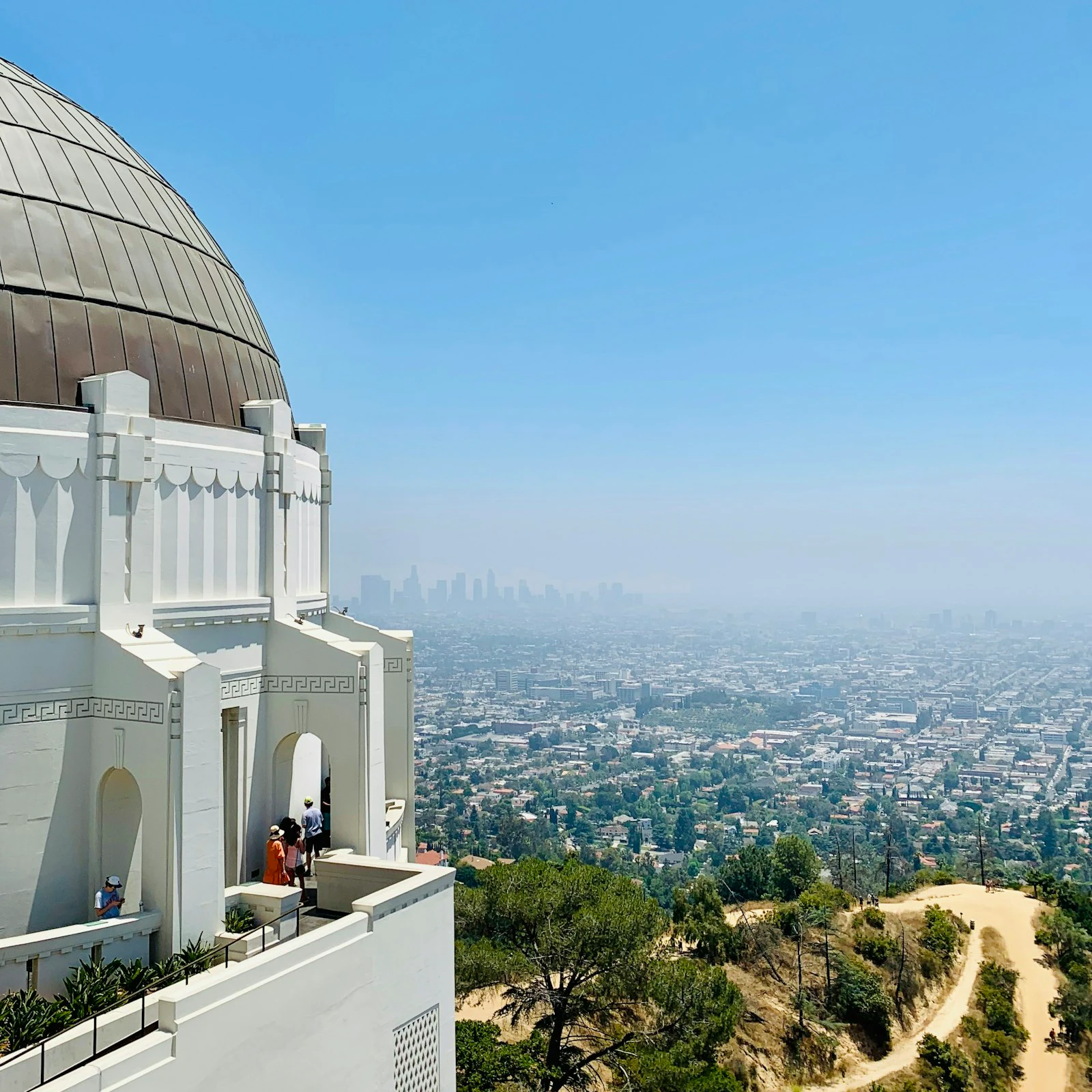
Griffith Observatory
The postcard: the Art Deco dome with the city skyline behind it, or the Hollywood Sign off to the west from the front lawn. Parking fills by mid-morning, so come at sunrise or on a weekday. Tripods are allowed on the exterior grounds only, not inside the building, and staged engagement or wedding setups aren't permitted inside or on certain terraces. Free to enter, and the light is best in the first hour after the gates open.
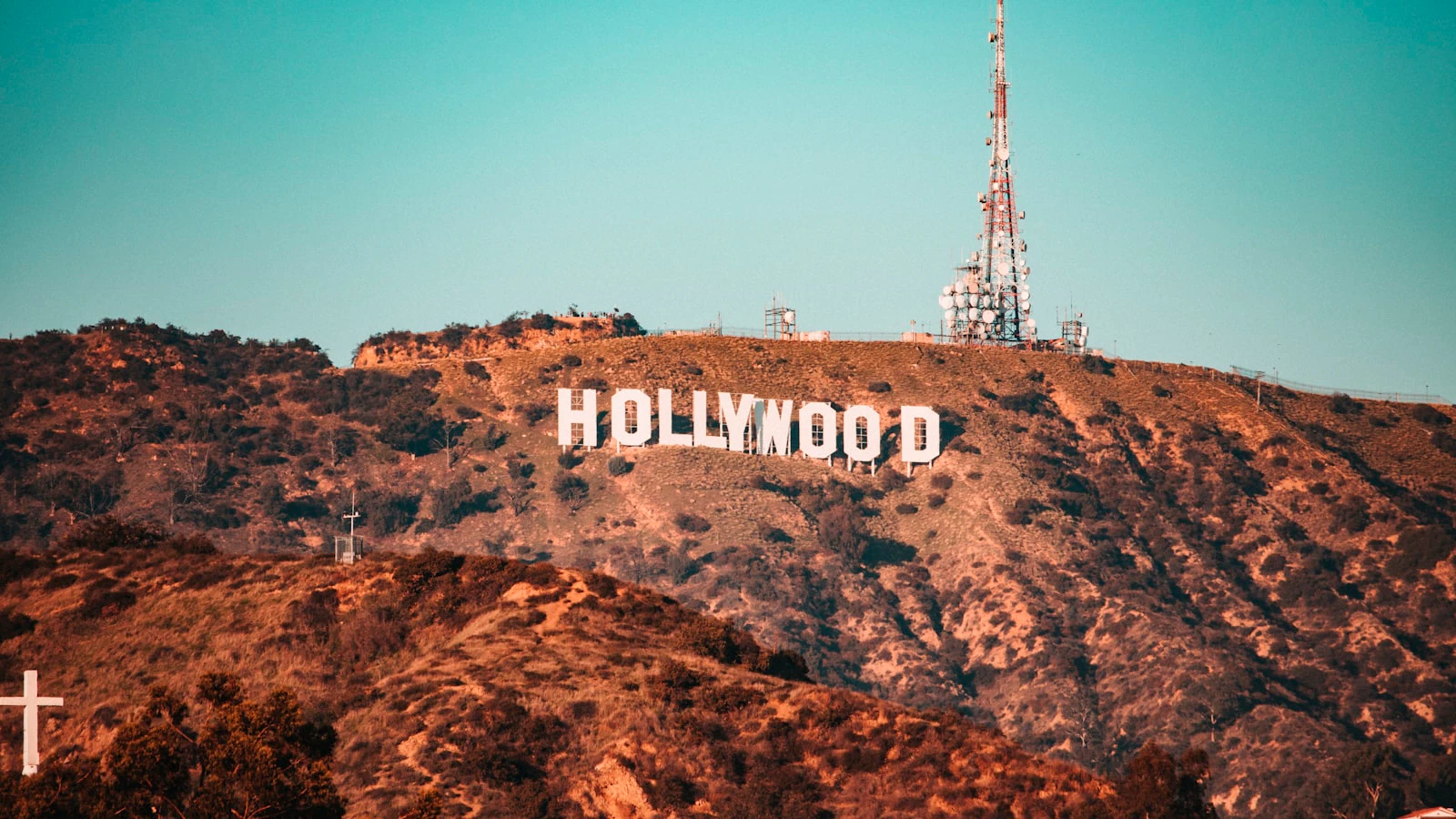
The Hollywood Sign
You can't stand at the letters, but you don't want to anyway. The cleanest, closest unobstructed view is from Lake Hollywood Park, which has easy street parking and a wide-open lawn. For an elevated angle with hikers in frame, the trails behind the sign in Griffith Park run long, plan on a couple of hours round trip. Neighborhood streets around the park have tight parking rules and locals who've had enough, so read the signs.
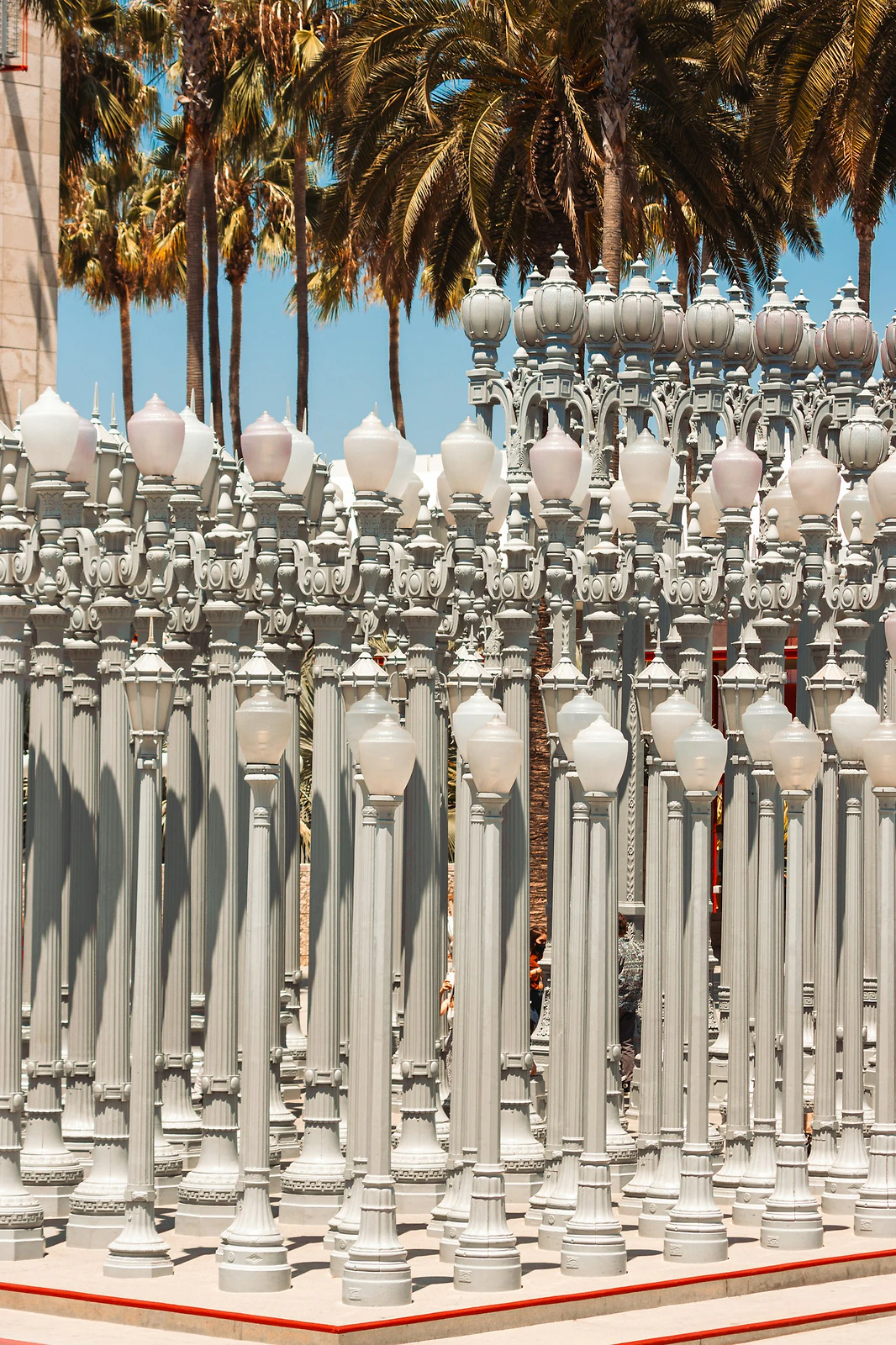
Urban Light at LACMA
The grid of 202 restored antique street lamps on Wilshire is free to walk through, day or night, without a museum ticket. It photographs beautifully at blue hour, right after sunset, when the lamps are lit and the sky still holds color. It's also one of the most shot spots in the city, so at peak times you're waiting your turn for a clear frame. Metered street parking nearby, or the paid museum lot.
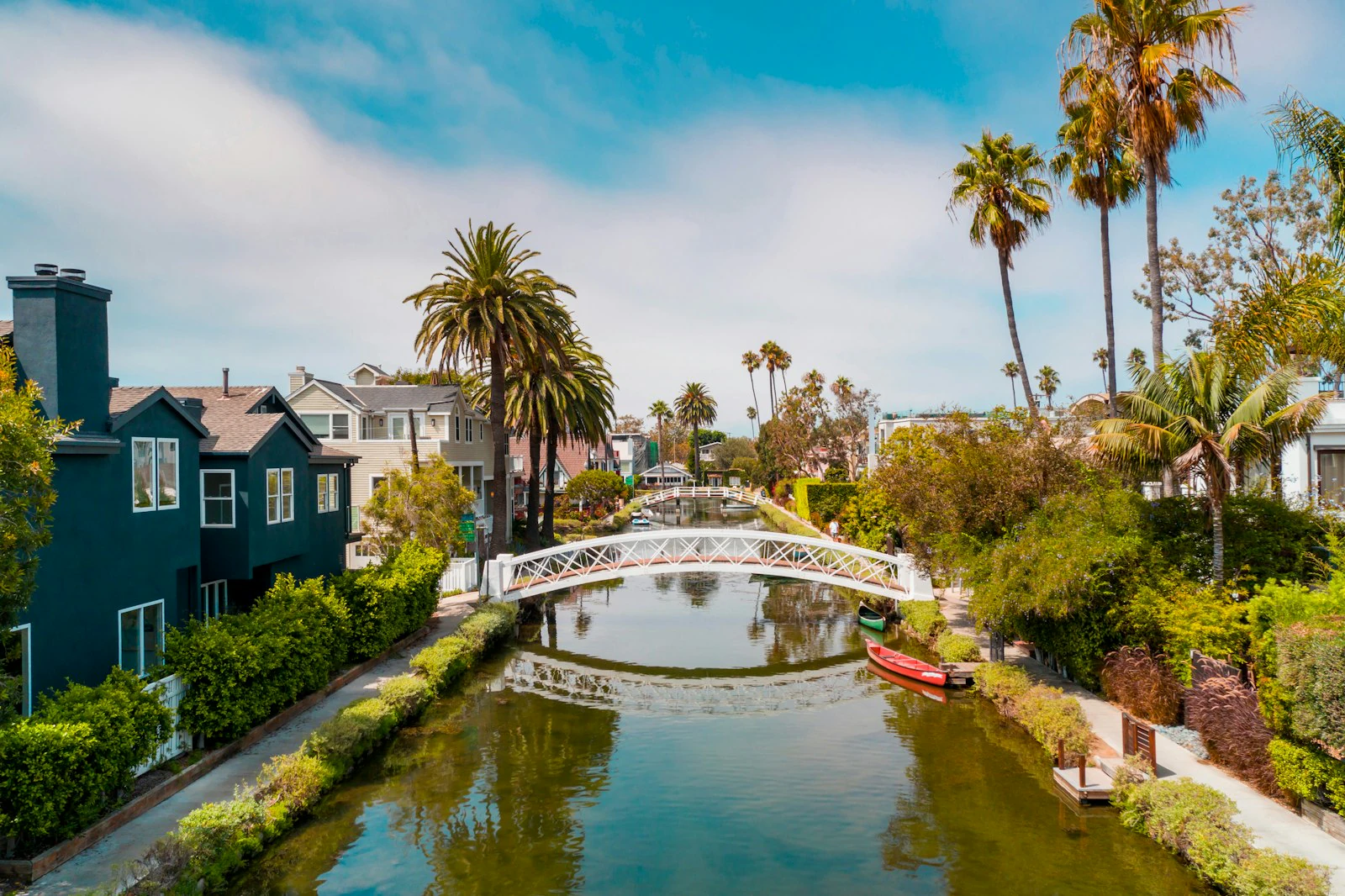
The Venice Canals
A quiet grid of man-made canals built in 1905, lined with footbridges, palm trees, and eclectic homes. It's residential, so it stays calmer than the boardwalk a few blocks west. Early morning gives you glassy water and reflections before the day heats up. Park on Venice or Washington and walk in; there's no lot. Keep it low-key, people live here, and a tripod blocking a private bridge wears out its welcome fast.
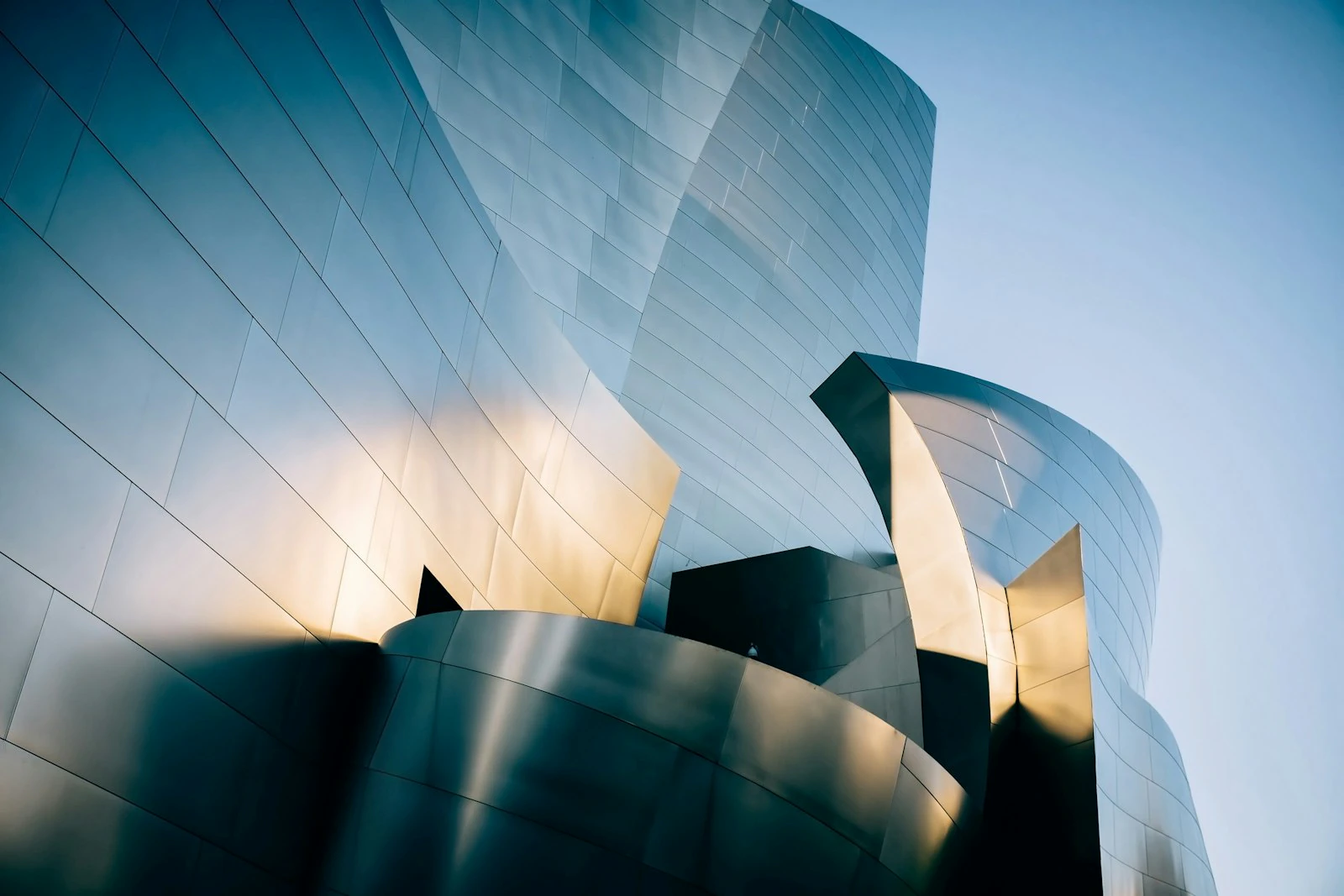
Walt Disney Concert Hall
Frank Gehry's stainless-steel curves downtown are a playground for shape and reflection. The exterior and the courtyard are free to access. Overcast days actually work in your favor here, harsh midday sun blows out the metal and gets punishingly bright to stand next to. Paid garages nearby. The Broad museum next door and the Grand Avenue steps give you a whole block of downtown frames in one stop.
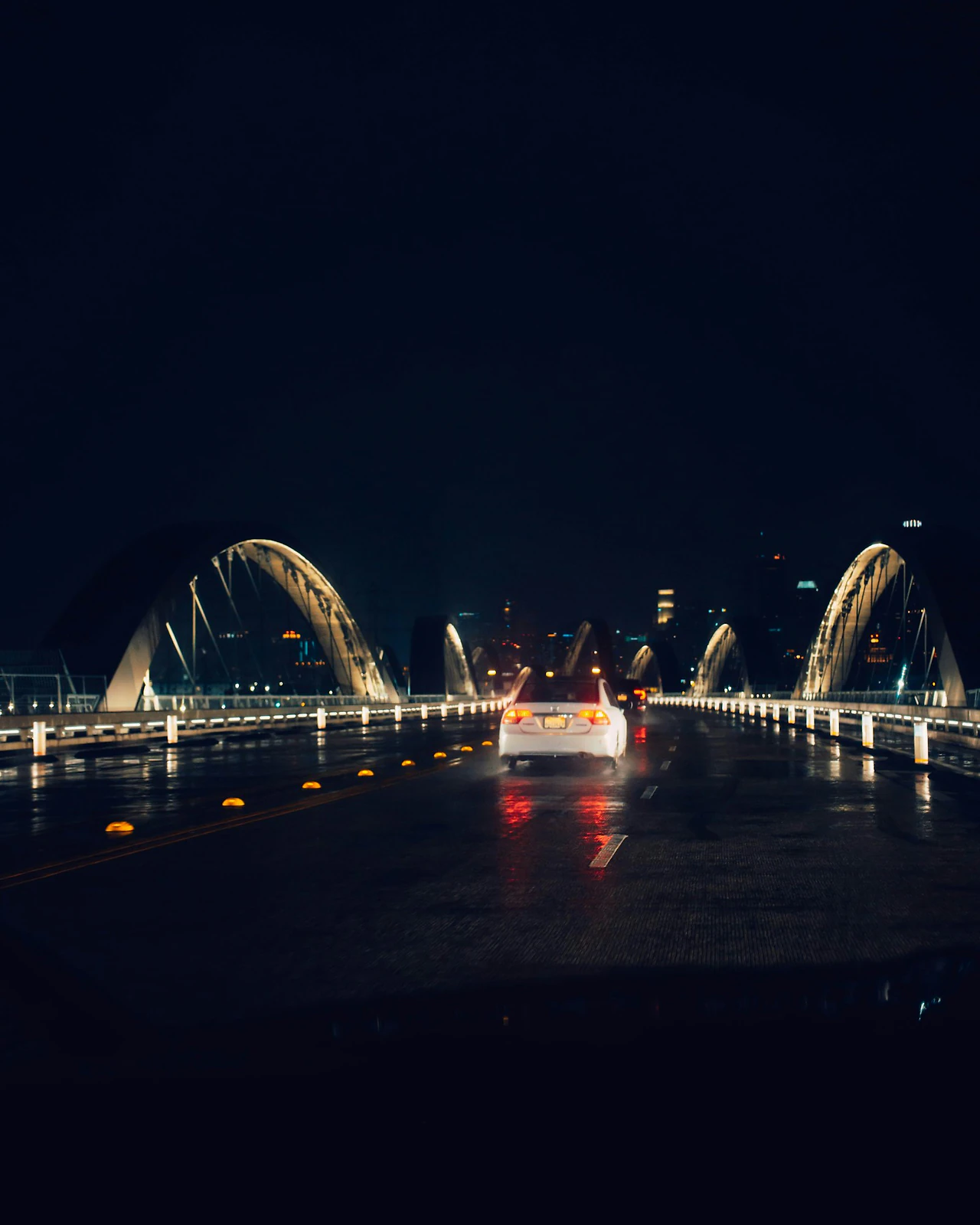
The 6th Street Viaduct
The newest icon on this list. Opened in 2022, its series of arches, the "Ribbon of Light," connects the Arts District to Boyle Heights and looks best at sunrise, sunset, or after dark when the arches glow. Free street parking on the Arts District side, and pedestrian walkways run the length. It draws car meets and crowds on weekend nights, so a weekday sunrise gets you the clean version.
Golden hour is real, and the marine layer is realer.
The single biggest upgrade to any LA photo is shooting inside the golden hour, the roughly sixty minutes after sunrise and before sunset when the light is low, warm, and soft. That part every guide gets right. The part they skip is the fog.
Los Angeles sits under a marine layer for a good chunk of late spring and early summer, the pattern locals call May Gray and June Gloom. On those mornings the coast and the low basin can be socked in with flat gray cloud until noon, which quietly kills the golden sunrise you drove out for at the beach. It's not a rumor and it's not every day, but if you're planning a coastal sunrise between roughly May and July, check the marine layer forecast the night before, not just the sunrise time. Inland and up high, Griffith, the hills, downtown rooftops, the marine layer often burns off sooner or never reaches you at all, so those make better foggy-morning backups.
Sunset runs the opposite way. The beaches, Santa Monica Pier, El Matador in Malibu, Venice, are the places to be as the sun drops into the Pacific, and El Matador's sea stacks and caves at low tide are worth timing a tide chart around. Blue hour, the twenty or so minutes after the sun is gone, is when city lights and installations like Urban Light or the 6th Street arches come alive against a sky that's still blue instead of black. Most people pack up too early and miss it.
Almost every crowded LA photo spot has a quiet version. It's just at 6:45 in the morning.
Parking, permits, and the stuff that ends a shoot early.
None of this is meant to scare you off. It's the handful of practical things that decide whether you get the shot or get moved along, sorted so you can plan around them.
- Personal photos almost never need a permit; paid ones often do. In the City of Los Angeles, shooting for your own personal use generally doesn't require a permit. The line is commercial intent: a working photographer shooting a paid session on public land, or any shoot that could make money, typically needs a City film permit coordinated through FilmLA. Rules and fees vary by location and change, so if money's changing hands, confirm the current requirement for that exact spot before you book it.
- Griffith Observatory has specific gear rules. A camera and a discreet tripod are fine on the exterior grounds, but tripods aren't allowed inside, and extra lighting or reflector boards aren't permitted. Staged engagement or wedding photos aren't allowed inside the building or on certain terraces. Personal snapshots are welcome; a full posed session may cross into permit territory.
- Beaches and parks charge, and some restrict shoots. Many state beaches like El Matador run a small parking fee, often in the single-digit dollars, and county beaches and parks have their own film-and-photo permit rules for anything organized. Getty Center and Getty Villa are free to enter but charge for parking. Budget a few dollars for lots almost everywhere, and carry small bills.
- Come early for the popular ones. Griffith, Urban Light, the Venice Canals, and the 6th Street Viaduct are all busiest at sunset and on weekends. Sunrise gets you thinner crowds, open parking, and often better light anyway. It's the cheapest upgrade available to any of these locations.
- Respect the residential spots. The Venice Canals, the palm-lined streets of Beverly Hills, the Micheltorena heart stairs in Silver Lake, people live at all of them. Keep tripods off private steps and bridges, keep the noise down early, and you'll be welcome to come back.
Neighborhoods that reward wandering with a camera.
If you want frames the whole internet doesn't already have, skip straight to the neighborhoods. The Downtown Arts District is block after block of large-scale murals and industrial brick, best in soft morning light before delivery traffic picks up. Nearby, The Last Bookstore in the old bank building gives you the famous tunnel of stacked books and a vaulted upstairs; personal photos on the main floor are generally fine, but anything staged or professional needs their say-so in advance, so ask at the desk.
Chinatown's Central Plaza delivers neon gates, red lanterns, and pagoda rooftops that pop hardest at dusk when the signs light up. Rodeo Drive and the palm-lined streets of Beverly Hills are all clean lines and symmetry, though the busiest palm intersections have real traffic, so watch the road and don't stand in it for the shot. Out on the coast, Malibu's piers and the bluffs along the Pacific Coast Highway string together enough pullouts and beaches for a whole sunset drive. The point of LA is that you can build a full day around one part of town instead of racing across a county that takes two hours to cross in traffic.
Then you actually have to book the photographer.
Knowing where to shoot is the easy half. If you're a couple or a family who found the perfect backdrop, the next step is hiring someone good and paying them without the whole thing turning into a three-day email chain.
This is the part that usually gets clunky. You find a photographer, then it's a back-and-forth about dates, a Venmo request for the deposit, a separate link for the balance, and eventually a zip file or a gallery buried in your inbox. That's where a tool like PicurPhoto fits. It's a booking-and-galleries platform built for photographers, so the good ones use it to hand you one link: you pick an open time from their real calendar, pay the deposit through their own Stripe account (the money goes straight to them, not through a middleman), and get your finished photos back in a password-protected gallery you can download from or order prints out of. For the photographer, it's booking, payments, and delivery under one roof instead of three. There's a genuinely free tier to start on, and because pricing is a flat subscription, PicurPhoto never takes a cut of your bookings on any plan. The free tier covers 10 galleries with a bit of storage, and paid plans from $9 a month lift those limits, with a custom domain and white-label branding arriving on the $19 Pro tier. It won't pick your golden-hour slot for you, but it takes the friction out of the part after the spot's chosen. Worth knowing exists whether you're the one shooting or the one getting shot.
Where is the best place to take pictures in LA?
There's no single winner, it depends on the look you want. For the classic skyline-and-dome shot, Griffith Observatory at sunrise. For an iconic installation, Urban Light at LACMA at blue hour. For a quiet, characterful backdrop, the Venice Canals early in the morning. For something newer, the 6th Street Viaduct. Match the spot to the light you'll actually have, and go early to beat the crowds at all of them.
What is the most photographed place in Los Angeles?
The Hollywood Sign and Griffith Observatory trade the title, and they're often in the same frame. The most popular vantage for a clean, close shot of the sign is Lake Hollywood Park. Urban Light at LACMA is probably the most photographed single art installation in the city.
Do you need a permit for photography in Los Angeles?
For personal photos, generally no. The line is commercial use. A paid photo session on public land, or any shoot with the intent or potential to make money, typically requires a City film permit coordinated through FilmLA, and specific parks, beaches, and landmarks have their own rules on top of that. Griffith Observatory, for example, limits tripods to the exterior and bans staged wedding or engagement setups indoors. Rules and fees change, so if you're shooting professionally, check the requirement for that exact location before the shoot.
What is the best time of day for photos in LA?
Golden hour, the hour after sunrise and the hour before sunset, for soft warm light. Sunrise doubles as your crowd-and-parking hack at busy spots. Blue hour, just after sunset, is best for lit installations and city skylines. One LA-specific catch: a marine layer often fogs the coast and low basin on late-spring and early-summer mornings, so check the fog forecast before planning a beach sunrise.
Where can couples take engagement photos in Los Angeles?
Popular picks are the beaches and bluffs along the Pacific Coast Highway at sunset, the Venice Canals for something intimate, the Arts District murals for color, and the hills around Griffith for the skyline. Keep in mind that many of these treat a posed, professional session differently from casual snapshots, so a hired photographer may need a permit for public land. Once you've settled on the backdrop, sort the booking and payment up front so the shoot day is just the shoot.
Pick the spot. Then make the rest easy.
Los Angeles gives you the light and the backdrops. If you're a photographer who'd rather spend the day shooting than chasing deposits, set up a booking page and see if it fits.