
The shot you're picturing is mostly a question of timing.
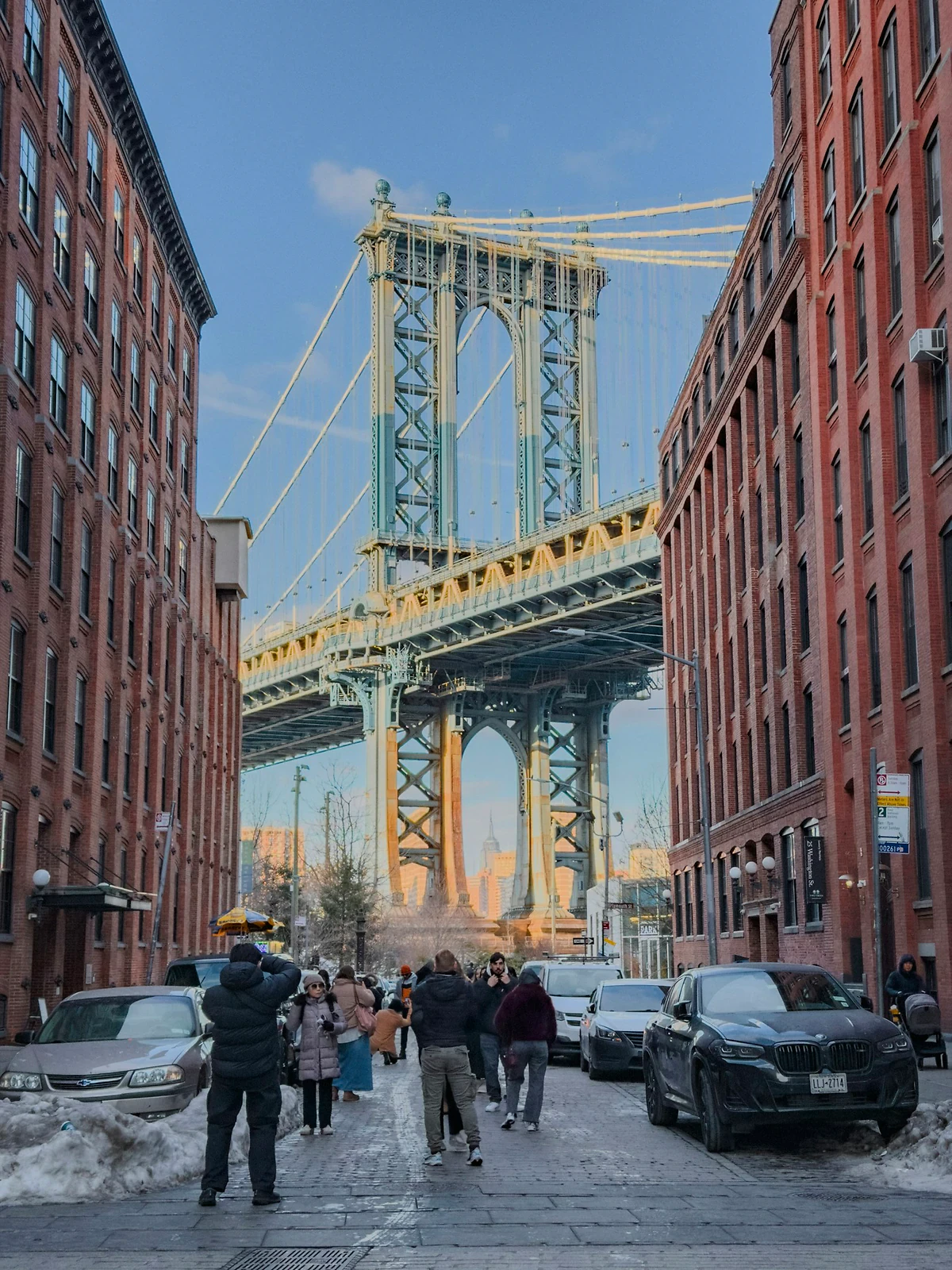
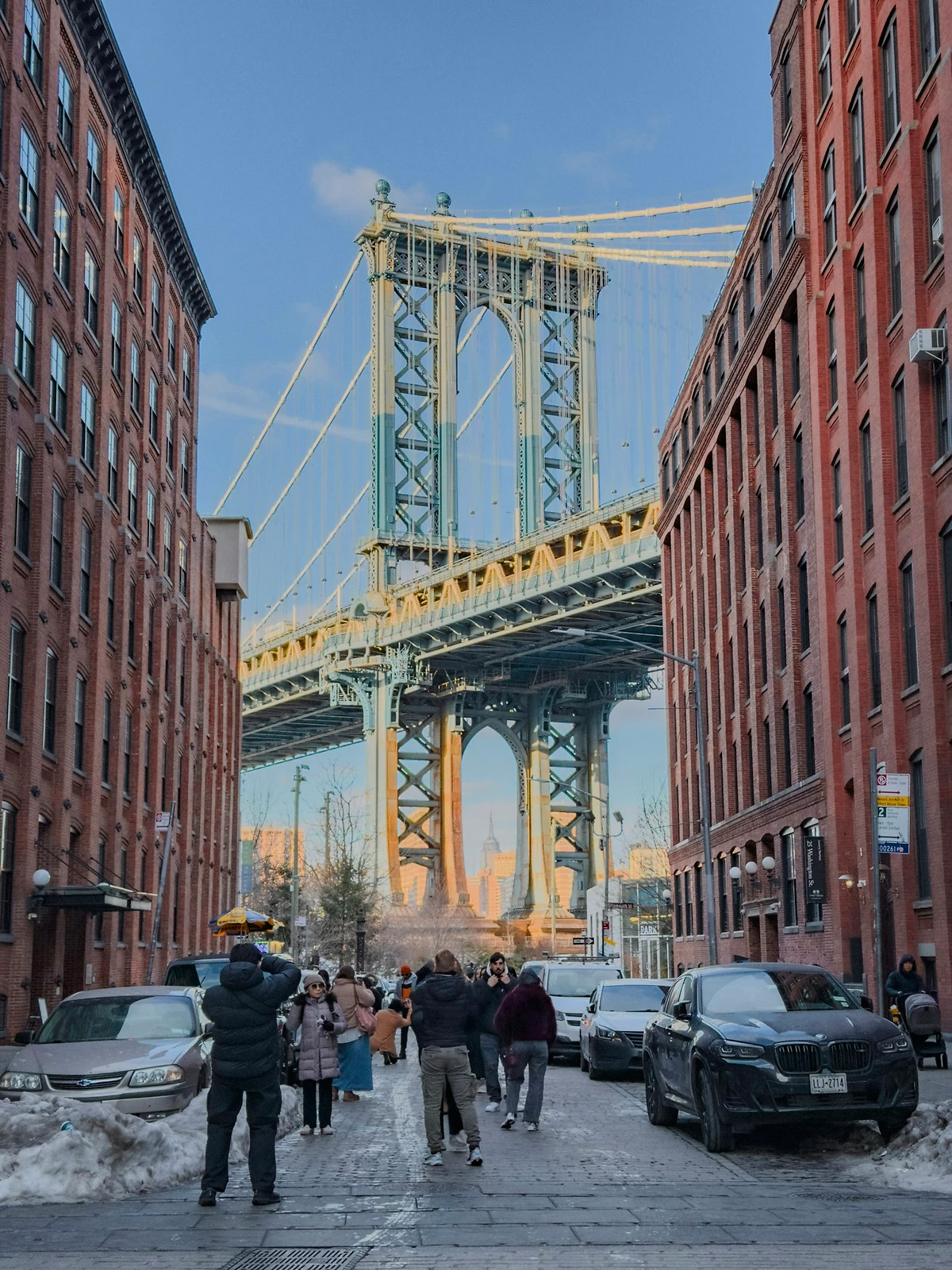
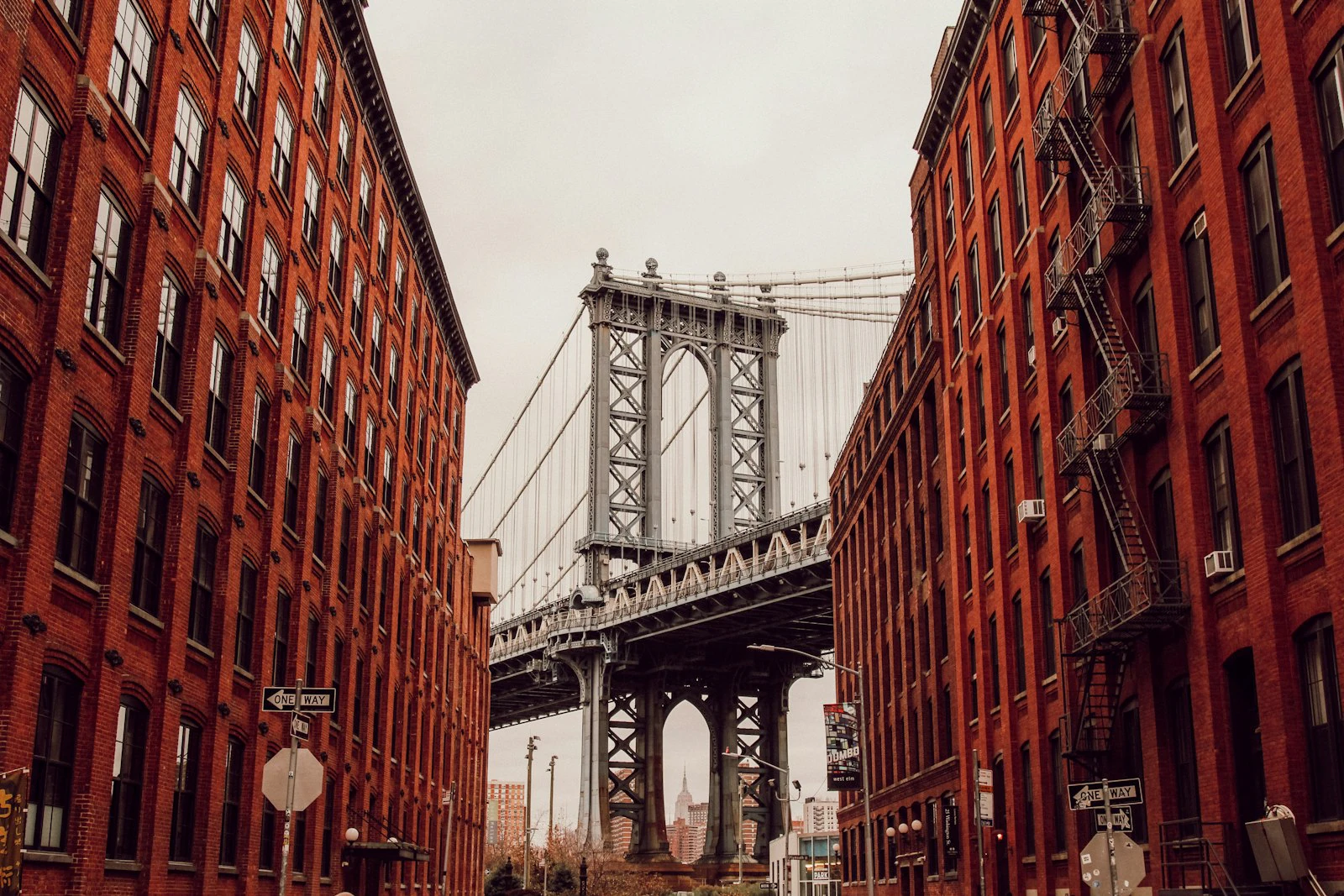
If you want the postcard version of New York, three spots do most of the work: Washington Street in DUMBO for the Manhattan Bridge framed between two brick buildings, the Brooklyn Bridge itself at first light, and any high observation deck at sunset. Everything after that is variations on skyline, streets, and parks. But the spot matters less than when you show up. The same corner that's magic at 6:30am is a wall of tourists by noon, so this guide leads with the location and the hour together, because in this city one without the other gets you a mediocre photo of a great place.
Washington Street, DUMBO
The single most photographed frame in Brooklyn: the Manhattan Bridge slotting between two red brick buildings, with a sliver of the Empire State Building underneath it if you line up right. Corner of Washington and Water. Get there before 8am or you're photographing the backs of forty other people's phones. It's a working street with cars, so mind the road.
Brooklyn Bridge
Best shot at sunrise, and it isn't close. By mid-morning the pedestrian walkway is shoulder to shoulder. Come up from the Brooklyn side around dawn and you can get the gothic stone arches nearly empty. The bridge is a mile across, and the least crowded, most photogenic stretch tends to be the middle. Cyclists have their own lane now, so stay out of it.
An observation deck at sunset
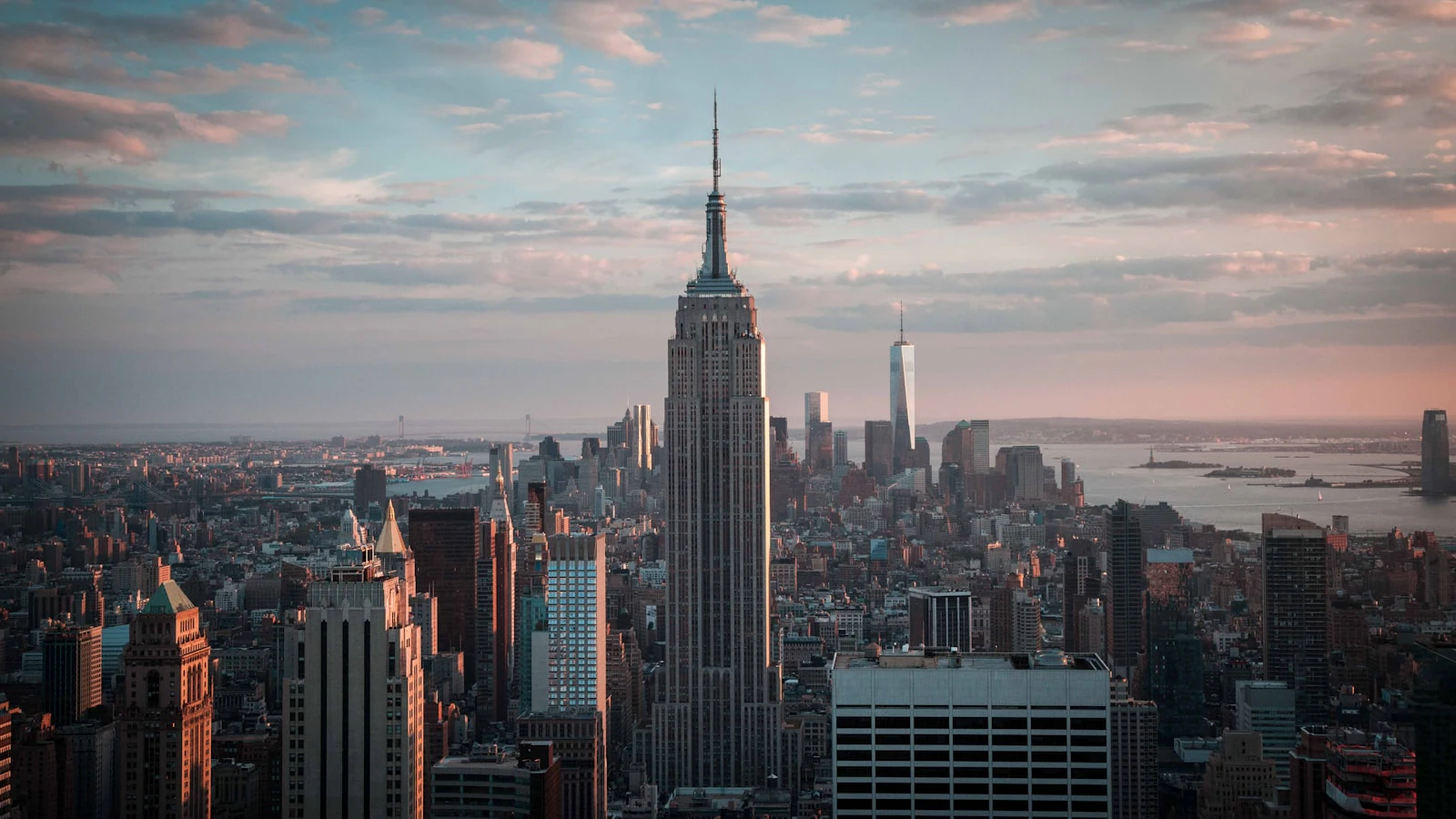
Top of the Rock, The Edge, Summit One Vanderbilt, or the Empire State Building. Each sells the same thing, the skyline from above, with different angles. Book the last slot before sunset and you get daylight, golden hour, and the lights coming on, all on one ticket. More on which deck below, because they photograph very differently.
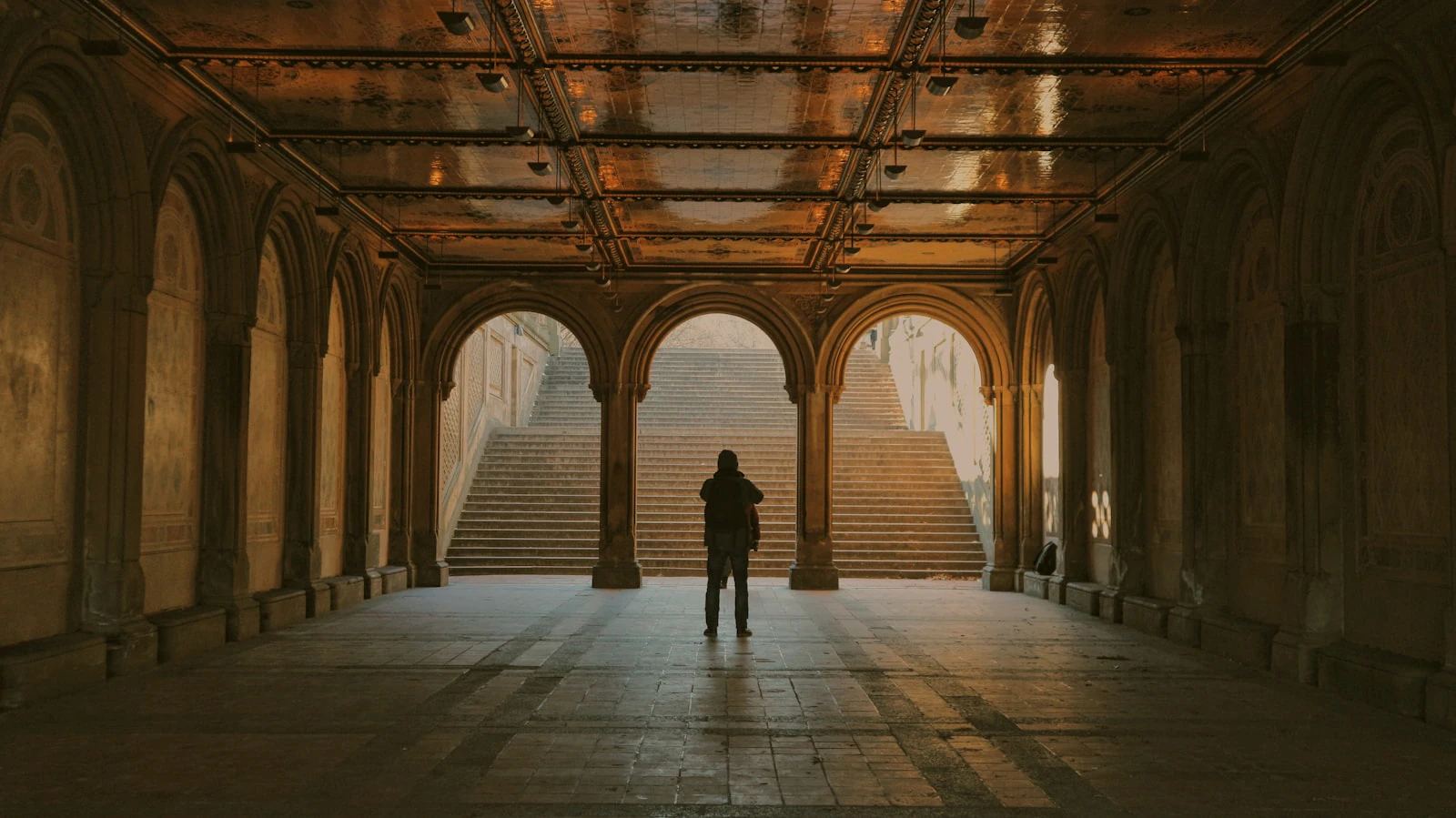
Bethesda Terrace, Central Park
The tiled arcade under the terrace is one of the prettiest interiors in the park, and it's covered, which makes it a reliable rainy-day option. The fountain and the lake sit right above it, and Bow Bridge is a short walk north. Central Park packs more usable backdrops into a small radius than anywhere else in the city.
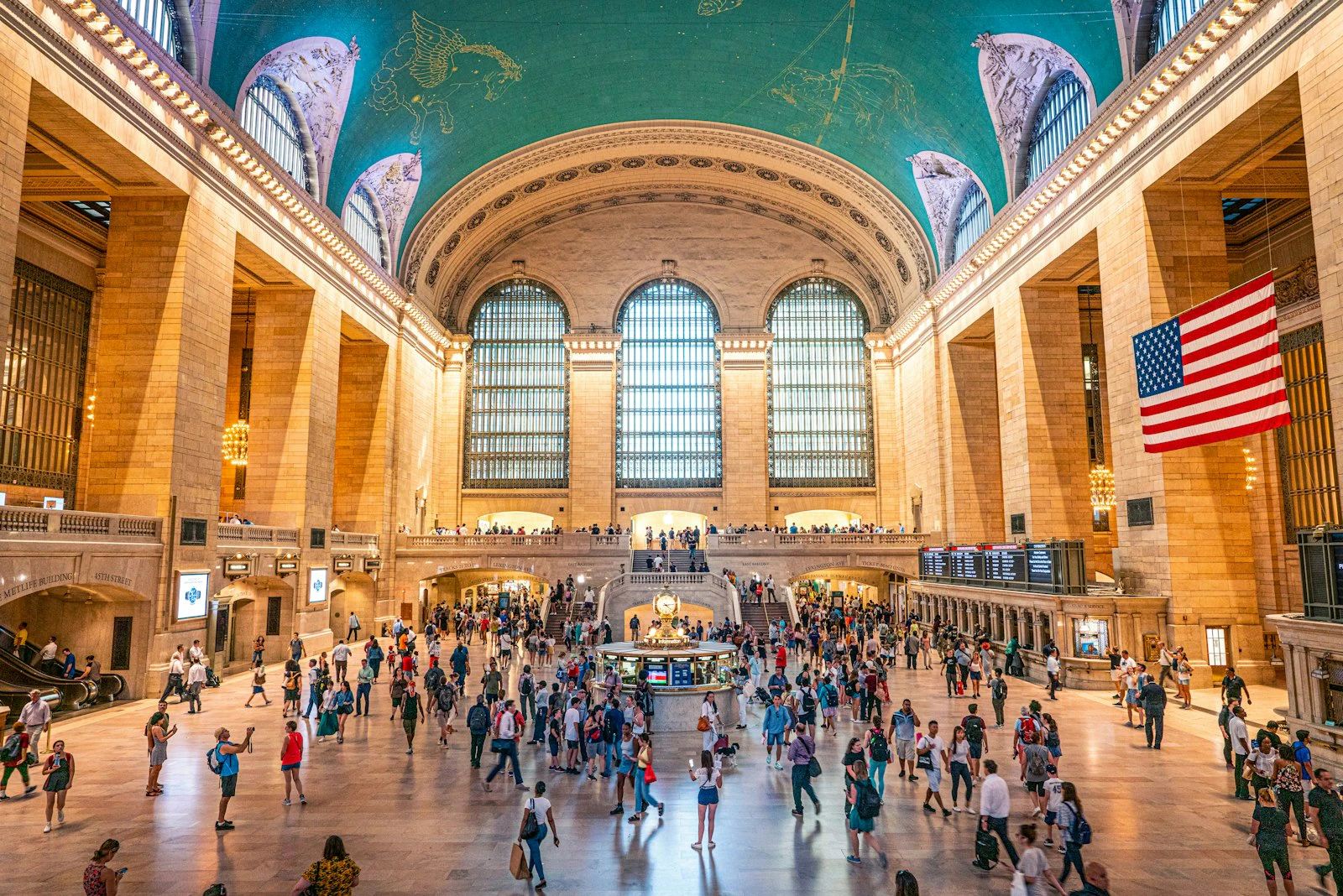
Grand Central Terminal
The main concourse from the west balcony, with the shafts of light coming through the tall windows if you catch a clear morning. It's a commuter station, so early morning and mid-morning on a weekday give you both the light and a bit of that classic rush-hour motion blur if you slow the shutter down. Handheld cameras are fine here.
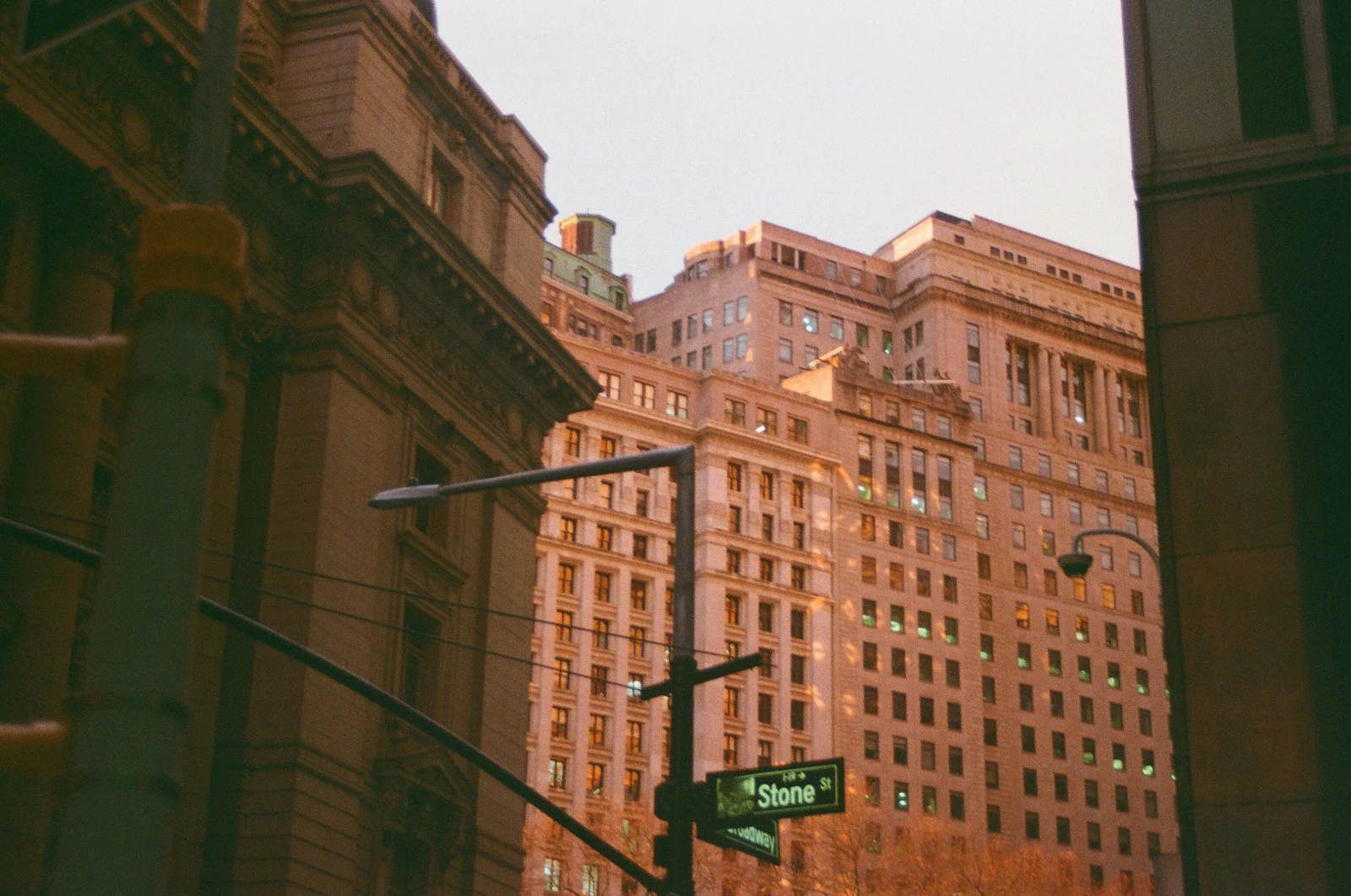
Stone Street and the old streets
Down in the Financial District, Stone Street is a narrow cobblestone lane lined with bars, and it reads as far older and more European than most of Manhattan. Pair it with the DUMBO cobblestones and the Flatiron Building for a street-and-architecture day that doesn't touch a single observation deck.
Golden hour and the crowd curve run on opposite clocks.
Two things are competing every time you plan a shoot here: the light and the people. The good light in New York is the hour after sunrise and the hour before sunset, same as anywhere, but the crowd load is what makes this city different. The iconic spots are busiest from roughly 10am to 5pm, which is exactly the flat, harsh, midday window you'd want to avoid anyway. That's the lucky part: shooting when the light is good also means shooting when the crowds are thin.
Sunrise is the underrated slot. Almost nobody is out at 6am, the light is soft and warm, and places that are impossible by lunchtime, the Brooklyn Bridge, DUMBO, the Bethesda arcade, are yours. Blue hour, the roughly twenty to forty minutes after the sun drops, is when the skyline turns deep blue and the building lights read strongest against it, which is why the sunset-slot observation deck ticket is worth the money: you catch daylight, golden hour, and blue hour without leaving.
- Check the sunrise and sunset times for your actual date. They swing by hours across the year. In midsummer sunrise can be before 5:30am; in winter the sun sets before 5pm. Plan the whole day backward from the good light.
- Weekday over weekend, early over late. A Tuesday at 7am at any famous spot is a different city from a Saturday at 1pm. If you only get a weekend, take the earliest hour you can stand.
- Overcast is not a write-off. A flat gray sky is a giant softbox. It's forgiving for portraits and street work even if it's dull for skylines. Interiors like Bethesda and Grand Central don't care about the weather at all.
- Rain has its own look. Wet cobblestones in DUMBO or the Financial District throw reflections and neon back at the camera. Bring a cloth for the lens and shoot anyway.
Pick the hour first and the spot second, because in this city the wrong hour ruins the right place.
Four skyline decks, and they don't photograph the same.
They all sell height, but the frame you get is different at each. Prices sit in a similar range and change often, so book ahead online and check the current rate rather than trusting a number here.
| Deck | What you get in frame | Best for |
|---|---|---|
| Top of the Rock | The Empire State Building dead center, with Central Park behind you | The classic postcard, because you're looking at the building everyone pictures |
| The Edge | An outdoor angled deck and a glass floor, high over the West Side and Hudson | Vertigo shots and the feeling of standing on air |
| Summit One Vanderbilt | Mirrored rooms that reflect the skyline and you, next to Grand Central | Reflection and installation photos, more experiential than a plain view |
| Empire State Building | The open-air 86th floor with the city in every direction | The most famous deck itself, and downtown or uptown views both ways |
If you can only do one and you want the shot most people mean by "New York skyline," Top of the Rock is the safe answer, because it puts the Empire State Building in your frame instead of putting you on top of it. If you want the photo to be about the experience of being up there, Summit or The Edge do more. All four get busy at the sunset slot, so booking the timed entry in advance isn't optional on a good-weather evening.
Where locals point you when the icons are mobbed.
Once you've got the obvious ones, the city rewards wandering. The Brooklyn Heights Promenade is a quiet strip of benches with a clean, wide view of Lower Manhattan across the water, and it's a calmer alternative to fighting the crowds actually on the bridge. Brooklyn Bridge Park below it is where to catch the sunset with the bridge and skyline together, especially from the piers. For skyline without the Brooklyn trip, the High Line gives you an elevated walk through the West Side with the city framed by old rail architecture and greenery.
In Manhattan, the Flatiron Building still photographs beautifully from the plaza to its south, scaffolding permitting. Washington Square Park and its arch work best off-season and early, before the park fills up. And the tangle of Little Italy, Nolita, and the West Village is full of colorful storefronts, fire escapes, and quiet cobblestone corners that don't show up on every feed, which is the whole point. If you're after the moody neon look, the subway platforms and the underside of the elevated tracks give you something no other city offers.
When you need one, and when you really don't.
This trips people up, so here's the honest version. For the vast majority of shoots, a couple, a family, a portrait session with a photographer and a handheld camera or a single tripod, you do not need a permit anywhere public in New York, including Central Park. NYC Parks explicitly allows handheld and tripod photography without a permit, and an engagement or couples session with no bulky gear is treated the same as any personal photography.
Where it changes is scale. Once you bring lighting rigs, reflectors on stands, crews, or props that take up space and block foot traffic, that reads as a production, and that can require a permit from NYC Parks or the Mayor's Office of Media and Entertainment. A wedding ceremony in Central Park has its own separate permit and reservation process through the Central Park Conservancy. Rules and any fees change, so if your setup is bigger than a camera and a tripod, confirm with the specific park or the city before the day rather than guessing. Never assume a permit price you read online is current.
You've got the spot. Now the awkward part.
Here's what the spot lists skip. If you're a couple or a family who found the perfect corner in DUMBO, you still have to find a photographer, agree on a price, pay a deposit, and get the actual photos back afterward, and that stretch is usually where a good plan goes clunky: a back-and-forth of texts, a Venmo request, a Dropbox link that expires. And if you're the photographer scouting these spots for clients, you're on the other side of the same mess, chasing deposits and sending galleries by hand.
That seam is exactly what PicurPhoto is built for. It's a booking, payments, and gallery tool for photographers: clients self-book a real time slot, pay a deposit up front through the photographer's own Stripe account, and get their edited photos back in a password-protected gallery they can download and order prints from. For a photographer, that means one link does the booking, the deposit, and the delivery instead of three separate tools. For a client, it means booking a shoot feels like booking anything else online. There's a genuine free tier with ten galleries and 1GB of storage, and because PicurPhoto runs on a flat subscription it never takes a cut of your bookings, so there's no commission or transaction fee on any plan. If you outgrow the free galleries, the $19 per month Pro plan adds unlimited galleries, more storage, a custom domain, and white-label branding that removes PicurPhoto's own branding, so you can see whether it fits before paying anything. It won't help you pick the spot, but it takes the friction out of everything after you have.
What is the most photographed spot in NYC?
Washington Street in DUMBO, where the Manhattan Bridge is framed between two brick buildings, is probably the single most photographed frame, alongside the Brooklyn Bridge itself. Both are best very early, before the crowds arrive around mid-morning.
Do you need a permit for a photoshoot in NYC?
Usually not. Handheld cameras and a single tripod are allowed without a permit in public spaces and in Central Park, and a personal or engagement session is treated as personal photography. You only need a permit once you bring lighting stands, reflectors, crews, or props that block foot traffic. Confirm with NYC Parks or the Mayor's Office of Media and Entertainment if your setup is larger than a camera and tripod.
What's the best time of day to take photos in NYC?
The hour after sunrise and the hour before sunset give you the softest, warmest light, and sunrise has the bonus of almost no crowds at the famous spots. For skyline shots, the twenty to forty minutes of blue hour just after sunset is when the building lights read strongest against the sky. Check the actual sunrise and sunset times for your date, since they shift by hours across the year.
Where do you get the best skyline photos in New York?
From above, an observation deck at sunset: Top of the Rock puts the Empire State Building in your frame, while The Edge and Summit One Vanderbilt lean more experiential. From ground level, Brooklyn Bridge Park, the Brooklyn Heights Promenade, and the piers along the East River give you the classic Manhattan skyline across the water.
Is it free to take photos in Central Park?
Yes. There's no charge and no permit needed for personal photography in Central Park with a handheld camera or a tripod. Wedding ceremonies and large productions with heavy equipment are the exceptions and go through a separate permit process with the Central Park Conservancy or the city.
Sort the shoot, then just show up for the light.
Whether you're booking a photographer or you are one, a single link for the booking, the deposit, and the gallery beats a pile of apps. See if it fits before you pay anything.