
The murals get the line. The water gets the shot.
By 9am on a Saturday there's already a queue at the "i love you so much" wall on South Congress, and it moves about as fast as airport security. Do the murals, they're worth it, but Austin's best photos come off its water and its hills: the downtown skyline doubled in Lady Bird Lake at dawn, Mount Bonnell in the last hour of light, the Pennybacker Bridge from the cliff above Loop 360, and, for roughly three weeks each spring, entire fields of bluebonnets. Every spot below comes with its hour, its parking reality, and its permit status, because in this city the timing matters more than the address.
Six spots that carry a whole shoot
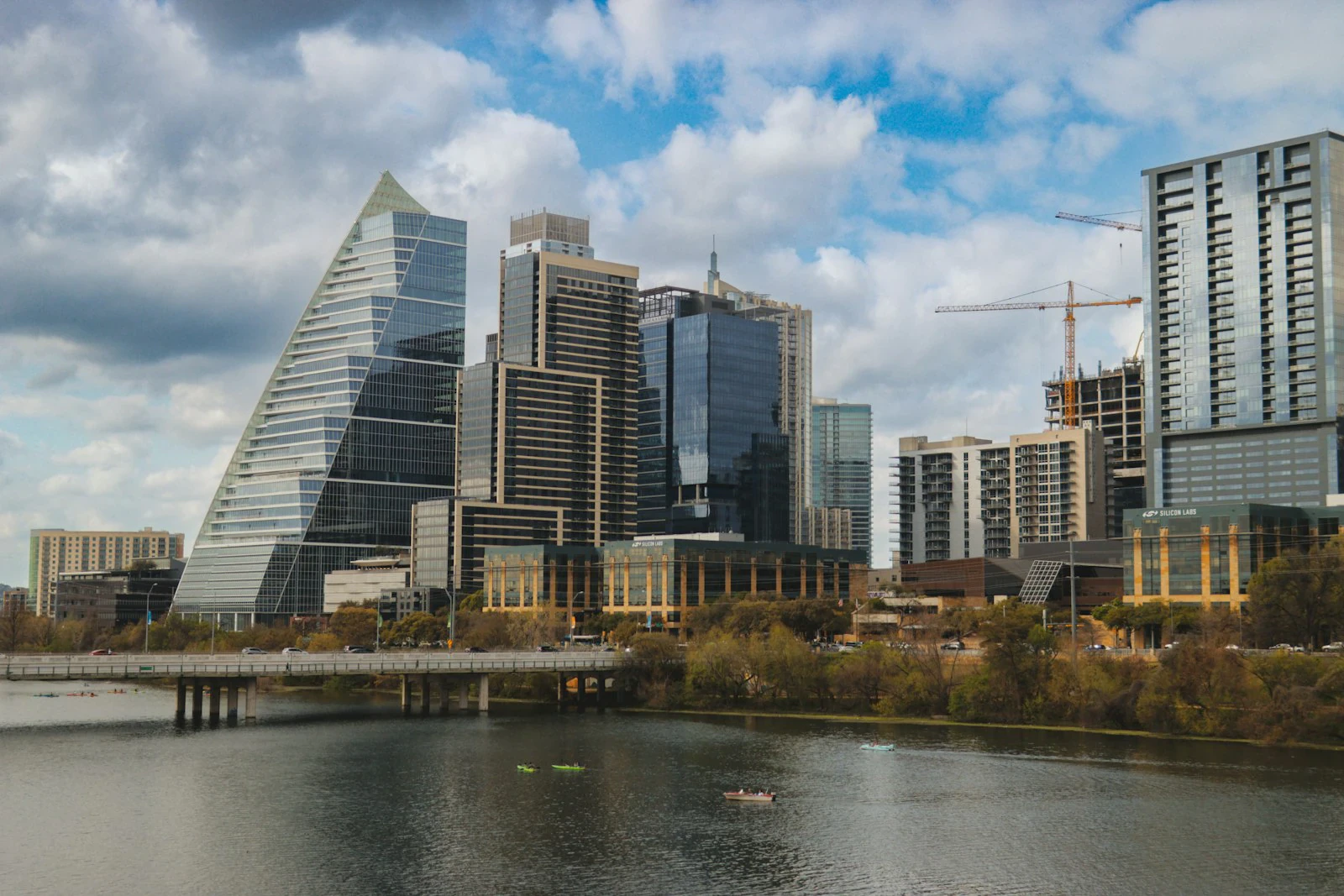
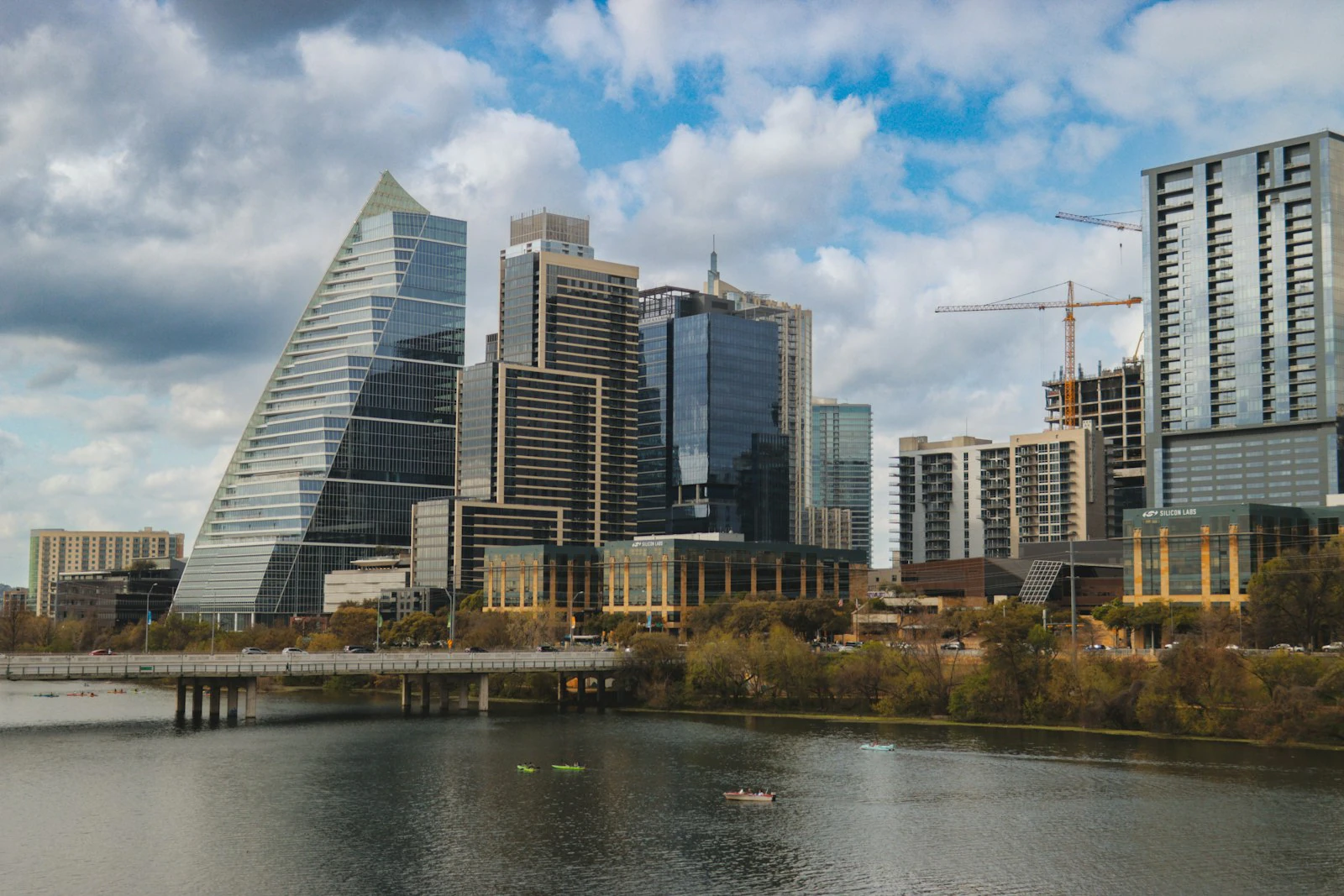
Lady Bird Lake boardwalk
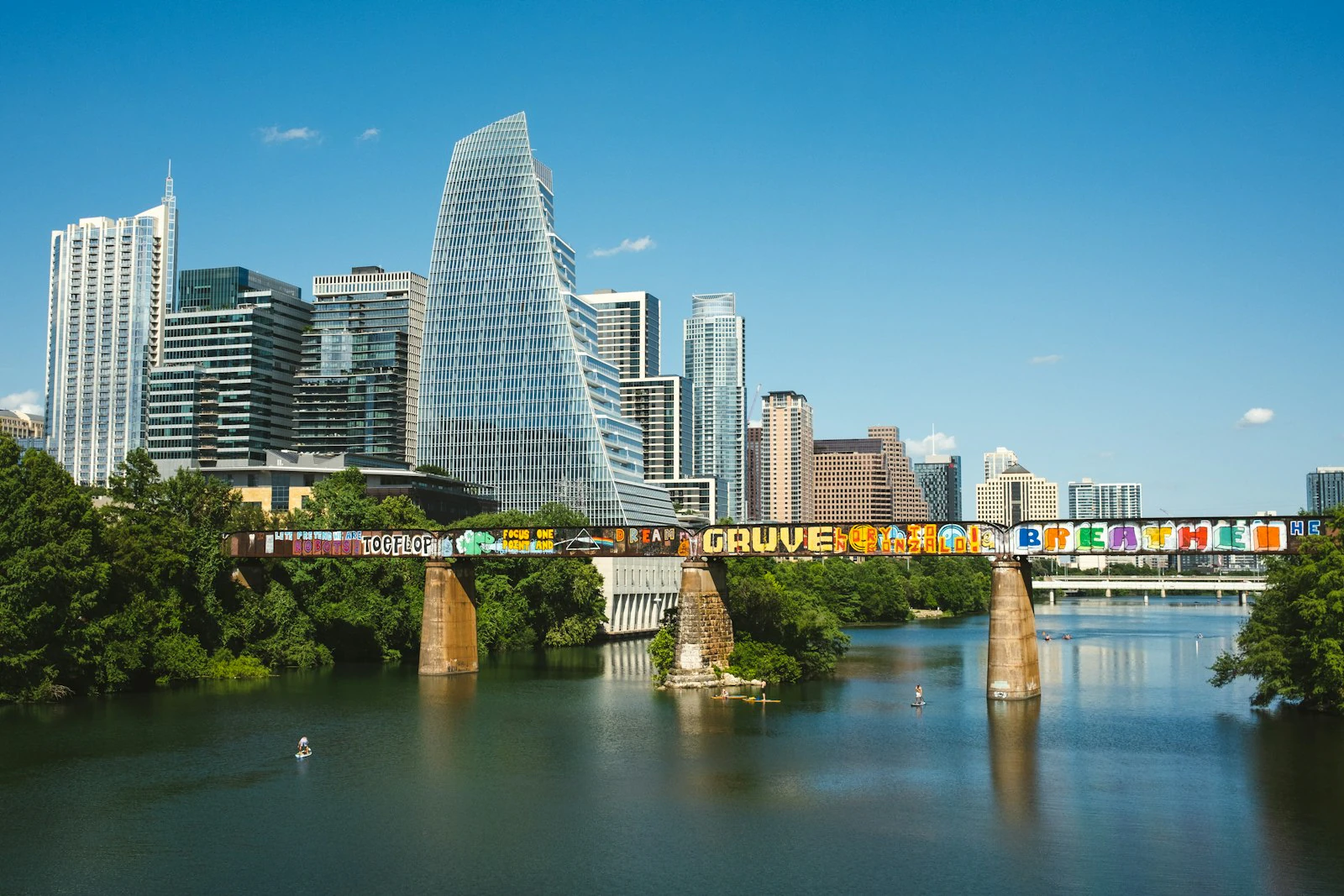
The definitive Austin skyline shot: downtown stacked across the water from the boardwalk section of the Butler Hike-and-Bike Trail. Sunrise lights the towers head on and the lake usually sits glassy enough for a clean reflection. Free, flat, and busy with runners by 7:30am, so come at first light.
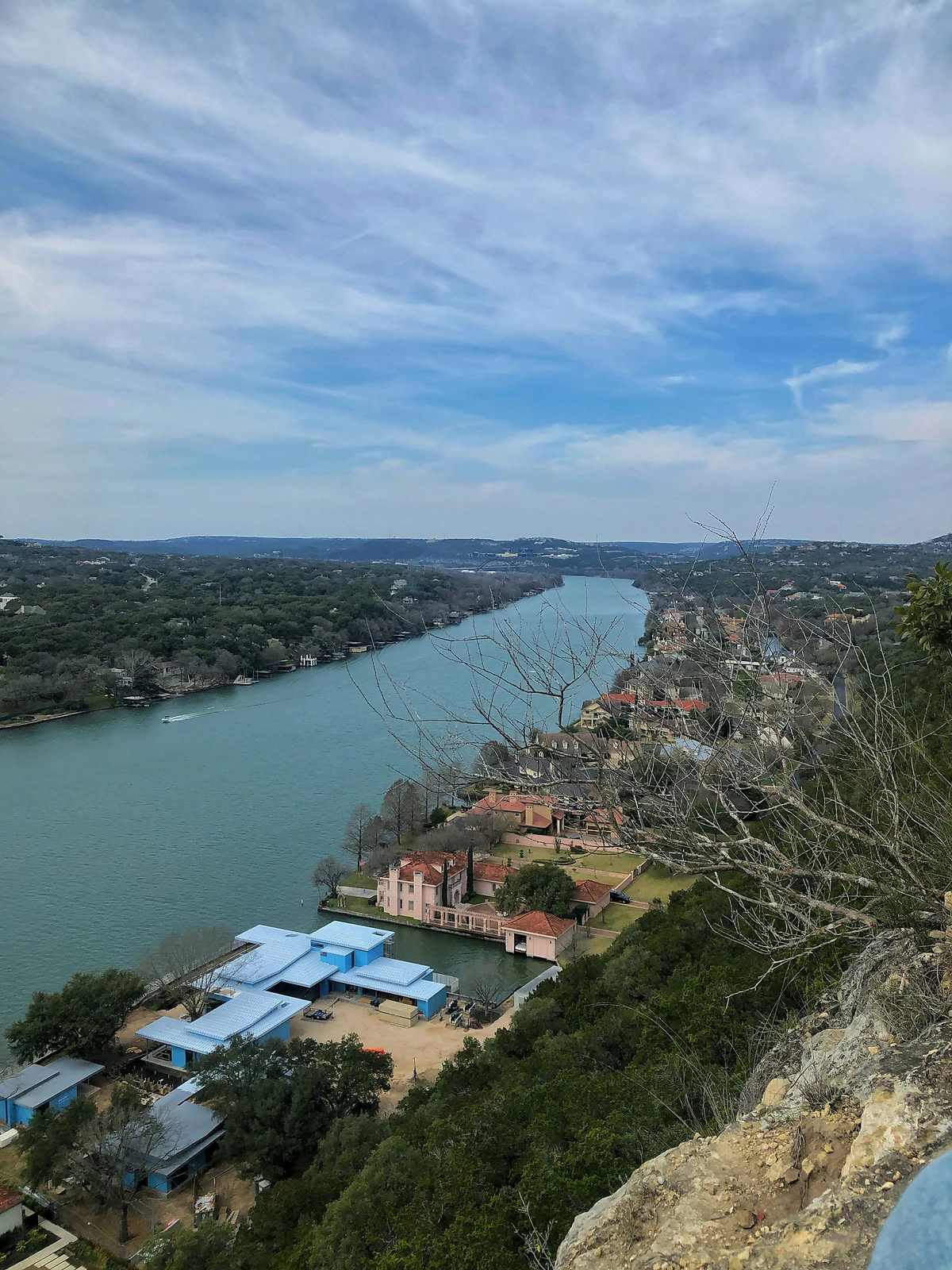
Mount Bonnell
A hundred-odd stone steps up to about 775 feet, then Lake Austin below you and Hill Country ridges stacking to the horizon. Sunset is the show, and the small free lot on Mount Bonnell Road fills 45 minutes before it. It's a fixture on lists of the best engagement photo locations for a reason: the rail at golden hour does half the work.
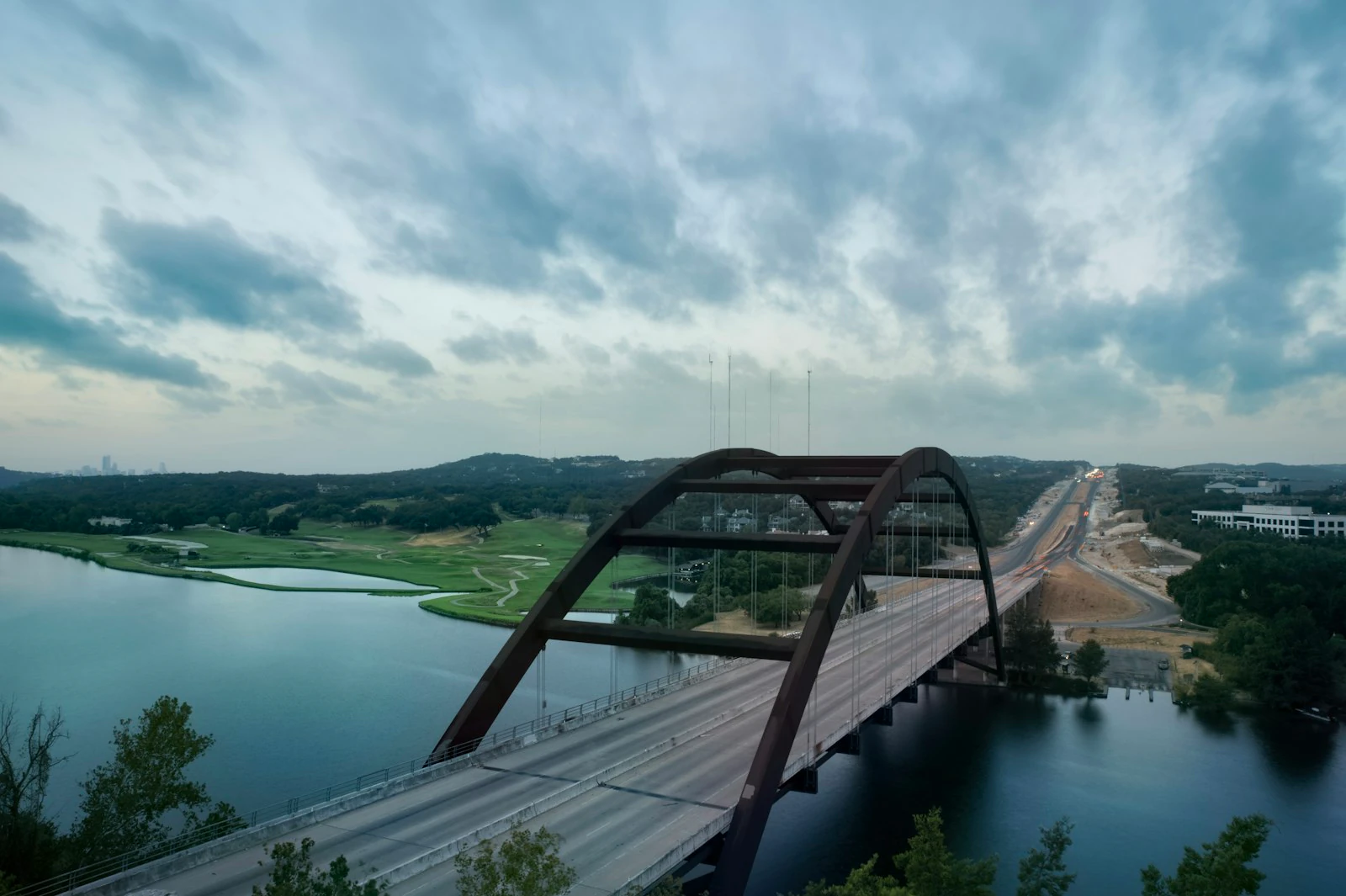
Pennybacker Bridge overlook
The rust-red arch of the 360 Bridge over Lake Austin, shot from the cliff on the north side. It's a short, steep scramble from a gravel pullout off Loop 360, so wear real shoes and skip it after rain. Face west for sunset; the bridge goes copper about 20 minutes before the sun drops.
Congress Avenue Bridge at dusk
Roughly 1.5 million Mexican free-tailed bats, the largest urban colony in North America, pour out from under the bridge at last light from about March through early fall. August flights are the biggest, once the pups join. Shoot from the bridge rail or the lawn on the south bank, and bring a fast lens because the light is nearly gone when they fly.
Zilker Park great lawn
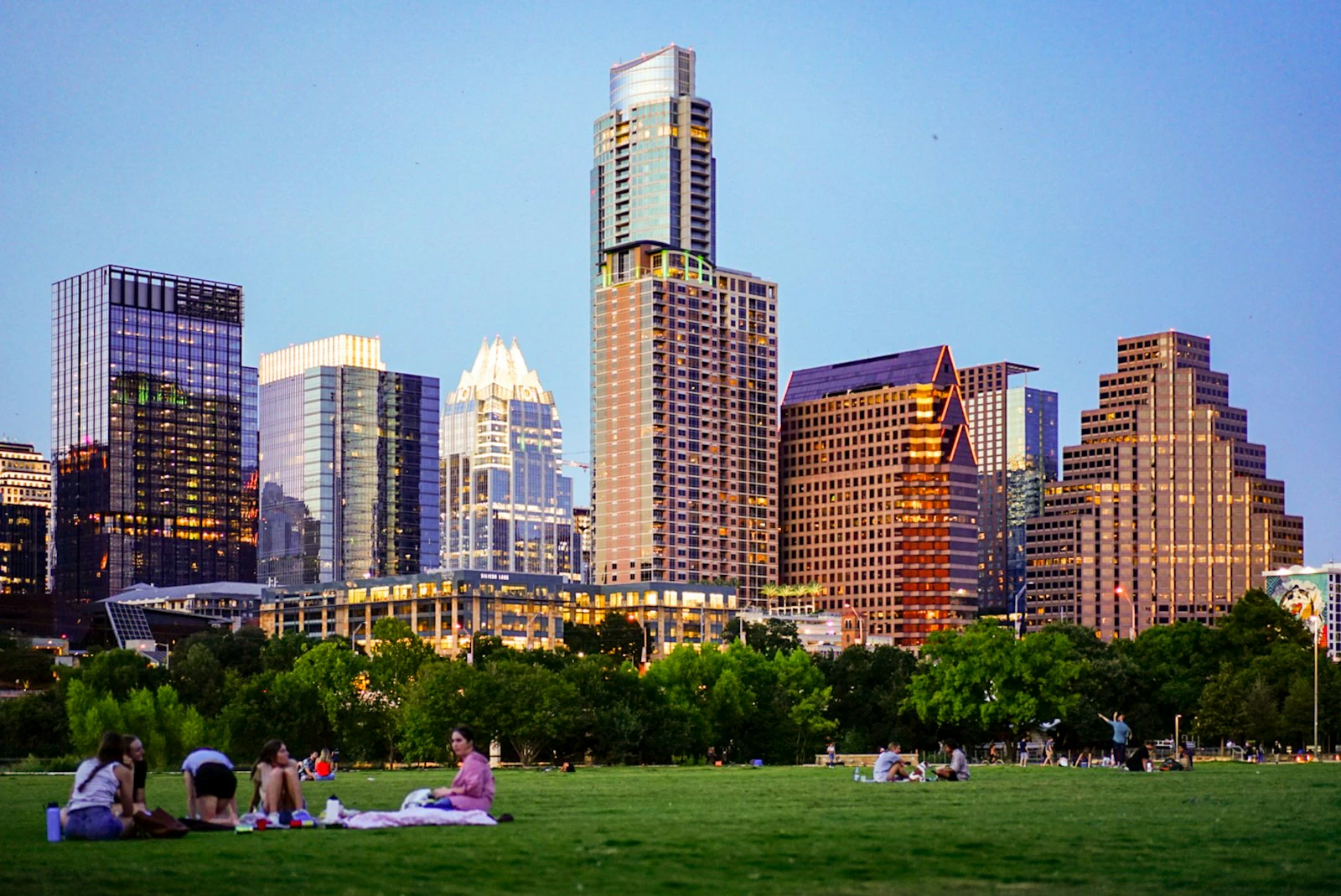
The skyline floats above the trees across the lawn, which makes it the default for family sessions and picnic-blanket shots. Late afternoon flatters it. Weekend parking is paid, and in October chunks of the park close around the ACL festival, so check before you plan an autumn shoot here.
Texas State Capitol
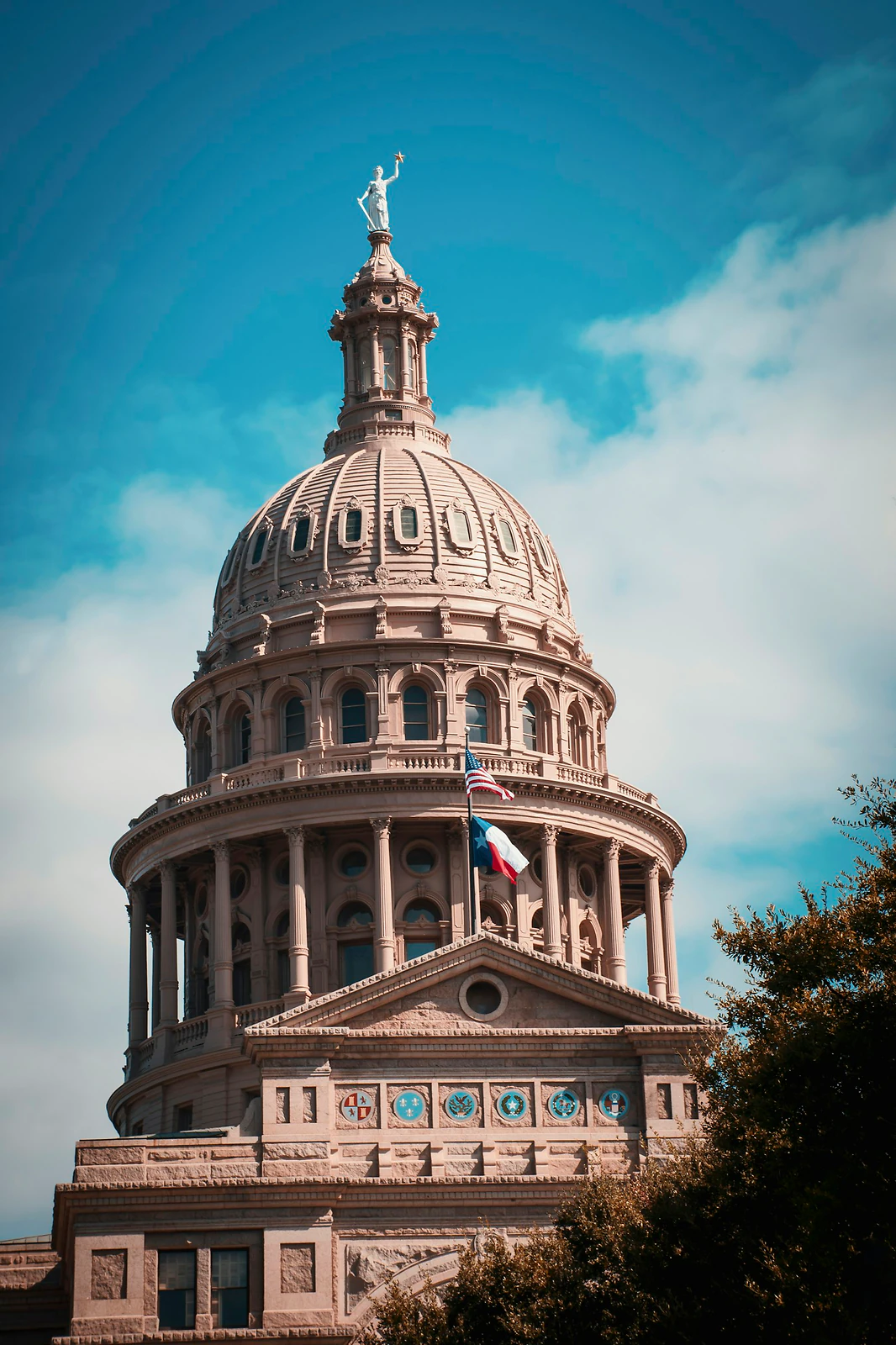
The pink granite dome goes properly red at golden hour, and the grounds are free and open for casual and portrait photography. The other shot is the view corridor: stand on Congress Avenue south of the river and the dome closes the street like a stage backdrop. Metered street parking, or the visitors garage a block east.
Summer changes the math on all six. From June into September the heat index is punishing by 10am and the haze softens the skyline, so the workable windows shrink to sunrise and the last 90 minutes of the day. The upside of shooting in August is that the bats and the best light arrive together; the downside is you have to decide before you get on the bridge which shot you came for.
Show up at noon and most of this list is hard light and heat haze.
Four walls everyone shoots, and how to get them without the crowd.
Nothing here has the scale of the famous photo spots in NYC, where the landmark fills your frame from four blocks out. Austin's walls are sidewalk-close and bolted to businesses that are open while you shoot, which changes both the framing and the manners.
- "i love you so much," South Congress. The green wall on the side of Jo's Coffee. Weekday before 10am is the only reliably empty window; on weekends the line runs long enough that three frames per group is the polite maximum. Buy a coffee. It's their wall.
- "Greetings from Austin," South First Street. The vintage-postcard mural on Roadhouse Relics, and the most photogenic of the four in warm evening light, which hits the wall directly. The catch is the street parking in front; either wake up early or embrace the parked cars as foreground.
- "Hi, How Are You," 21st and Guadalupe. Daniel Johnston's frog, Jeremiah, on the Drag by the UT campus. It sits in shade most of the day, which actually helps: flat, even light and no squinting. Expect students walking through your frame between classes.
- "You're My Butter Half," East MLK. The east side's favorite couples wall, and usually the least crowded of the four. Pair it with a coffee-shop crawl through the surrounding blocks, which hold a rotating cast of smaller murals that change year to year.
Etiquette is simple and mostly unwritten: these are working storefronts, so don't block doors, don't set up light stands in the entryway, and keep client sessions quick when a line forms behind you. For a paid shoot with real gear, a weekday morning solves nearly every problem the weekend creates.
Three weeks of wildflowers, give or take
Peak bluebonnets usually run from late March into mid April, but the season rides on winter rain, so a dry year can shift or shrink it. The Lady Bird Johnson Wildflower Center in southwest Austin is the curated version: dense, healthy plantings and no traffic to dodge, with paid admission and its own photography policies, so check their current rules before bringing a client. The free version is the roadside patches along Loop 360 and the ranch roads west of town, which come with two rules. First, never stop on a highway shoulder for a photo; find a legal pullout or a frontage road. Second, sit beside the flowers, not on them. Picking bluebonnets isn't actually illegal in Texas, despite what everyone's aunt insists, but a trampled patch skips a year, and the fire ants underneath will settle the argument anyway.
Wildflowers are also the most timing-sensitive shot in this whole guide. Backlit in the final hour, the whole field glows; at noon it's just blue stubble in hard light. If you're planning a session around them, the golden hour photography guide covers how to place the sun and how much usable time you actually get, which at Austin's latitude is about 40 minutes of the good stuff.
Parking, permits, and the right hour, in one grid.
| Spot | Best light | Parking | Worth knowing |
|---|---|---|---|
| Lady Bird Lake boardwalk | Sunrise, blue hour | Paid downtown lots; trailheads fill by 8am weekends | No permit for casual shoots; reflection needs calm water |
| Mount Bonnell | Last hour before sunset | Small free lot on Mount Bonnell Rd | Stone stairs; arrive 45 minutes early for a rail spot |
| Pennybacker overlook | Sunset | Gravel pullout off Loop 360, fills fast | Steep scramble; skip after rain |
| South Congress murals | Weekday mornings | Metered street parking | Business walls; keep sessions short when lines form |
| Zilker Park | Late afternoon | Paid on weekends | Partial closures around ACL in October |
| Texas Capitol grounds | Golden hour | Metered streets or visitors garage | Grounds free to shoot; interior sessions have their own rules |
| Congress Avenue Bridge | Dusk, roughly March to October | South-bank lots go early on big bat nights | Biggest flights in August |
| Hamilton Pool Preserve | Late morning canyon shade | Included with your reservation | Reservations required; book weeks ahead for summer |
On permits generally: casual and hobby photography is fine everywhere above. Paid portrait sessions are where it gets murkier, because Austin Parks and Recreation has its own rules for commercial activity in city parks, and venues like Hamilton Pool and the Wildflower Center set their own policies on top. The rules shift often enough that the honest advice is to check the current guidance for the specific park before a client shoot rather than trust any blog post, including this one.
One last practical note, because these spots draw two kinds of people. If you're a couple or a family planning a session at one of them, the location is the easy part; booking the photographer, paying the deposit, and getting the photos back afterward is where it usually gets clumsy. PicurPhoto compresses that into one link: you pick a time on the photographer's booking page, pay there, and the finished gallery comes back through the same place. And if you're the photographer serving Austin's very crowded portrait market, it's a flat subscription, free for up to 10 galleries and 1 GB, and it never takes a cut of your session fee on any plan. Payments run through your own Stripe account, so deposits, payouts, and refunds stay under your control.
What people ask before shooting Austin
Do I need a permit to take photos in Austin?
For personal photos, no, nowhere in this guide. For paid portrait sessions, city parks can require permits for commercial activity depending on the park and the setup, and places like Hamilton Pool, the Wildflower Center, and the Capitol interior have their own policies. Check the specific venue's current rules before a client shoot; they change more often than articles get updated.
What's the etiquette at the South Congress murals?
The walls belong to open businesses, so treat the shoot like a guest. Don't block the door or the sidewalk, keep it to a handful of frames when a line forms, skip the light stands during busy hours, and buy something from the shop whose wall you're using. Weekday mornings before 10am avoid the problem entirely.
When do bluebonnets bloom in Austin?
Late March through mid April in a typical year, with the peak lasting two to three weeks. Winter rainfall moves the window, so watch local bloom reports from early March. The Wildflower Center is the most reliable dense display; roadside patches vary year to year.
Is it illegal to pick bluebonnets in Texas?
No, that's a durable myth, though damaging plants in state parks is against park rules. The real reasons to leave them alone: trampled patches bloom worse the next year, roadside stops are genuinely dangerous, and bluebonnet fields hide fire ants and the occasional snake. Sit beside the flowers and shoot low.
When can you see the bats at Congress Avenue Bridge?
Roughly March through early fall, emerging around sunset. Late summer is the peak, since August flights include the season's pups and the colony is at full strength. Arrive 30 to 45 minutes before sundown for a rail spot, and know that some nights they fly late or barely at all; it's wildlife, not a schedule.
Picked the spot? Make the booking just as easy.
A booking page, deposits paid up front, and a gallery that delivers the finished photos, all in one link. Free for up to 10 galleries.