
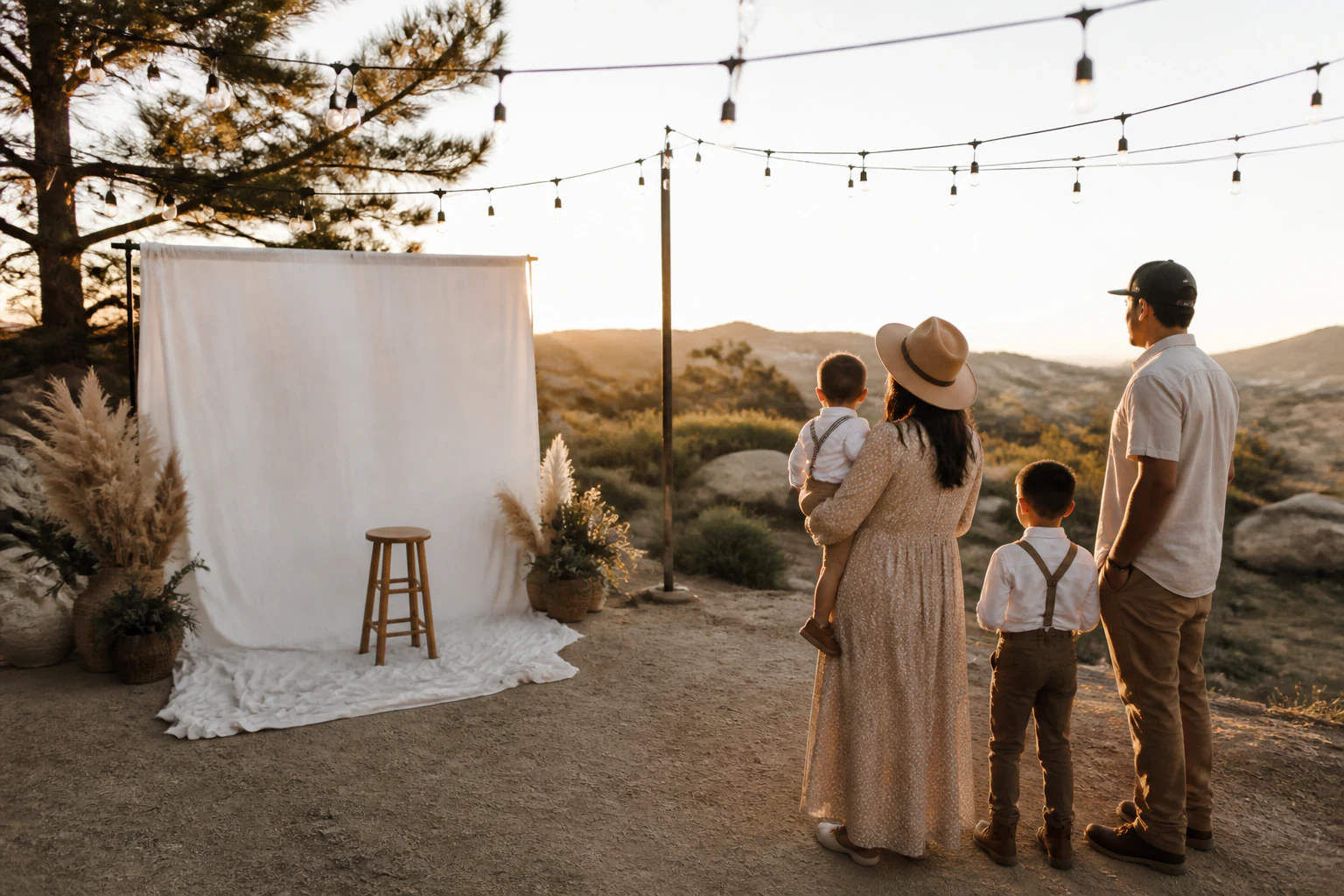
Mini sessions pay on volume and fail on logistics.
It's 4:12 on a Saturday in October. The 4:00 family is still parking, the 3:30 family wants one more frame with the dog, and the 4:30 booking just texted to ask if they can come early. Whether that moment is a shrug or the start of a pileup got decided weeks ago, when you built the schedule. Profitable mini sessions rest on four decisions made in advance: a slot length you can actually deliver in (20 minutes is the workhorse), a 10-minute buffer between every slot, a price that clears your cost floor without undercutting your full sessions, and a booking setup that fills every opening while making it impossible to hand the same slot to two families.
One afternoon, six slots, $1,200 on the schedule.
The standard build is a 20-minute session with a 10-minute buffer, which puts you on a 30-minute cadence: six bookable slots in a three-hour block. Here's a fall Saturday running up to golden hour, priced at $200 a slot.
| Slot | Session | Buffer | Running total at $200 a slot |
|---|---|---|---|
| 1 | 3:00 to 3:20 | 3:20 to 3:30 | $200 |
| 2 | 3:30 to 3:50 | 3:50 to 4:00 | $400 |
| 3 | 4:00 to 4:20 | 4:20 to 4:30 | $600 |
| 4 | 4:30 to 4:50 | 4:50 to 5:00 | $800 |
| 5 | 5:00 to 5:20 | 5:20 to 5:30 | $1,000 |
| 6 | 5:30 to 5:50 | wrap | $1,200 |
The 10-minute buffer does real work. It absorbs the family that parked in the wrong lot, the card check between sessions, walking one group out while the next settles in, and the toddler who needs a minute before cooperating. Squeeze the buffers out to cram in a seventh slot and one late arrival at 3:30 cascades through everything after it. Every session from there on starts rushed, and rushed shows up in the photos.
Cap the day at six to eight sessions. Past that, your energy and your consistency both slide, and the last family paid the same $200 as the first.
Also be honest about what the $1,200 buys. The three-hour block is maybe half the work: add 45 minutes of scouting and setup on the front, then culling and editing six separate galleries on the back, call it 30 to 45 minutes each. You're closer to eight hours of total work, which is still solid money, but it's $150 an hour, not $400. Run that number against your cost floor before you commit to a price; the full method is in our guide to how to price your photography.
Price against your full session, not the cheapest mini in town.
Most US minis land somewhere between $150 and $350. Where you sit in that range matters less than where you sit relative to your own full session, because minis compete with your own price list before they compete with anyone else's. A useful anchor: charge roughly half your full session rate for about a third of the shooting time. If your full family session is $400 for an hour, a $200 mini is faster money per shooting hour for you and a smaller commitment for the client, and the gap is wide enough that families who want the full experience still book it.
Price the mini at $75 and you get a different business: bargain hunters who won't rebook at your real rates, full-session clients who quietly downgrade, and the same editing work per gallery either way. Cheap minis don't fill your calendar so much as they replace better bookings.
Two more decisions belong inside the price. First, include a set number of edited images, 5 to 10 is typical, and sell the full gallery as an upgrade after delivery; that upsell is where a good mini day keeps earning after the shooting stops. Second, take full payment at booking, not a deposit. The slot fee is small, the schedule is tight, and a paid slot is a kept slot. Deposits make sense on a $2,000 wedding; on a $200 mini they just add a second transaction to chase.
Themes that reliably book out.
A mini day sells a moment, not a session. Pick the theme by what your clients already have a deadline for.
Fall family minis
The workhorse. Peak color lasts about two weeks in most regions, which gives the announcement built-in urgency you don't have to manufacture. Lock the date early and name the location in the post.
Holiday card minis
Run these late October through mid November, early enough that families can actually print cards. Mention card printing in the announcement; the deadline sells the slot for you.
Spring and Mother's Day minis
Blossoms, gardens, long golden evenings. Mother's Day slots get bought as gifts, so write the announcement for the person paying, not just the person being photographed.
Back-to-school minis
August, simple setups, kids with a first-day deadline. These run well at 10 to 15 minutes, so the cadence tightens and the same afternoon holds more slots.
Pet minis
Underrated and fiercely loyal. Pet owners rebook every year and share their galleries everywhere. Keep the slots short; ten good minutes with a dog beats twenty tired ones.
Headshot minis
The weekday option. Set up near an office district or partner with a coworking space, run 15-minute slots, and include two retouched images. Companies come back with whole teams.
Six slots at $200 is $1,200, but only if all six families show up, on time, already paid.
Filling every opening without double-booking one.
Announce to past clients before you post anywhere public. They already trust your work, a mini is the easiest yes you can offer them, and a first-pick-of-the-slots email reads as a favor rather than a promotion. Give them 48 hours, then take the remaining slots to social with the count visible: "three slots left" is honest urgency, which is the only kind worth using. If your list is too thin for that to work, that's a separate problem worth solving before your next mini day; here's how photographers actually get clients when the calendar's empty.
Then there's the mechanics, which is where mini days most often go sideways. Taking bookings in DMs while payments trickle in over Venmo and a spreadsheet tracks who owns which slot works right up until two families both believe 4:00 is theirs. With six back-to-back sessions there's no slack in the day to absorb that mistake.
This is the exact job PicurPhoto's mini sessions were built for. You set the slot length, the buffer, and the date once, and it turns them into a booking page: clients pick from real availability, a slot disappears the moment it's claimed, and calendar sync keeps your other commitments blocked out, so a double-booking can't happen. Payment is collected at booking through your own Stripe account, which means payouts and refunds stay under your control, and PicurPhoto never takes a cut of your slot fees on any plan; the subscription is flat. Automated email and SMS reminders go out before the day, which is most of the fight against no-shows. One honest limit: the free plan runs a real mini day at $0, but its caps are 10 galleries and 1 GB of storage, and a single six-slot day produces six galleries, so a second event will push you to Basic at $9 a month for unlimited galleries and 5 GB.
Prep that keeps six sessions on the rails.
A mini day is a normal shoot times six with no slack between them, so preparation matters more here, not less. This is the condensed version; the full photoshoot checklist covers the deeper gear and backup layers.
- Scout at the exact hour. Visit the location a week out, at the same time you'll shoot. Check the light, the parking, and where six consecutive families are going to wait.
- Design three or four setups you can cycle. Same spots, same poses, every session. That repetition is what makes six galleries editable in an evening instead of a weekend.
- Send the prep email 48 hours out. Pinned location, parking instructions, what to wear, arrive ten minutes early, and a one-line reminder of the reschedule policy.
- Double the consumables. Charged spare batteries, empty cards, and shoot to two cards if your body allows it. There's no reshooting slot three.
- Put the weather plan in writing. A named backup date in your booking terms beats improvising refunds with six families at once.
- Stage the set before slot one. Blanket, stools, props, and a test exposure all done before the first family walks up.
- Keep the time where you can see it. A watch alarm five minutes before each slot ends keeps you honest without making the client feel clocked.
Deliver fast, then let the gallery do the selling.
Minis carry an implied speed promise: a client who booked a 20-minute session expects photos in days, not the month a wedding gallery takes. Aim for delivery inside a week. The day was engineered for it, six sessions in the same light with the same setups batch-edit quickly, and that's the hidden payoff of all the repetition you planned.
Deliver the included images in a proper client gallery rather than a bare download link. Password protection keeps each family's set private, favorites show you which frames they love, and the full-set upgrade and print options sit right next to the photos they're already sending to grandparents. The upgrade orders that follow a mini day arrive without you selling anything face to face, and they belong in your slot math when you plan the next one.
Mini session questions, answered straight.
How long should a mini session be?
Twenty minutes is the standard for families. Ten to fifteen works for pets and back-to-school, where a kid's patience is the real limit, and headshots fit comfortably in fifteen. Past thirty minutes it stops being a mini; you're just discounting a short full session.
How much should I charge for a mini session?
Most US minis run $150 to $350. Anchor to your own full session, roughly half the price for about a third of the shooting time, and never go below your cost floor. Include a set number of edited images and sell the rest of the gallery as an upgrade.
How many photos should a mini session include?
Five to ten edited images is typical. Fewer feels thin at $200; many more and you've eroded your full-gallery upsell. Deliver a handful of unmistakable keepers and let the gallery show what else exists.
How far in advance should I schedule mini sessions?
Open booking three to four weeks before the date, past clients first, public about 48 hours later. Seasonal dates deserve even more runway; holiday minis fill from families who start planning their cards in October.
What should I do about no-shows?
Take full payment at booking, send automatic reminders (email plus SMS beats email alone), and state the reschedule policy up front. Keep a short waitlist so a cancellation before the day becomes someone else's slot instead of a hole in your schedule.
Run your next mini day off one link.
Set the slot length, the buffers, and the price once; PicurPhoto turns it into a booking page that takes payment up front and can't hand the same slot to two families.